Bringing a new puppy home is thrilling, but early training is crucial. Positive reinforcement can shape a well-behaved, loyal companion. Let’s explore essential puppy training tips for new dog owners.
We’ll cover obedience commands, socialization, and handling techniques. These skills will help you build a strong bond with your furry friend.
Key Takeaways
- Start training simple commands like “no” and “good” when puppies are 2-3 months old1
- Introduce complex commands like “sit” and “stay” between 12-16 weeks1
- Begin puppy socialization and handling training before 12 weeks1
- Use positive reinforcement with treats during training sessions2
- Consistent training in different environments is key for polite behavior2
Importance of Early Puppy Training
Early puppy training is vital for shaping good behaviors and building a strong bond. Your pup will quickly learn to follow commands with early training. Positive reinforcement helps puppies form good habits, leading to better behavior throughout their lives.3
Early socialization is key for puppies to feel at ease around humans and other pets3. This helps them grow into confident, well-adjusted dogs.
Benefits of Starting Training Early
Young puppies are like sponges, ready to soak up information about their world4. Proper socialization before 16 weeks can prevent stress and behavior issues later on4.
Many new puppy owners don’t seek professional training due to lack of support.5 However, early training can help reduce separation anxiety and stress in puppies5.
Forming Good Habits from the Beginning
Puppies need to learn essential skills like potty training, crate training, and socialization.5 Proper training keeps puppies safe from dangers like busy streets or dog confrontations5.
Well-trained puppies can adapt to various environments, making them ideal companions5. Early communication and teaching help puppies reach their full potential as wonderful canine companions.4
| Key Puppy Training Statistics | Findings |
|---|---|
| Puppy owners surveyed | 296 across North America3 |
| Puppies with minimal exposure to people and dogs outside the home | Nearly one-third of the puppies3 |
| Puppies that attended puppy classes | Almost half of the puppies in the study3 |
| Puppies in classes exposed to more canine friends and people | Compared to those with minimal exposure3 |
| Puppies attending classes less likely to show nervousness or separation anxiety | Puppies were less likely to show these symptoms3 |
| Owners of class-attending puppies more likely to reward good behavior | And less likely to punish their dogs3 |
| Classes teaching “sit” or “down” behaviors | More than 80% of classes3 |
| Classes allowing puppies to play with each other | Less than 70% of classes3 |
| Classes covering experiences like noise exposure or resource guarding | Less than half of the classes3 |
Positive Reinforcement Training Techniques
Positive reinforcement is the best way to train puppies. It rewards good behavior instead of punishing bad ones. Give treats, praise, or playtime when your puppy obeys commands or behaves well.
Rewarding Good Behavior
Use verbal cues like “watch,” “sit,” “stay,” and “come” in training. Offer food treats, praise, petting, or toys as rewards. Start by rewarding every good action.
Later, switch to random rewards to keep your puppy eager. This helps maintain their motivation to perform well.
Avoiding Punishment for Bad Behavior
Don’t punish your puppy. It can hurt your bond and trust. Instead, redirect bad behavior and reward good habits.
Punishment can cause fear, aggression, and anxiety in dogs. It also damages your relationship with them.
Quick, consistent rewards are key to successful training. Give rewards within seconds of good behavior. Mix up reward times to keep your puppy interested.
There’s no national certification for dog trainers. But groups like the Association of Professional Dog Trainers certify those using positive methods67.
Choosing the Right Rewards
Effective puppy training depends on using the right rewards. Dogs repeat behaviors they find rewarding. It’s vital to identify rewards that motivate your specific puppy.
Some puppies love food, while others prefer playtime or affection. Discovering your puppy’s favorites will lead to more successful training sessions.
Food Rewards for Food-Motivated Puppies
Small, soft treats work well for food-driven puppies8. Chicken, beef, pork, and fish flavors are often popular choices. Treats can be freeze-dried or crunchy.
Find treats your puppy can’t resist. Give them right after the desired behavior to reinforce the connection.
Non-Food Rewards for Picky Puppies
Some puppies prefer attention, affection, or playtime as rewards8. Games like fetch, tug-of-war, and hide-and-seek can be highly motivating.
New toys can also serve as excellent rewards. Their novelty can drive puppies to repeat trained behaviors8.
For less food-motivated puppies, these non-food rewards may be more effective. They can help shape desired behaviors more successfully.
Experiment to find your puppy’s favorite rewards9. List and rank things your puppy enjoys from most to least exciting. This will guide your training approach and lead to enjoyable, successful sessions.
Consistency in Puppy Training
Consistent puppy training is vital for your canine companion’s growth. It helps your pup learn and retain important commands and behaviors. A unified approach across all household members reinforces desired behaviors and prevents confusion10.
Dogs learn faster with short, regular training sessions. Just 3 minutes daily can be more effective than an hour weekly11. Consistent rewards help dogs quickly distinguish between desired and undesired behaviors11.
Everyone interacting with the dog should use the same commands, rewards, and consequences10. Family involvement using the same cues aids the dog’s progress. Consistency in cues and schedule builds trust between dog and owner10.
Regular meal and training schedules contribute to the consistency dogs need10. Setting goals in each session helps measure progress. Patience and celebrating small victories are key in dog training10.
Consistency involves maintaining methods and being persistent. The Piloting method builds a “bank” to train dogs by answering their behaviors. Each answered question adds money to the bank12.
Examples of barking behavior values: mailman ($10), passing dog ($8), wind ($12), schoolbus ($25), Door Dash ($30)12. Follow-through is crucial when addressing negative behaviors in dogs12.
A consistent approach to puppy training fosters a strong, lasting bond. It sets your furry friend up for success and builds trust10.
puppy training Techniques
Effective puppy training uses various techniques to keep your furry friend engaged. Positive reinforcement with high-value treats is the best method. Setting up a potty training schedule is crucial for fast success13.
As puppies avoid accidents in their space, they gain access to more rooms. This gradual expansion helps reinforce good behavior and builds trust.
Short, Frequent Training Sessions
13 Small training sessions throughout the day are effective for puppies. Keep sessions short to maintain enjoyment and prevent frustration. This approach works well for both the dog and trainer14.
Base the number of daily training hours on short sessions. This prevents your puppy from feeling overwhelmed or losing interest.
Training in Different Environments
13 Exposing puppies to new environments is vital for their development. Practice obedience in various locations with different distractions. This ensures your dog responds well in any setting14.
Provide a safe space for puppies when you’re away. This can include a gated room or playpen with a crate and potty pad.
| Training Technique | Benefits |
|---|---|
| Short, Frequent Sessions | Maintains puppy engagement and prevents frustration |
| Training in Different Environments | Helps puppy generalize commands and respond correctly in various situations |
| Positive Reinforcement | Encourages desired behavior and builds a strong bond between puppy and owner |
14 Start puppy training early to cover essential behaviors like sitting, staying, and coming. Include crate training and potty training in your routine. Use positive reinforcement with treats, toys, and praise to encourage good behavior.
Building Up Complex Commands
Teaching complex commands like “stay” or “come” requires breaking them into smaller steps. Reward your puppy for any progress towards the desired behavior. Gradually increase the difficulty as they master each part.
This approach helps your puppy understand and succeed more easily. It also boosts their confidence and strengthens your bond.
Breaking Down Behaviors into Smaller Steps
- Begin by rewarding your puppy for the smallest approximations of the desired behavior15.
- Once your puppy has mastered the initial step, gradually increase the criteria, rewarding only when they meet the new, slightly more challenging requirements15.
- Consistently reinforce your puppy’s progress, building up the command step by step until they can perform the complete behavior on cue15.
This method helps your puppy grasp commands more easily. They won’t feel overwhelmed by complex behaviors all at once. Breaking tasks into manageable pieces sets your puppy up for success.
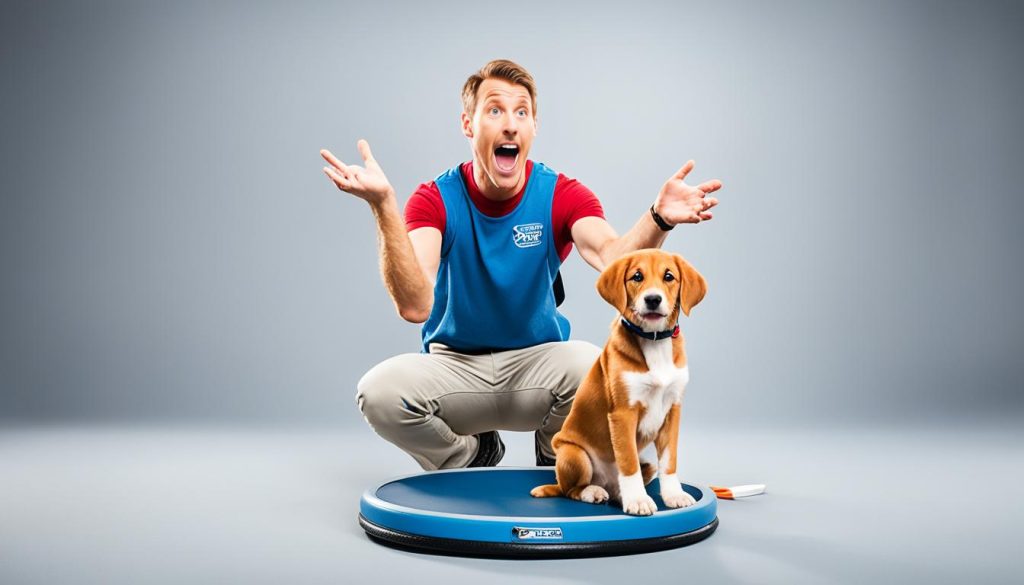
Patience and consistency are key when building complex commands. Provide lots of positive reinforcement throughout the process. Your puppy’s skills and confidence will grow with this approach.
Soon, you’ll have a well-trained, obedient companion by your side.
Making Training Fun and Engaging
Puppy training should be enjoyable for both you and your furry friend. Incorporating play sessions into your training routine can significantly improve your puppy’s learning and engagement.16 Breaks and fun activities keep them motivated and eager to learn.
Consider teaching your puppy fun tricks alongside basic obedience commands. Games and trick training can cater to the energy levels and intelligence of various dog breeds,16 making learning more interactive. Variation in training games can also help adapt to different age groups of dogs,16 keeping your puppy interested.
Incorporating Play Sessions
Puppy recall training games, especially in the park, can improve essential obedience skills.16 Mixing treats and playtime can significantly improve training sessions,16 as dogs associate training with positive experiences.
Encouraging social interaction and playfulness in training sessions can further strengthen the bond between you and your puppy.16 This approach makes learning more enjoyable for your furry friend.
Teaching Tricks in Addition to Obedience
Incorporating fun elements in training can enhance the learning experience for your puppy,16 keeping them engaged and motivated. Moderate levels of difficulty in games can keep the dog engaged without losing interest,16 allowing steady progress.
Family involvement in training activities can strengthen the bond between the dog and its owners,16 creating a supportive environment. Ending training sessions on a high note, even with small achievements, reinforces your puppy’s confidence and enthusiasm for future sessions.17
Fun training helps your puppy develop skills while strengthening your bond. Tailor the training to your puppy’s needs, preferences, and age. This ensures an enjoyable learning process for both of you1617.
Praising Small Improvements
Recognizing your puppy’s small achievements is vital during training. This positive approach boosts confidence and keeps them motivated. Vets agree that positive reinforcement is the most effective dog training method18.
Reward your puppy when they master a command or show good behavior. The American Kennel Club suggests short, five-minute training sessions throughout the day18. This keeps your puppy engaged and excited about learning.
Consistency in training and commands is crucial for dogs to learn new habits effectively.18 Celebrating small wins reinforces positive behaviors. Appreciating your puppy’s efforts along the way is important.
Find rewards that resonate with your puppy, whether it’s food or playtime. Teaching tricks and praising improvements can make training fun for both of you18.
Focusing on small wins strengthens your bond with your puppy. Consistent positive reinforcement sets them up for long-term success. Every step forward is worth celebrating!
Incorporating Training into Daily Routine
Make puppy training a part of your everyday life. Incorporate training before mealtimes, walks, or playtime. Ask your pup to “sit” or “stay” before rewards, reinforcing good habits naturally19.
Short, frequent training sessions work best. They prevent boredom and keep your puppy engaged. Use mealtimes for training to maximize repetition and focus19.
Training isn’t just about food rewards. Walks or cuddles can be great motivators too. Training during walks helps practice commands like “sit” or “leave it”19.
Daily training stimulates your puppy’s mind. It teaches them household rules and gives them a sense of control. Consistent, positive reinforcement creates a well-behaved, confident pup19.
Using Hand Signals Alongside Verbal Commands
Hand signals with verbal commands boost puppy training effectiveness. They reach 92% accuracy, outperforming voice cues at 80%. This makes them useful in noisy environments.
Consistency and repetition are key when teaching hand signals. Basic signals include pointing for “go,” flat hand for “down,” and closed fist for “come.” Eye contact reinforces these signals, ensuring your puppy understands20.
Perform the visual signal first, then the verbal command. This helps puppies link gestures to spoken signals. Using both increases responsiveness by 70% compared to verbal cues alone2021.
Puppies learn hand signals 60% faster than older dogs. This is crucial as 30% of dogs may experience hearing loss. Hand signals can improve behavior understanding by 40%21.
Daily training leads to 50% faster adoption of hand signals. Pairing commands with signals boosts retention by 45%. Positive reinforcement increases successful learning by 55%21.
Hand signals are vital for dog owners and trainers. Dogs quickly link gestures to behaviors. Consistent use of signals is crucial for successful training22.
Seeking Professional Help if Needed
Struggling with puppy training? A professional dog trainer can offer valuable guidance. They can address problems efficiently and provide personalized advice. Look for trainers who use positive reinforcement techniques for the best results23.
Benefits of Working with a Dog Trainer
Certified Professional Dog Trainers (CPDTs) have extensive experience and pass standardized tests. Applied Animal Behaviorists hold advanced degrees in animal behavior. Veterinary Behaviorists complete residencies and pass qualifying exams23.
Choosing a Positive Reinforcement Trainer
The CCPDT oversees an international certification program for CPDTs. CAABs and ACAABs receive university training in animal behavior and related fields. Some trainers learn through apprenticeships, volunteering, or specialized training schools23.
CAABs work closely with vets on behavioral medications. Veterinary behaviorists can prescribe meds for various pet issues. Board-and-train programs work best when trainers teach owners to maintain new behaviors23.
Contact multiple professionals and ask for references before choosing a behaviorist. For serious behavior problems, seek experts with academic training and practical experience23.
Socialization and Handling
Socialization and handling are key for puppy training. Expose your pup to various people, animals, and environments positively. This builds confidence and helps them adjust well. Comfort with handling makes routine care easier as they grow.
Socializing with Humans and Pets
A puppy’s first three months shape their future personality. Poor socialization can cause behavior problems later. These issues are the top cause of death for dogs under 3.
Puppies are ready for socialization between 3-14 weeks. Take your pup to new places twice weekly. Puppy classes teach basic commands and help with interactions.
Getting Puppy Used to Being Handled
The socialization period ends shortly after vaccinations are done. Puppies get used to stimuli through repeated, fear-free exposure. Desensitization helps treat fears in dogs of any age.
Older dogs can learn new experiences with praise and treats. The AKC Canine Good Citizen test shows good manners and basic obedience skills.
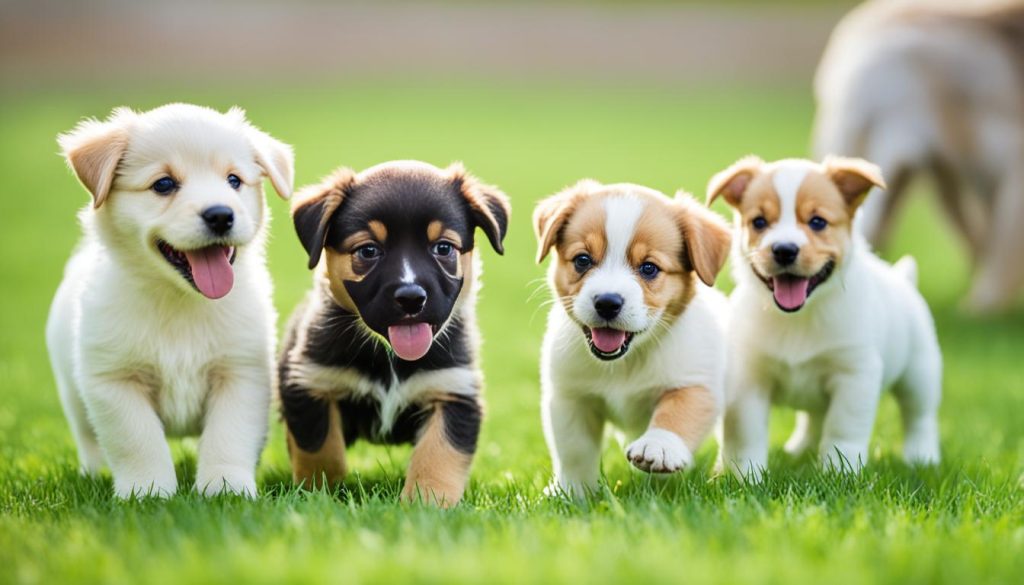
Genetics, maternal behavior, nutrition, and early handling shape puppy personalities. Puppies handled from birth to five weeks are often more confident and social. Predicting a dog’s future behavior is tricky.
Puppies should stay with their mother until 7-10 weeks old. Social interactions should continue into adulthood for strong social skills2425.
Conclusion
Puppy training is vital for creating a well-behaved, loyal companion. New dog owners can set their puppies up for success by following these tips26. Use positive reinforcement, be consistent, and make training fun.
Seek professional help if needed26. With patience and dedication, you can help your puppy develop essential skills. Your furry friend will become a beloved family member in no time.
Early puppy training is crucial for new dog owners. Positive reinforcement techniques offer numerous benefits. Incorporating training into your daily routine is also valuable27.
Puppy school is designed for puppies up to 16 weeks old. It provides a safe space for puppies to interact with other dogs and people. Classes typically last 4-6 weeks27.
Start training early, between 8 and 16 weeks. Work with experienced, certified trainers who use positive reinforcement. This approach sets puppies up for lifelong success.
Puppy training requires patience, dedication, and mutual understanding. Prioritize positive reinforcement, consistency, and fun. This creates a strong foundation for a loving, well-behaved companion. Your furry friend will bring joy and laughter for years to come.
FAQ
When should I start puppy training?
Start puppy training as soon as you bring your furry friend home. Early training helps puppies learn commands quickly. It also helps them become well-behaved, loyal companions.
What is the most effective training method for puppies?
Positive reinforcement is the best method for training puppies. It rewards good behavior instead of punishing bad behavior. This approach builds trust between you and your puppy.
How do I choose the right rewards for my puppy?
Try different rewards to see what motivates your puppy. Some puppies love food treats, while others prefer toys or affection. Finding the right rewards is key to successful training.
Why is consistency so important in puppy training?
Consistency helps puppies learn faster. Everyone in the house should use the same commands and rewards. This avoids confusion and makes training more effective.
What are some effective puppy training techniques?
Keep training sessions short, around five minutes or less. Practice in different places to help your puppy learn. Break down complex commands into smaller, easier steps.
How can I make puppy training more enjoyable?
Mix short play sessions into your training routine. Teach fun tricks along with basic commands. This keeps your puppy engaged and eager to learn.
When should I seek professional help with my puppy’s training?
If you’re struggling or facing behavior issues, consider a professional dog trainer. They can offer personalized advice and help solve problems quickly. Look for trainers who use positive reinforcement methods.
How important is socialization and handling for my puppy?
Socialization and handling are crucial for puppies. Expose your puppy to various people, animals, and environments in a positive way. This helps them become confident and well-adjusted.
Get your puppy used to being handled. This makes routine care like nail trimming and grooming easier as they grow.
Source Links
- 5 Training Tips for New Dog Owners | Dog Training in East Lansing, MI – https://www.doggonefunmi.com/5-training-tips-for-new-dog-owners.php
- Puppy Training 101: Your Guide to Mastering Basic Puppy Training – https://be.chewy.com/basic-puppy-training/
- No title found – https://www.akc.org/expert-advice/training/puppy-training-classes/
- Benefits of Early Puppy Training and Socialization | Andrea Arden Dog Training – https://andreaarden.com/puppy-training-and-socialization/benefits-of-early-puppy-training-and-socialization/
- What Everybody Ought to Know About Puppy Training! — The Puppy Academy – https://www.thepuppyacademy.com/blog/2021/1/11/why-puppy-training-is-so-important
- Positive reinforcement training – https://www.humanesociety.org/resources/positive-reinforcement-training
- Puppy 101: Positive Reinforcement Dog Training – https://www.smalldoorvet.com/learning-center/puppies-kittens/positive-reinforcement-training
- Dog Training Rewards: Choosing the Best Dog Training Treats | SpotOn – https://spotonfence.com/blogs/training-tips/positive-reinforcement-dog-training-choosing-reward-for-your-dog?srsltid=AfmBOoqzjojRB_W5pdKNKYBHmve3pstbc52tv1K847NrtXyALI-5xnsP
- No title found – https://www.akc.org/expert-advice/training/training-rewards/
- The Importance of Consistency in Dog Training | OLK9MD – https://www.olk9md.com/importance-of-consistency-in-dog-training/
- The Importance of Consistency in Dog Training – https://danceswithdogs.com/the-importance-of-consistency-in-dog-training/
- Dog Training Myth Busting: Consistency – https://www.darwindogs.org/post/dog-training-myth-busting-consistency
- How to Train a Puppy: 13 Tips From a Dog Trainer – https://www.dailypaws.com/dogs-puppies/dog-training/basic/how-to-train-a-puppy
- Dog Training 101: An Ultimate Guide to Fixing Common Behavior Issues – https://www.thesprucepets.com/steps-to-train-your-dog-1118273
- 20 Essential Dog Training Commands – (Basic to Advanced) | Dogsee – https://www.dogseechew.in/blog/20-essential-dog-training-commands-orders-list-basic-to-advanced
- 50+ Puppy & Dog Training Games for Any Scenario – Zigzag – https://zigzag.dog/en-us/blog/new-puppy/games-and-toys/puppy-training-games-library/
- 5 Tips for Keeping Your Dog Engaged During Training – https://www.jjdog.com/blog/keep-your-dog-motivated-to-train/
- Top 10 Dog Training Tips – https://www.smalldoorvet.com/learning-center/behavior/top-10-dog-training-tips
- No title found – https://www.akc.org/expert-advice/training/fit-dog-training-busy-life/
- Dog Training Hand Signals To Teach Your Dog – All Stage Canine Development – https://www.allstagecaninedevelopment.com/dog-training-hand-signals/
- Hand Signals to Teach Your Dog – https://primalpetfoods.com/blogs/news/hand-signals-to-teach-your-dog
- Hand Signals for Dogs: Your Ultimate Guide – https://www.woofz.com/blog/hand-signals-for-dogs/
- Behavioral Help for Your Pet – https://www.aspca.org/pet-care/general-pet-care/behavioral-help-your-pet
- No title found – https://www.akc.org/expert-advice/training/puppy-socialization/
- Puppy Behavior and Training – Socialization and Fear Prevention | VCA Animal Hospitals – https://vcahospitals.com/know-your-pet/puppy-behavior-and-training—socialization-and-fear-prevention
- Life Lessons Learned From Training Dogs – Whole Dog Journal – https://www.whole-dog-journal.com/lifestyle/life-lessons-learned-from-training-dogs/
- Your Ultimate Guide To Puppy School | Paws Claws & Tails – Charlotte Bryan – https://pawsclawstails.com.au/your-ultimate-guide-to-puppy-school/