Labrador Retrievers are full of energy and smart. They were bred to help hunters. Now, they love to play and solve problems with their families. This guide helps you understand why exercise is key for their health at every age.
Healthy adult Labs need about an hour of activity daily. But, this can change based on their age, genes, and health. Puppies should start with short, safe play to avoid hurting their joints. As they get older, around seven to eight years, they need easier activities to keep moving well.
This article offers practical tips and health reminders. It shows how to balance exercise, mental games, and vet visits. This way, your Labrador can stay happy and healthy at any age.
Key Takeaways
- Labradors need regular activity to prevent obesity and joint problems; adults often do well with about an hour a day.
- Use the puppy 5-minute rule to pace growth-stage play and protect developing joints.
- Seniors typically require 30–60 minutes of gentle exercise split into short sessions to maintain mobility.
- Activity-tracking collars and routine veterinary assessments support age-appropriate dog exercise plans.
- Integrating mental challenges and consistent routines promotes pet holistic wellness and long-term well-being.
Understanding Pet Wellness in Labrador Retrievers
Labrador retrievers do best when care goes beyond just walks and treats. Good pet wellness means regular activity, mental games, checking their body condition, and routine vet visits. This keeps Labs happy and healthy. Owners who care for their pets holistically can avoid common issues and support their long-term health.
Definition of pet wellness
Pet wellness for Labradors is a complete approach to their well-being. It includes physical exercise, mental games, keeping a healthy weight, supporting joints, and preventing bad habits. This method views exercise, diet, grooming, and vet visits as part of a single plan. It’s tailored to each dog’s age and needs.
Importance of exercise for labs
Exercise is key for Labrador care. It helps prevent obesity, keeps joints healthy, and preserves muscle. Exercise also boosts heart health and brain function, helping to slow down aging.
Before starting intense exercise, it’s smart to have a vet check. This ensures the exercise is safe and helps prevent injuries or worsening of joint disease.
Practical steps include tracking your dog’s weight and body condition. Adjust their play or walks as needed. Combining exercise with holistic care boosts their chances of a long, active life and improves their overall health.
The Exercise Needs of Labrador Puppies
Puppies grow fast, so they need balanced activity for health. Early routines shape their behavior and growth. Use pet wellness tips to create safe, varied sessions that challenge both body and mind.
Recommended activities include low-impact play and basic skills. Short walks on soft surfaces and gentle fetch with plush toys are good. Controlled swimming and brief obedience drills also work well.
Follow the “5-minute rule” for Puppy exercise: five minutes per month of age, twice daily after three months. For example, a four-month-old puppy needs about 20 minutes of activity twice a day. This helps avoid strain on growth plates and supports holistic wellness.
Keep the intensity low and avoid high-impact activities. These can stress developing joints. Before starting new routines like treadmill work or extended swims, get vet advice.
Recommended Activities for Puppies
- Short neighborhood walks on soft ground.
- Gentle fetch with soft, lightweight toys.
- Two- to five-minute training bursts rewarding calm focus.
- Supervised, shallow swimming sessions when the puppy is comfortable.
- Interactive toys that blend movement with puzzles.
Duration and Frequency of Play
Divide play into several short sessions. Young puppies tire quickly. Multiple brief sessions support learning and reduce injury risk. Use a log or activity-recording collar to track play.
As the puppy grows, increase session length gradually. Watch for signs of fatigue. Adjust frequency based on energy, temperament, and vet advice. Always include calm cool-down time after play.
Socialization with Other Pets
Socialization is as important as physical play. Positive encounters with vaccinated, friendly dogs and calm cats build confidence. Choose supervised puppy classes or controlled playdates for safe exposure.
When introducing a new pet, observe body language and step in if play becomes too rough. Proper socialization supports holistic wellness and reduces future behavioral issues. Pair social sessions with preventive veterinary care checks to confirm vaccination status before group interactions.
Young Adult Labrador Retrievers and Exercise
Young adult Labs are full of energy and strength, from 18 months to seven years. They need 60–120 minutes of daily activity to stay healthy. A balanced routine helps with their wellness and prevents joint problems later.
Ideal Exercise Routines for Young Labs
Young Labs need a mix of aerobic and strength-building exercises. Long walks, trail hikes, and short runs boost their heart health. Swimming is a great low-impact option that strengthens muscles and improves endurance.
Play fetch or timed intervals to increase the intensity. Watch their pace and adjust as needed, based on their condition and energy. Regular vet visits are key for their long-term health.
Interactive Games and Activities
Engage their natural instincts with fetch, frisbee, and agility courses. Structured training, like recall and timed retrieves, helps them burn energy and shows progress.
- Rotate toys to keep interest: balls, durable tug toys, and flight discs.
- Set up short agility lines for speed and coordination.
- Try supervised off-leash play in safe areas to practice real-world commands.
Importance of Mental Stimulation
Labradors love solving problems. Scent work, obedience drills, and puzzle feeders keep them engaged and prevent boredom. Mental challenges complement physical activities for their overall wellness.
Keep track of how your Lab reacts to new activities and toys. Use simple logs to note their stamina, appetite, and behavior. These logs help in shaping their wellness plan and inform vet visits.
Fitness for Mature Labrador Retrievers
As Labradors get older, their needs change. They need regular exercise to stay fit and healthy. Gentle changes in their routine help them stay active and comfortable.
Adjusting Exercise as Labs Age
First, check how your dog is doing with your vet. They can help adjust activities based on health issues. Instead of long runs, try short, frequent walks.
Low-Impact Activities for Older Dogs
- Short walks on soft surfaces like grass or packed dirt to reduce joint stress.
- Swimming sessions that build strength without pounding joints.
- Gentle hikes at slow pace with frequent rests to keep muscles active.
- Indoor enrichment that encourages movement, such as scent games or slow food puzzles.
Also, make sure your dog’s diet is right. A balanced diet with supplements like omega-3s and glucosamine can help. These are good tips for keeping your pet healthy.
Signs Your Lab Needs a Break
- Noticeable slowing during walks or reluctance to move forward.
- Increased panting or heavy breathing after mild exertion.
- Limping, stiffness the next day, or hesitation climbing stairs.
- Marked fatigue or extended recovery sleep following activity.
If you see these signs often, it’s time to slow down. Try using a harness, softer routes, and gentle stretching. A holistic care approach keeps your dog happy and healthy.
Senior Labrador Retrievers: Special Considerations
Labradors become seniors around seven to eight years old. At this stage, their routines need to change to fit their new body and energy levels. Regular check-ups help keep them comfortable and active.
Health check-ups for senior labs
Before starting new exercise plans, get a full health check. Vets at places like Banfield or VCA suggest annual or biannual exams. These include blood tests, joint checks, and imaging if needed.
Gentle exercises to maintain mobility
Senior dogs need 30–60 minutes of gentle activity each day. This can be short walks, swimming, or indoor play. Simple exercises and massages help with stiffness and keep blood flowing.
Nutrition’s role in wellness
Senior dogs need the right food to match their metabolism and needs. Choose senior diets and control portions to avoid weight gain. Vets might suggest supplements like glucosamine and omega-3s for joint health.
- Use blood work and imaging reports to tailor feeding and supplement plans.
- Consider professional options: canine physical therapy, certified hydrotherapy, or massage therapy for targeted support.
- Keep preventive veterinary care up to date to catch issues early and preserve quality of life.
Combine medical advice with holistic care for your senior Lab. This mix of medical guidance, gentle exercise, and the right food helps them stay active and happy.
Seasonal Exercise Tips for Labs
Labrador activity levels change with the seasons. Owners who plan ahead help their pets stay healthy. Simple changes make exercise safe and fun all year.
Summer Safety Precautions
Walk your Lab in the early morning or late evening to avoid the heat. Hot pavement can hurt their paw pads. Choose grassy or shaded paths instead.
Carry water for you and your dog. Offer small sips often. This keeps them hydrated.
Watch for signs of heat stress like heavy panting, drooling, or weakness. If you see these signs, stop and cool your dog with damp towels. This helps prevent emergencies.
Winter Exercise Ideas
Take shorter walks during the warmest part of the day. Dry your dog’s paws to prevent irritation from ice or salt. Consider a dog coat for cold or windy days.
Keep your dog active indoors when it’s too cold outside. Use puzzle feeders, short training sessions, and play in a hallway or garage. This keeps them fit and happy.
Adapting to Weather Changes
- Adjust the length and intensity of walks based on the weather.
- Choose shaded paths in summer and sheltered routes in winter.
- Remove calming or chemical collars before pool swims; supervise water play closely.
Thermoregulation changes with age and health. Tailor exercise plans for puppies, adults, and seniors. Consistent routines improve long-term health and meet wellness goals.
Incorporating Training into Exercise Routines
Training turns simple walks into fun workouts for Labrador Retrievers. Short, frequent sessions mix movement and focus. This supports pet wellness and animal health. Use predictable routines to help the dog understand what’s expected. Then, mix up commands to keep things lively and effective.
Obedience Training as a Workout
Structured obedience like sit, stay, recall, and heeling becomes cardio when done with movement. Ask for a sit, then send the dog for a short run before rewarding calm behavior. Drills like retrieval and simple backyard agility build strength and stamina while teaching discipline.
These methods support holistic pet care by combining physical exercise with mental challenges.
Fun Commands That Promote Physical Activity
Choose playful commands that spark bursts of activity. Teach “fetch” for repeated retrievals, “spin” for quick turns, and “run” for short recall sprints. Use “leave it” to control impulses during high-energy play. For seniors, slow the pace and shorten repetitions while keeping the same cognitive demands.
The Bonding Benefits of Training
Training strengthens the bond between humans and dogs, lowers anxiety, and channels excess energy into positive tasks. Positive reinforcement, clear markers, and consistent rewards build trust and cooperation. Regular sessions naturally provide pet wellness tips, helping owners monitor animal health and practice holistic pet care in everyday routines.
- Keep sessions short: frequent 5–10 minute blocks prevent boredom and fatigue.
- Vary activities: mix obedience, retrieval, and agility to sustain interest.
- Monitor signs: pause for lagging effort or stiffness to protect long-term health.
Socialization and Exercise Integration
Play and social time are key for a Labrador’s health. Short, supervised play helps dogs learn manners and burn energy. This reduces boredom and improves behavior.
Choose parks with clear rules and clean fencing. Make sure vaccinations are up to date. Watch body language and intervene if play gets too rough.
Group classes for labs
Look for puppy or adult obedience classes. These combine play with training. Certified trainers at places like PetSmart or local behaviorists offer safe socialization and reinforce commands.
Benefits of playdates with other dogs
- Playdates boost coordination and stamina.
- Regular socialization reduces anxiety and builds social skills.
- Controlled meetups help spot and address issues like resource guarding.
Use short, frequent play sessions. For reactive dogs, consider professional classes or one-on-one introductions. These methods advance pet wellness while keeping interactions safe and fun.
The Role of Play in Labrador Wellness
Play is key for a Labrador’s health. It mixes movement, mental challenge, and bonding. Owners who play with their pets help keep them healthy and happy.
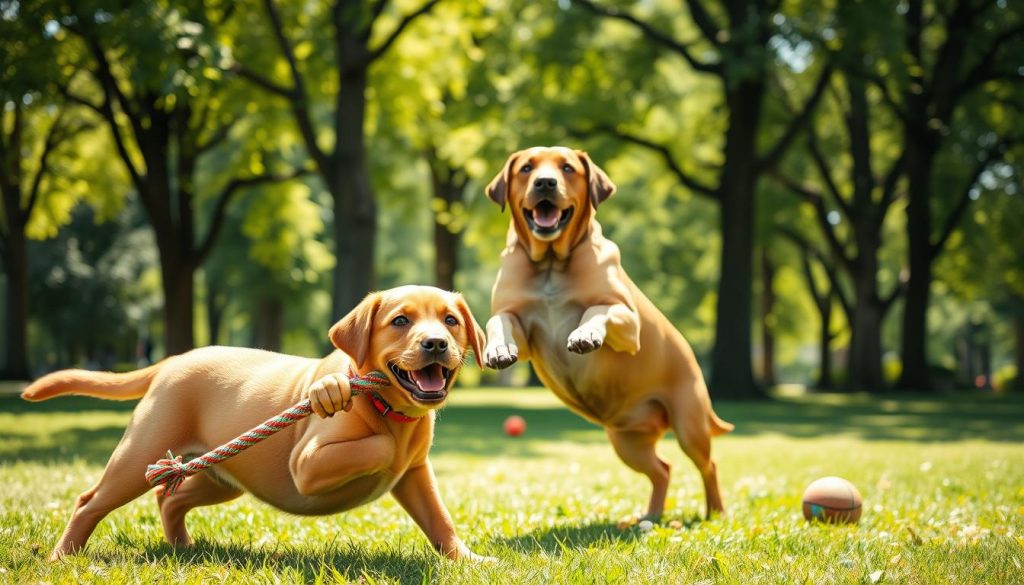
Choose toys that fit a Lab’s needs. Durable balls, flying discs, and rope toys are great. Make sure they’re safe and check them often to avoid harm.
Types of Toys That Promote Exercise
- Durable rubber balls and Chuckit-style launchers for longer runs.
- Soft flying discs that are gentle on teeth and easy to catch.
- Heavy-duty rope toys for tug games that build muscle and focus.
- Puzzle feeders and snuffle mats to blend mealtime with play for mental stimulation.
Setting Up Obstacle Courses
Backyard agility or indoor couch-to-cushion setups are great. For puppies and seniors, keep it low and easy. For young adults, add more challenges.
Use positive reinforcement and change the course often. This keeps things interesting and safe. It’s good for their health and well-being.
The Value of Fetch and Retrieval Games
Fetch is natural for Labs and burns energy fast. For high-energy dogs, mix up the distance and pace. For seniors, use rolling toys and shorter runs.
Play fetch with training cues to improve obedience. Rotate toys and add puzzle feeders to keep things interesting. These activities are good for their behavior and mood.
Regular play helps prevent health issues. It keeps them at a healthy weight and joint mobility. Play consistently and adjust to their age and health for the best results.
Combining Mental and Physical Activities
The best routines for Labradors mix brain games with physical activity. This combo supports pet wellness and prevents boredom. It also keeps animals healthy and happy.
Puzzle toys keep a dog’s mind sharp and encourage curiosity. Toys like food-dispensing balls and snuffle mats challenge sniffing and pawing. Short puzzle sessions between walks are great for low-impact activity and daily care.
Problem-solving exercises combine thinking with light movement. Activities like hide-and-seek and scent trails use a dog’s nose and memory. These are perfect for seniors as they keep the brain active and support gentle exercise.
Variety is key to avoid injuries and keep things interesting. Mix up walks, swimming, training, and indoor puzzles. Adjust plans based on age, joint health, and temperament to keep your pet happy and healthy.
- Short puzzle sessions after meals to slow eating and add stimulation.
- Scent trails around the yard for mental focus and light movement.
- Interactive training games that reward problem solving and calm behavior.
Consistent mixing of activities boosts pet holistic wellness. It also gives owners useful tips for pet care. Watch your dog’s response, adjust as needed, and keep sessions fun and short for a happy Lab.
Signs of Overexertion in Labrador Retrievers
Labrador retrievers love to play and go for walks. Owners need to notice when they might be too tired. Catching overexertion early helps keep pets healthy and happy.
Recognizing Fatigue and Stress
Watch for heavy panting, not wanting to play, limping, or moving slower. Destructive behavior can mean they’re too tired or bored. Senior Labs might hesitate on stairs, nap a lot, or move stiffly.
What to Monitor During Exercise
Keep an eye on how fast they breathe, how they walk, and their mood. Look out for signs like confusion, too much drooling, or falling over. These could mean they’re too hot or have heart problems.
If you see these signs, stop and give them water. Move them to a cool place and let them rest. If it doesn’t get better, call the vet.
Recovery Time and Rest Days
Make sure they have days off and mix up their activities. For older or hurt dogs, keep walks short and gentle. Use a journal to track how they’re doing.
- Give them cool-down walks and make sure they drink water.
- Take them to the vet if they seem less energetic.
- Try holistic ways like gentle touch and regular sleep times.
By watching closely, you can keep your Labrador happy and healthy for years.
Creating a Balanced Exercise Routine
A balanced routine keeps Labradors fit and happy. It supports their long-term wellness. Start with a plan that fits the dog’s age, health, and environment. Use small, clear steps to track progress and protect their joints and energy.
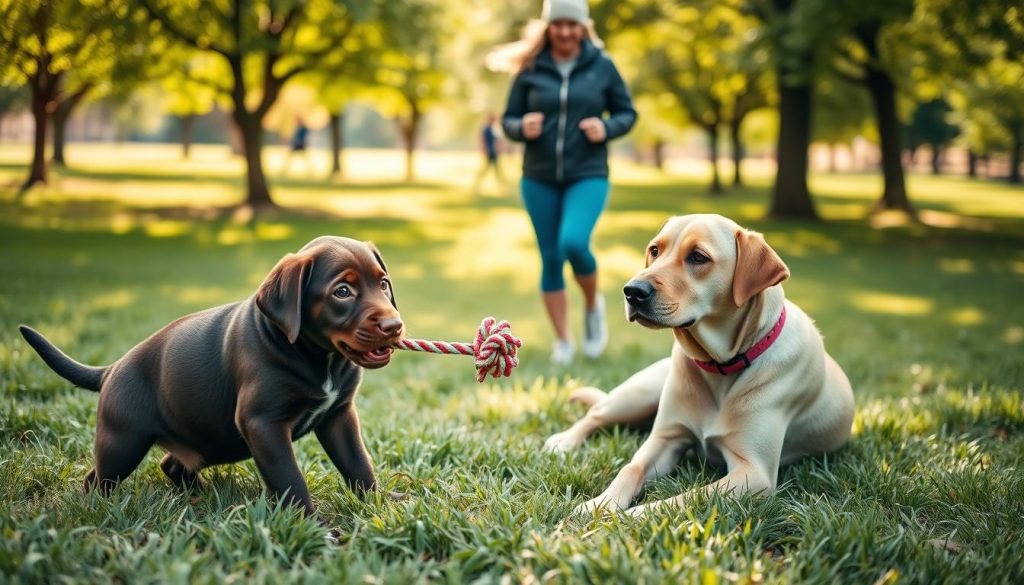
Factors to Consider (Age, Health, Environment)
Puppies need short play sessions to avoid stress. Young adults require 60–120 minutes of varied activity. Seniors do best with 30–60 minutes of gentle play and short walks.
Weight, genetics, and health conditions guide exercise choices. Soft surfaces reduce joint strain. Adjust routes and gear for warm or icy weather. If a Labrador is overweight, consult a vet before increasing exercise.
Weekly Scheduling for Optimal Wellness
Create a weekly exercise schedule with daily walks and targeted sessions. Young adults should have 1–2 high-intensity workouts. Add strength-building exercises and mental challenges for variety.
- Daily short walks for consistent activity.
- Two to three play or training sessions that boost heart rate.
- Puzzle time or scent games for mental enrichment, for seniors.
Integrate pet nutrition planning with activity levels to maintain healthy weight. Preventive veterinary care should be part of the routine calendar. It helps catch issues early and guide safe intensity increases.
Evaluating and Adjusting Plans as Needed
Use activity-tracking collars and cues like appetite, mood, gait, and energy to reassess plans. After illness, surgery, or a life-stage change, slow progressions and re-evaluate more often.
- Monitor daily behavior and recovery after exercise.
- Record activity trends and consult your veterinarian when changes appear.
- Consider supplements or physical therapy under veterinary guidance to support pet holistic wellness.
Small, regular adjustments keep the routine safe and effective. This approach supports preventive veterinary care while promoting long-term health and a stable weekly exercise schedule.
Conclusion: Lifelong Fitness for Labrador Retrievers
Labrador retrievers need the right amount of exercise at each stage of their life. Puppies should get short, gentle walks to protect their growing bones. Adult Labs need about an hour of different activities to stay fit. Seniors do best with 30 to 60 minutes of easy exercises.
Regular exercise helps prevent weight gain, keeps joints healthy, and reduces bad behaviors. It also boosts overall health and well-being.
Before changing your Lab’s workout routine, it’s important to get a vet’s okay. This ensures you’re not pushing them too hard. For older dogs, gentle activities, special diets, or supplements can really help.
These steps are key to keeping your dog healthy and happy for a long time. They focus on regular health checks and care that’s just right for your pet.
Make small changes to your Lab’s routine to help them live a long, happy life. Mix in training, socializing, mental games, and safe play. Watch how they react and talk to your vet if you’re unsure. This way, you can create a fitness plan that keeps your dog fit and by your side forever.