Maine Coon cats are among the largest and most loved domestic breeds in the U.S. Their size and muscle make them more likely to have orthopedic problems. Hip dysplasia is a big worry for owners who care about their pets’ health.
Hip dysplasia is when the hip joint doesn’t form right. This causes pain, arthritis, and can lead to more serious issues. It’s not as common in cats as in dogs, but Maine Coons are at higher risk. Their size and weight play a big part in this.
This guide will tell you what Maine Coon owners need to know about hip dysplasia. We’ll cover how it develops, signs to look out for, how to diagnose it, and how to prevent and treat it. We aim to give you expert advice and easy tips to help your cat’s joints stay healthy.
Key Takeaways
- Maine Coons’ large size increases their risk for hip dysplasia, affecting long-term mobility.
- Hip dysplasia involves joint malformation, leading to pain and osteoarthritis over time.
- Radiographic screening shows notable prevalence and heritability in the breed.
- Early detection, weight control, and targeted care improve feline joint health and quality of life.
- Responsible breeding and informed pet health tips can lower incidence across generations.
Understanding Hip Dysplasia in Maine Coons
Maine Coon owners need to know about hip problems. Hip dysplasia is when the femoral head and acetabulum don’t fit right. This causes pain, cartilage wear, and eventually osteoarthritis. Cats often hide their pain, so signs can be hard to spot.
What is hip dysplasia?
Hip dysplasia is a malformation of the hip joint. It can range from mild to severe. The acetabulum might be too shallow, or the ball might not fit right. This damage leads to osteoarthritis and less mobility over time.
How is this different in Maine Coons?
Maine Coons are more likely to have hip dysplasia than other cats. Studies show rates between 25% and 37%. The risk increases with age and size. Big size from selective breeding can also raise the risk.
Diagnosing hip dysplasia involves a physical exam and X-rays. These help spot subluxation and early signs of osteoarthritis. Because it’s less obvious than in dogs, owners and vets must look for small changes in how the cat moves.
- Look for subtle signs during routine checks to support animal wellness.
- Understand that genetics and body condition both influence long-term outcomes.
- Early veterinary assessment helps guide interventions that protect joint health.
Symptoms of Hip Dysplasia
Maine Coon owners should watch for early signs of joint trouble. Hip dysplasia can start subtly, so it’s important to notice and report to the vet early. This can help with better care.
Common Signs to Look For
- Stiffness when getting up after rest; a cat may take longer to start moving or seem hesitant.
- Reduced interest in jumping or climbing; favorite perches may be abandoned.
- Limping or uneven gait that may come and go.
- Muscle loss in the hind limbs, giving the rear end a thinner appearance.
- Difficulty squatting for the litter box, leading to accidents outside the box.
- Vocalizing when the hips are touched during play or grooming.
Behavioral Changes Indicating Pain
- Avoidance of activity; an active Maine Coon may become withdrawn or sleep more.
- Apparent trouble walking without obvious limping; cats can mask discomfort well.
- Pain on palpation of the hip area during a checkup; this is a key finding for veterinary services.
- Persistent licking or chewing at the hip region; this may signal irritation or discomfort.
- Subtle changes in temperament, such as irritability when handled, that help you recognize cat pain early.
Clinical patterns vary: one dataset shows unilateral cases near one third and bilateral cases near two thirds, with bilateral disease often more severe. Age and body mass can worsen symptoms. Use pet health tips to monitor weight and activity. Bring any pet wellness signs to a veterinarian for prompt evaluation.
Causes of Hip Dysplasia
Maine Coon hip dysplasia comes from both inherited and external factors. Breeders, vets, and owners need to know how genes, growth, weight, and diet affect the hip joint.
Genetic Factors in Maine Coons
Research shows a clear genetic link to hip problems in large breeds. Studies like PawPeds show that selective breeding can lower hip dysplasia rates over time.
Maine Coons with parents who had hip issues are more likely to have problems. The trait is complex, so no single gene decides the outcome. By screening hip scores, breeders can reduce dysplasia and body mass.
Environmental Influences
Growth rate and body condition are key in whether genetic risk turns into a problem. Fast weight gain and too much weight put extra stress on young hip structures, speeding up wear and instability.
Pet nutrition in kittenhood is critical for bone and joint growth. Bad diets with too many calories or unbalanced calcium and phosphorus can cause abnormal growth. Trauma and repetitive stress also increase risk.
Preventive and holistic pet care are important in managing risk. Regular checks, controlled growth, balanced nutrition, and smart breeding choices can lower the risk of severe hip dysplasia.
Diagnosing Hip Dysplasia
Figuring out if a Maine Coon has hip dysplasia starts with a detailed look at their history. This includes changes in activity and past health checks. A hands-on exam then looks for signs like unusual walking, muscle loss, and pain.
Veterinary examination and evaluations
A vet will watch the cat move and perform special tests to check for any issues. They feel the joints for any unusual sounds or heat. They also check muscle strength and how well the cat moves.
These tests are often part of a bigger health check that includes blood tests and a detailed look at the joints. Sometimes, the cat might need to be sedated to help them relax and get accurate results.
Imaging techniques used
X-rays are key for a clear diagnosis. They show how the joints fit together and if there’s any new bone growth. Getting good X-rays can be tricky, so sedation might be needed to get the cat in the right position.
There are special programs for looking at X-rays to help breeders and vets. These programs use numbers and angles to score the joints. This helps in planning breeding and treatment.
If X-rays aren’t enough, vets might suggest more tests or see a specialist. Combining what they see and feel with X-ray results gives the best picture. This helps in making a care plan and keeping up with the cat’s health.
Treatment Options for Hip Dysplasia
Treatment for hip dysplasia in Maine Coon cats aims to ease pain and keep them active. A mix of treatments helps keep them moving well. The right choice depends on how bad it is, the cat’s age, and how active they are.
Medical Management and Pain Relief
Vets start with gentle care that fits into regular check-ups. Keeping the cat at a healthy weight and feeding them a special diet helps. Supplements like glucosamine and chondroitin also help the cartilage.
Medicines from the vet help with pain. Gentle exercise makes the hip muscles stronger. Simple changes at home, like ramps and soft beds, make it easier for them to move.
Physical therapy and guided rehab help too. These help the cat move better and feel less pain. Following a plan helps them stay comfortable and mobile.
Surgical Interventions Explained
Surgery is considered when other treatments don’t work. One common surgery is femoral head ostectomy, or FHO. This surgery removes the femoral head to stop the bones from rubbing together. Many cats can move well again after this.
In some cases, a total hip replacement might be an option. This is for big, active cats with severe damage. The decision depends on the cat’s age, size, activity level, and the surgeon’s skills.
For cats with weak hind legs, special carts can help. Talking to your vet and a surgeon helps choose the best option for your cat’s health.
Importance of Early Detection
Spotting joint changes early lets owners and vets take action. With quick steps, managing weight, special diets, and gentle exercise can slow the disease. This helps Maine Coons feel better.
Why Early Intervention Matters
Finding problems early helps keep cats mobile for longer. Early vet care means tailored pain management and therapy. This helps keep function.
Following pet care tips can prevent obesity. This is key to avoiding joint strain. Regular checks on activity and body condition keep muscles strong.
Screening Recommendations for Maine Coons
Breeders and owners should get radiographic checks for at-risk kittens. Programs like PawPeds and the Orthopedic Foundation for Animals offer evaluations and breeding advice.
- Schedule vet exams for weight and gait checks.
- Discuss radiographs if you suspect a problem, as they confirm diagnosis.
- Use screening programs to guide breeding and reduce disease incidence.
Simple tips like watching for lameness, limiting high-impact play, and regular vet visits help. These actions are part of a bigger plan for healthier, more active cats.
Role of Pet Nutrition in Hip Health
Proper diet is key for hip health in Maine Coon cats. A balanced diet supports bone and joint growth. This is important for large-breed kittens that grow fast.
Watching calorie intake and body condition score is vital. It helps avoid too much joint stress. This supports long-term health of your pet.
Nutrients that Support Joint Function
- Controlled protein and calcium levels help ensure steady skeletal growth without stressing the hips.
- Omega-3 fatty acids from fish oil offer anti-inflammatory effects that reduce joint discomfort and support mobility.
- Antioxidants like vitamin E and selenium protect connective tissue from oxidative damage and aid recovery.
Supplements Beneficial for Maine Coons
- Glucosamine and chondroitin are widely recommended by veterinarians to maintain cartilage health and joint resilience.
- Joint supplements for cats that include hyaluronic acid can improve joint lubrication and comfort.
- Consider veterinarian-approved formulations to fit a Maine Coon’s size and life stage; quality matters for safety and effectiveness.
Adding these choices to a holistic pet care plan is smart. Natural pet remedies like controlled diets and supplements work best with vet check-ups. This way, you can manage hip risks without harming your cat’s joints.
Weight Management Strategies
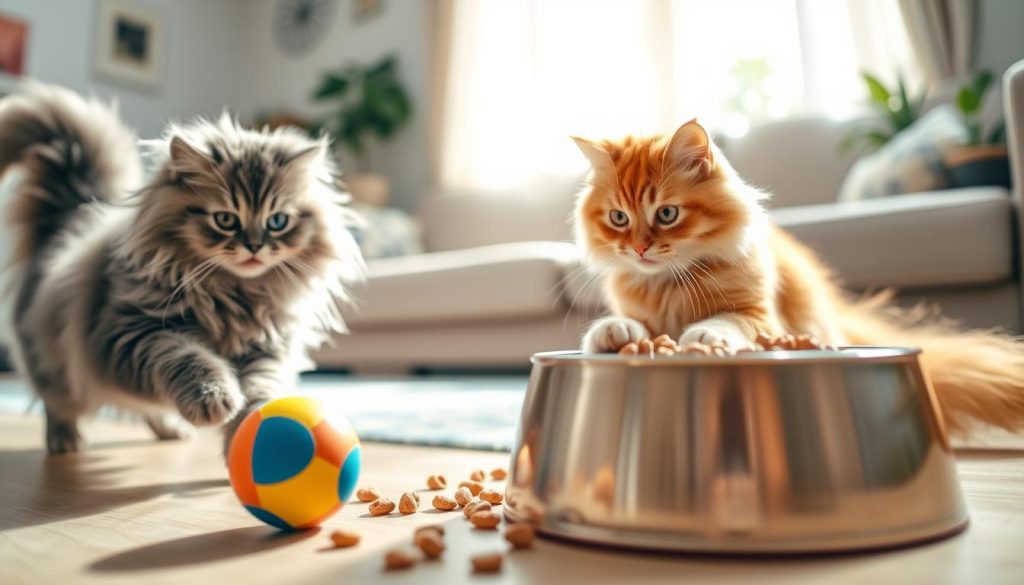
Keeping your cat at a healthy weight is key. It helps ease pressure on their hips and slows down hip dysplasia. For big cats like Maine Coons, which can get really heavy, watching their weight is important. It helps them stay mobile and healthy for a long time.
Importance of Maintaining a Healthy Weight
Being too heavy puts extra stress on your cat’s hips. This can make them feel more pain. Losing just a little bit of weight can make a big difference in how they feel and move.
Getting your cat’s body condition score checked by a vet is a good first step. Regular vet visits are important. They help you catch any changes early.
Effective Weight Loss Programs
- Start with a vet visit to set a safe weight goal and check for health issues.
- Use measured portions and consider special diets if your vet suggests it.
- Lower calories slowly to avoid shocking your cat’s metabolism.
- Try interactive feeders and puzzle toys to make mealtime fun and active.
- Play with low-impact toys and supervise stair walks to keep muscles strong without hurting joints.
- Keep track of progress with body condition scores and regular weight checks.
Good pet care includes diet changes and fun activities. Simple things like raised food bowls and short play sessions can help. They encourage your cat to move without getting too tired.
Teaching owners how to help is key. Give them clear tips, portion guides, and check in often. This helps keep them on track. Focusing on weight management can help your Maine Coon feel better and stay active longer.
Exercise Guidelines for Affected Cats
Gentle movement keeps muscles strong and joints mobile. Tailor activities to your Maine Coon’s age and comfort. Make simple changes to keep your cat active and safe.
Safe activities include short, supervised play. Try wand toys, slow walks, and low-rise climbing. These activities help your cat stay active and healthy.
Use ramps and foam steps to help your cat reach favorite spots. Place treats or toys on inclines to encourage movement. This way, your cat stays active without hurting their joints.
- Short, frequent play sessions—3 to 5 minutes several times daily
- Low-impact climbing on stable, low platforms
- Guided walking using a harness for controlled activity
Avoid high-impact exercises like forceful jumps or sudden twists. Don’t let your cat jump from high places to hard floors. This can hurt their hips more.
- Remove or block access to tall, unstable jump points
- Replace slick surfaces with rugs to reduce slipping
- Swap air-chasing toys for toys that encourage ground-level movement
Watch for pain signs during play. Stop if your cat limps, vocalizes, or hides. Talk to a vet or a certified physical therapist for a custom plan. This helps keep your cat mobile and happy for years to come.
The Role of Physical Therapy
Physical therapy helps Maine Coon cats with hip issues. It makes them move better, builds muscle, and reduces pain. It’s part of a bigger plan for their health.
Working with experts, owners see big improvements. Their cats live better and move more easily.
Benefits of Rehabilitation for Maine Coons
Rehab helps strengthen muscles around the hip joint. This makes the joint last longer and move better. Cats feel less pain and move more naturally.
Tracking progress is key. It helps set goals for activity and health. For many cats, it’s a big help alongside medical treatments.
Techniques Used in Physical Therapy
Therapists use hands-on and equipment-based methods. They do exercises to keep joints flexible and massage to ease tension. This helps with circulation.
- Hydrotherapy and underwater treadmills are low-impact ways to strengthen.
- Laser and heat treatments help with inflammation and healing.
- Exercises that help cats bear weight and strengthen joints are done carefully.
Getting a certified feline rehab specialist is important. They make sure the therapy is safe and works. When cats are part of a health program, they get the best care.
Understanding Prognosis and Life Expectancy
Maine Coon cats with hip dysplasia can live well with the right care. This includes keeping them mobile, comfortable, and closely monitored. Early vet visits and a custom care plan are key to their long-term health.
Long-Term Outlook for Maine Coons
Many Maine Coons stay active with simple steps like managing their weight and using pain meds. Surgery like FHO or total hip replacement can also help. The cat’s age, how severe the dysplasia is, and their response to treatment all play a role in their outlook.
Adjustments for Quality of Life
Small changes at home can greatly improve a cat’s life. Things like easy-to-use litter boxes and ramps help. Regular vet visits also help adjust care plans to keep your cat comfortable.
By following simple health tips, many cats can enjoy life. They can sit, run short distances, and even play gently. Regular vet visits are important to keep track of their health and make any needed changes.
- Maintain healthy weight through balanced diet and portion control.
- Use prescribed pain management and joint supplements as directed by a veterinarian.
- Incorporate low-impact exercises and supervised play to preserve muscle tone.
- Schedule regular wellness exams to reassess function and adjust treatments.
By focusing on these steps, owners can help Maine Coons live happy, comfortable lives despite their hip issues.
Preventive Measures for Hip Dysplasia
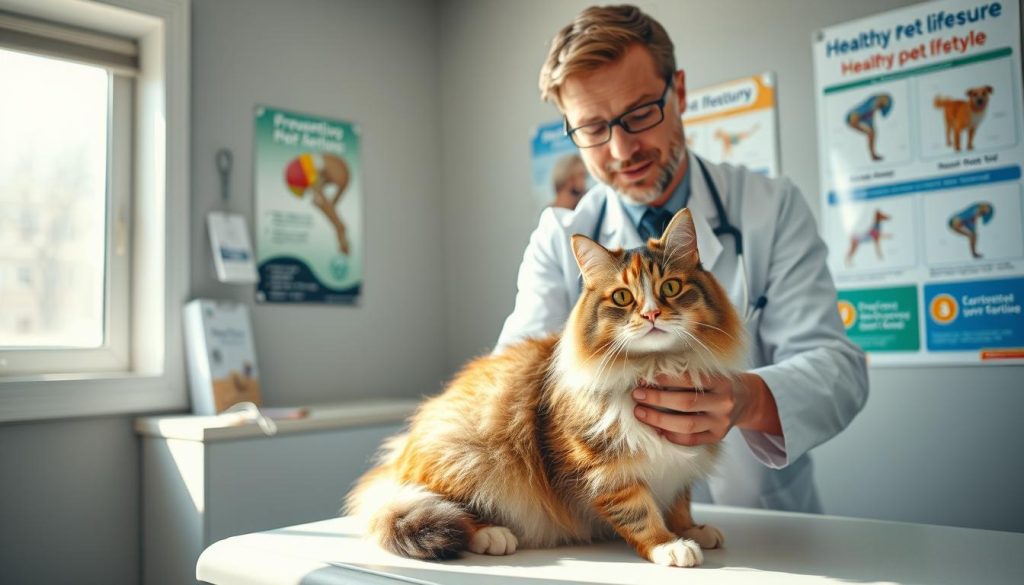
Preventing hip dysplasia in Maine Coon cats starts with choosing the right breeder. It also involves regular health checks and managing growth and weight. This approach helps keep your cat healthy for a long time.
Responsible breeding practices
Look for breeders who screen their cats for hip dysplasia. Programs like PawPeds or OFA-style evaluations help make better breeding choices. Make sure they provide detailed hip scores and pedigree information before buying a kitten.
Breeders who screen their cats carefully avoid breeding those with hip dysplasia. They control litter size and feed them right to help with growth. This helps lower the risk of hip problems in kittens.
Regular veterinary check-ups
Take your Maine Coon to the vet regularly for early detection and advice. These visits include weight checks, mobility tests, and tips on diet and supplements. Vets can also give vaccinations and monitor your cat’s health closely.
Keeping your Maine Coon at a healthy weight and encouraging exercise helps prevent hip problems. Your vet can create a care plan that includes the right food, exercise, and check-ups.
- Confirm breeders use documented breed screening before purchase.
- Monitor kitten growth to avoid rapid weight gain.
- Keep biannual or annual veterinary services for ongoing checks.
- Use targeted nutrition and supplements to support joints.
- Encourage low-impact exercise to build muscle and mobility.
Role of Pet Wellness in Overall Health
Pet wellness combines care, nutrition, and activity for Maine Coon cats’ long-term health. Owners who follow vet wellness programs spot joint issues early and manage chronic problems better. This view sees hip health as part of a bigger care plan, not just a single issue.
Comprehensive Wellness Plans
Wellness plans should fit a cat’s age, weight, and hip health. A good plan includes regular vet visits, X-rays for at-risk cats, and special food for joints. Vets might also suggest anti-inflammatory meds and supplements to keep cats moving and comfortable.
- Routine vet visits for early detection and monitoring.
- Special food that’s balanced and supports joints.
- Supplements like omega-3s and joint-specific formulas.
Keeping Your Cat Active and Engaged
Activity keeps muscles strong and joints flexible, supporting overall health. Activities that are low-impact keep Maine Coons active without hurting them. Simple changes like controlled play, puzzle feeders, and easy-to-reach spots make exercise a daily part of life.
- Short, frequent play sessions with wand toys or laser pointers.
- Interactive feeders for mental and physical stimulation.
- Soft ramps and low platforms to protect hips while keeping mobility.
Follow pet health tips for a consistent routine. Teach family to spot early signs of pain, follow vet plans, and adjust activities as needed. A balanced care plan keeps Maine Coons active, comfortable, and happy.
Lifestyle Adjustments for Affected Cats
Small changes at home can help a cat with hip issues move more comfortably. These steps support pet wellness and make daily care easier for you and your Maine Coon.
- Install short ramps and pet steps to couches and beds to limit high jumps and protect joints.
- Choose low-sided litter boxes to ease entry and exit; place them on non-slip mats for safety.
- Use soft, supportive bedding near warm spots; memory-foam pads cushion hips and reduce pressure.
- Replace slick flooring with rugs or shelf-safe traction tiles to prevent slips and encourage steady gait.
- Create multiple feeding stations at different heights so your cat can eat without climbing or twisting.
Stress-Reducing Techniques
- Keep a predictable routine for feeding, play, and medication to lower anxiety and improve cooperation with care.
- Offer quiet, dim resting areas away from household traffic; a covered bed can feel secure.
- Use pheromone diffusers such as Feliway to calm cats during vet visits or rehabilitation sessions.
- Choose gentle, low-impact play like wand toys or slow treat puzzles to maintain mobility without strain.
- Apply natural pet remedies such as chamomile-based supplements under veterinary guidance to ease nervous tension.
Combine these adjustments with regular veterinary follow-up and the pet health tips provided by your clinician. Thoughtful changes boost comfort, support rehabilitation, and improve the cat’s mood. This creates a calmer environment for recovery and long-term care.
Resources for Owners
Owners looking for help with feline hip dysplasia can find support from many places. Start with a trusted vet or the Cornell University Feline Health Center for advice. Here’s a list of resources to help with pet wellness and care.
Support Groups and Communities
Local cat clubs and online groups for Maine Coons are great places to meet others. They share tips and advice on care and mobility. Forums and groups also talk about adapting your home for your cat.
Rehab therapists and vets can help find mobility devices and local groups. These networks offer practical help and emotional support. They help with preventive care for your pet.
Educational Materials and References
For info on feline hip dysplasia, check out peer-reviewed studies and guides from vet centers. Sites like PawPeds and the OFA explain testing and genetics. They help you understand your cat’s condition better.
It’s smart to talk to vets for a plan, then read academic articles. Journals like Animals and PMC-hosted papers offer more insight. This mix of advice and research helps keep your pet healthy.
- Veterinary contacts: small animal surgery faculty and feline rehabilitation specialists for management and surgical options.
- Screening programs: OFA and PawPeds for standardized hip evaluations.
- Community support: breed clubs, local vets, and online forums for shared experiences and referrals.
Conclusion: Ensuring a Healthy Life for Maine Coons
Hip dysplasia is a big risk for Maine Coons because of their size and genetics. Owners need to watch for early signs and get vet help fast. A balanced plan that includes managing weight, good nutrition, and gentle exercise is key.
This approach helps keep pets healthy and active. It also stops the condition from getting worse. It’s all about keeping your pet moving well.
Preventive care is all about responsible breeding and regular vet checks. Vets might suggest supplements, pain meds, or surgery like FHO or THR. These can help a lot.
Adding physical therapy and making home changes can make a big difference. This way, Maine Coons with hip dysplasia can live well and stay active.
Regular vet visits and following holistic health tips are important. This means tailored diets, controlled exercise, and changes at home to ease joint pain. Being a responsible owner means staying informed and working with your vet.
With the right care, many Maine Coons with hip dysplasia can enjoy a happy, active life.