French Bulldogs can show stress through body language, changes in appetite, or restless nights. This introduction frames stress and anxiety as both a behavior issue and a whole-body topic, because discomfort, routine, and environment affect mood.
Clear information helps a pet parent know what to watch for before jumping to solutions. Basic Dog care—food, exercise, sleep, and safe routines—often reduces uneasy behaviors. Overfeeding hurts long-term health; vet-guided portions prevent obesity and related illness.
Frenchies often bond tightly and may struggle with separation or busy homes. The guide will explain causes, signs, day-to-day tips, training steps, and when a vet should be involved so you can make sure nothing important is missed.
Reassurance: many stress signals are common and manageable, but persistent symptoms deserve attention and a clear plan.
Key Takeaways
- Stress links to routine, environment, and physical discomfort.
- Learn signs that suggest anxiety versus short-term stress.
- Foundations—diet, exercise, sleep—support lasting health.
- French Bulldogs may need gradual adjustments in busy homes.
- Seek veterinary help for ongoing or severe symptoms.
Why French Bulldogs Get Stressed or Anxious
Many French Bulldogs show stress not from one event, but from a series of small disruptions across the day. A calm routine helps, because this breed is people-focused and routine-loving. When schedules shift, the animal can become reactive.
Breed temperament and household triggers
Frenchies thrive on predictable rhythms. In a busy family, doorbells, loud kids, deliveries, and high TV volume can push dogs from alert to anxious.
Separation, overstimulation, and stacking stressors
A Frenchie may follow a person room-to-room or panic when left alone. Teach gradual time apart so separation doesn’t escalate into barking or chewing.
Routine changes and health signals
Major shifts—moving house, new work hours, or another pet—often cause clinginess or irritability. Also, pain, dental issues, or GI upset may mimic anxiety and should be checked by a vet.
- Keep routines steady to help self-soothing.
- Use exercise and mental play to prevent boredom.
- Observe patterns; stress is communication, not stubbornness.
Signs Your Frenchie May Be Stressed
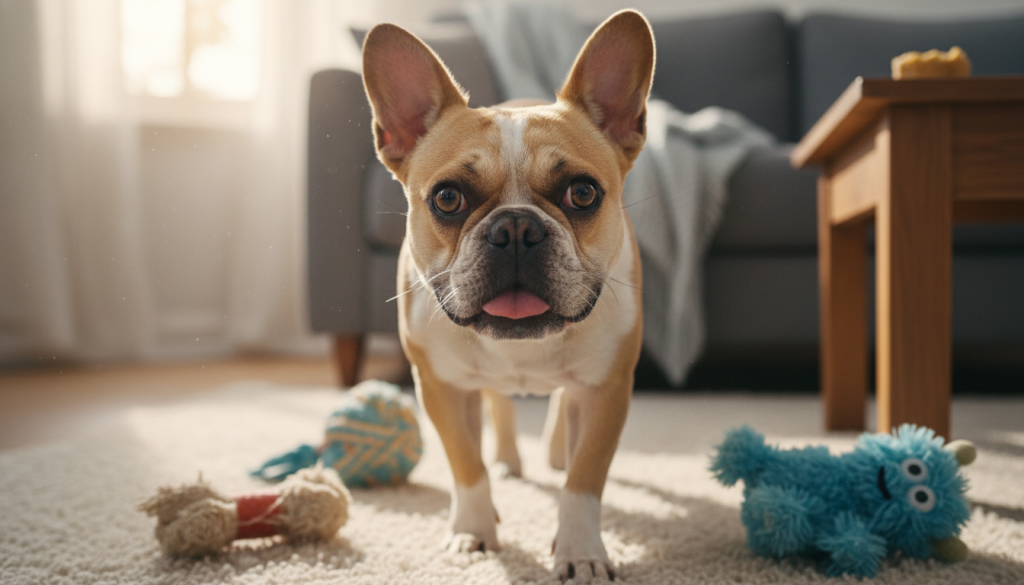
Subtle shifts in activity or mood can be the first sign that a Frenchie is feeling uneasy. Watch how the pet behaves at home, on walks, and around family. Small changes often point to a physical issue or anxiety.
Behavior at home, on walks, and with family
Common home signs include pacing, panting when not warm, clinginess, hiding under furniture, sudden barking at routine noises, or excessive chewing and licking as self-soothing.
On walks, a stressed animal may freeze, pull hard, refuse to move, scan constantly, react to other dogs, or seem shut down. Compare these actions to the pet’s normal baseline to spot change.
Around family, avoidance of touch, startling easily, growling when approached while resting, or snapping when overwhelmed means boundaries and decompression time are needed.
Physical clues and simple checks
Shaking, drooling, frequent yawning or lip licking, diarrhea, coat shedding changes, and repeated scratching can overlap with anxiety or indicate parasites or irritation.
At home, help keep comfort by checking the ears for redness or odor, observing gait for limps, and noting if touching certain areas causes flinching.
- When to call the vet: sudden behavior change, lasting appetite shifts, new pain signs, or symptoms beyond a few days warrant a veterinarian visit.
- Track information: time of day, triggers, duration, and what eased the episode to make vet conversations faster and more effective.
Dog care Strategies That Reduce Stress and Build Confidence
Simple daily routines and targeted play give a Frenchie predictable outlets and build steady confidence. These strategies focus on safety, movement, mental challenge, and calm handling so a pet learns to self-soothe.
Create a safe space for self-soothing
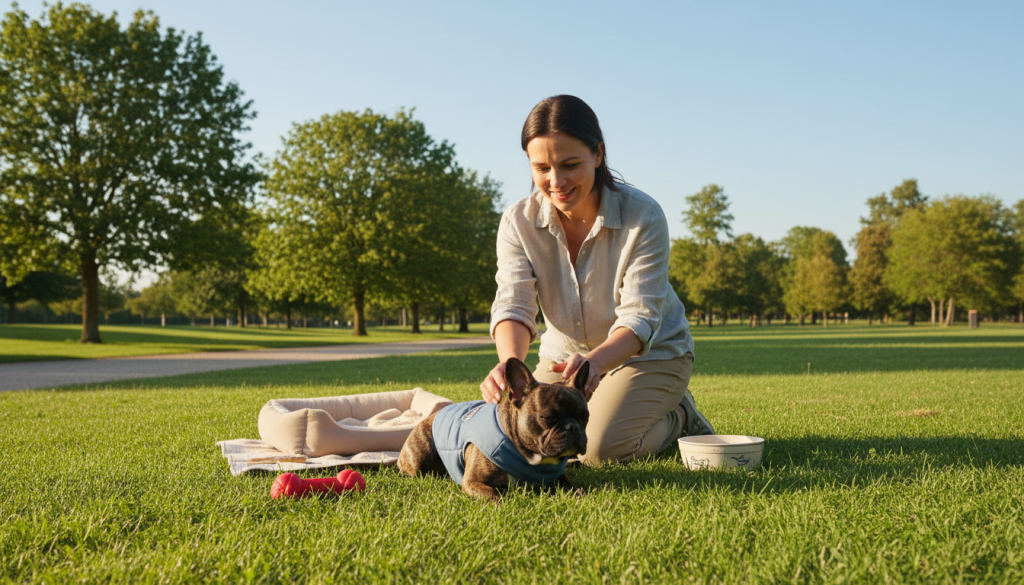
Make a calm zone: choose a quiet corner with a bed or blanket, an open crate left as a choice, a water bowl, and rotating toys. Teach the pet that this area is a refuge during loud events or guests.
Exercise that supports health and happiness without overdoing it
Short, frequent walks with sniff breaks keep boredom low and support health happiness. Stop early if breathing gets heavy and avoid long, hot outings.
Mental stimulation with games, puzzle toys, and variety
Rotate puzzle feeders, hide-and-seek with toys, and scent games to give wins without pressure. Purposeful play—short tug with rules or treat scatters—builds confidence.
Training as a calm routine using consistent “house rules”
Use 3–5 minute sessions, predictable cues, and immediate rewards. Calm training teaches boundaries and helps the whole family stay consistent over time.
Bonding habits and grooming that lower anxiety
Spend quiet time near the family and pet gently when the animal is relaxed. Desensitize handling by touching ears, paws, and mouth during positive moments, then reward. This step-by-step approach keeps grooming and coat checks low-stress.
- Keep sessions short and predictable.
- Give dog choices: open crate, toy access, and rest breaks.
- Make sure the environment matches your goal: lower volume and planned quiet time.
Nutrition, Daily Routine, and Home Setup for a Calmer Frenchie
Predictable meals and a safe, comfy space reduce tension and help the nervous system relax.
Feeding schedule basics by age
Follow age-based meals: 8–12 weeks: 4 meals per day; 3–6 months: 3 meals; 6–12 months: 2 meals; after 12 months most pets have 1 meal or two small meals if needed.
Routine lowers anxiety because dogs learn when to expect food, walks, and rest. Consistency helps the animal settle into a calm rhythm each day.
Portion control, healthy foods, and harmful items
Avoid overfeeding; extra weight raises discomfort and restless behavior. Choose balanced food appropriate for size and diet needs.
- Keep harmful foods away: chocolate; grapes/raisins; gum or candy with xylitol.
- Discourage plate-licking and table scraps to prevent digestive upset and begging stress.
Hydration and comfort at home
Fresh water must be available all day; refresh bowls often. Watch for heavy panting or dry mouth as signs of dehydration and stress.
Create a draft-free resting place with washable bedding and a cool spot in warm months to support emotional regulation.
Puppy-proofing and toxin safety
Secure trash, lock cleaners and pesticides with child-proof latches, and store rodent poisons out of reach. If a harmful ingestion occurs, contact a veterinarian immediately.
Health, Safety, and Vet Support When Anxiety Isn’t Improving
When routine and training stop helping, a veterinarian visit can pinpoint physical or environmental triggers. Persistent or worsening anxiety may hide pain, infection, or other treatable issues. Annual appointments let a vet screen for problems before behavior escalates.
Prepare before the visit: write triggers, episode times, recovery length, sleep and appetite changes, bathroom notes, and bring short video clips. This information helps the vet act faster and with more accuracy.
- Preventive care: keep up with vaccinations and parasite protection for worms, ticks, and fleas. Do seasonal tick checks after outdoor time.
- Teeth and comfort: inflamed gums or broken teeth change mood. Brush dog teeth with a dog-specific toothpaste and ask the veterinarian about professional dental care.
- Seasonal safety: summer—shade, water, avoid hot pavement, never leave a pet in a car. Winter—shorten cold exposure, wipe paws, and add a sweater if shivering.
When to escalate: if anxiety stays intense, appears with new physical signs, or suddenly gets worse, pursue veterinary help to rule out pain or illness.
Be prepared: keep a pet first aid kit, an emergency contact plan, and consider pet insurance so urgent vet decisions aren’t delayed by cost. These steps protect both health and emotional recovery.
Conclusion
Slow, steady steps—rather than big fixes—help most French Bulldogs move from anxious to calm.
The core takeaway: anxiety often improves when basic dog care—comfort, predictability, and mental engagement—is paired with gentle training. Start by identifying triggers, then adjust the home, add short exercise sessions, and use brief daily training wins.
Think like a pet parent and a problem-solver. Make small, consistent changes and track what helps. Diet, hydration, and rest shape behavior, so prioritize steady meals and good sleep.
If progress stalls or new warning signs appear, seek professional guidance. Getting help is responsible and kind, and it keeps recovery on a safe, steady path.