This guide helps you keep your dog safe around water. It focuses on preventing drowning, lowering ear-infection risk, and building a simple post-swim routine that works for busy people at home.
Labs are built to swim with a double-layer, water-repellent coat and webbed feet, so they often love the lake or pool. That natural ability can mask hazards: fatigue, panic, currents, slippery exits, and overexcitement can turn a fun swim into an emergency.
Floppy ears can trap moisture and wax, which raises infection risk after swimming. Excess weight also reduces stamina and raises the chance a dog will struggle in deep water.
Use this short guide to plan: choose safe spots, assess your dog’s fitness and training, and follow clear aftercare for ears, coat, paws, and hydration. Advice targets everyday pet owners in the United States and emphasizes prevention first, plus when to call a vet.
Key Takeaways
- Prevent drowning by planning exits, supervising, and matching activity to stamina.
- Dry ears and check for trapped moisture after every swim to reduce infections.
- Pick calm, shallow areas and avoid strong currents or steep banks.
- Maintain healthy weight and training to boost recall and endurance.
- Have a simple post-swim routine for coat care, paw checks, and hydration.
Why Labs Love Water but Still Need Swim Safety
Many members of this dog breed move through water with ease thanks to webbed feet and a dense, water-repellent double coat. These traits let a labrador retriever paddle longer and retrieve farther than many other dogs.
That same enthusiasm raises risks. An all-action retriever may ignore fatigue and keep fetching until exhaustion. Owners should set clear time and distance limits so the dog recognizes breaks.
Why the coat and ears matter
A thick double coat sheds surface moisture but can trap dampness near the skin. That increases hot spots and secondary skin infections after repeated swims.
Floppy ears create warm, airless canals where water and wax collect. Trapped moisture encourages otitis externa, a painful ear infection common in this breed.
Common hazards around water
- Slippery banks and rough entries that cause slips or strains.
- Sharp debris, broken glass, and cut pads from littered shorelines.
- Overexertion from endless fetch or deep-water panics when exits are steep.
Bottom line: Swim safety preserves fun. A few simple rules—limits, pre-checks, and a drying routine—keep a high-energy retriever healthy for years of adventures.
Pre-Swim Health and Readiness Check for Your Labrador
A quick two-minute review can decide if a swim is safe today. Check energy, breathing, gait, willingness to move, and whether the dog seems “off.” If anything feels wrong, postpone the session.
Age and exercise considerations
Puppies and older dogs need shorter swims and more rest. Labradors generally benefit from 1.5–2 hours of daily exercise, but water sessions should be gentle for growing joints or aging bodies.
Joint risks: hip and elbow dysplasia
Hip dysplasia appears on x-rays in about 3–17% of the breed and elbow problems are more common than in crossbreeds. These conditions make paddling painful and can trigger panic if fatigue arrives fast.
Vision and weight impacts
Progressive retinal atrophy often shows between 3–9 years and may cause poor low-light navigation. Keep swims in daylight with controlled entry if an eye disease is present.
About 60% of these dogs are overweight. Extra weight reduces stamina, strains joints, and raises drowning risk. Feed smaller meals before long swims and choose dog food that matches life stage and diet goals.
- Two-minute pre-swim checklist: energy, breathing, gait, willingness, “off” behavior.
- Shorten or skip swims if you spot stiffness, lameness, or reluctance.
Choosing the Safest Swimming Spot
Scout the shoreline first: an easy entry and solid exit cut the chance of accidents when your dog swims. Pick a location that keeps you close and ready to help, rather than a scenic spot that hides hazards or stretches supervision thin.
Calm water vs. surf and strong currents
Calm lakes, slow rivers, and controlled pools are safer for most dogs. They reduce panic and let a tired dog reach shore without fighting waves or strong flows.
Surf, fast-moving water, and strong currents increase drowning risk quickly. Avoid those types when you cannot watch or assist closely.
Hidden hazards and slippery exits
Check entry and exit points. Confirm a non-slip route out and avoid steep drop-offs that can trap a exhausted pet.
- Look for sharp objects: broken glass, fishing hooks, and submerged debris.
- Steer clear of algae-covered ramps, slippery rocks, and unstable docks; repeated launching raises cut-pad and laceration risks.
Temperature, weather, and emergency care
Cold water saps stamina; storms can create sudden chop; extreme heat boosts overheating risk. If a wound occurs, clean under running water, apply pressure for bleeding, and seek vet care for severe pain or inability to bear weight.
Essential Swim Gear and Training for Water-Smart Labradors
Good gear and clear training turn enthusiastic swimmers into safer, more confident water dogs.
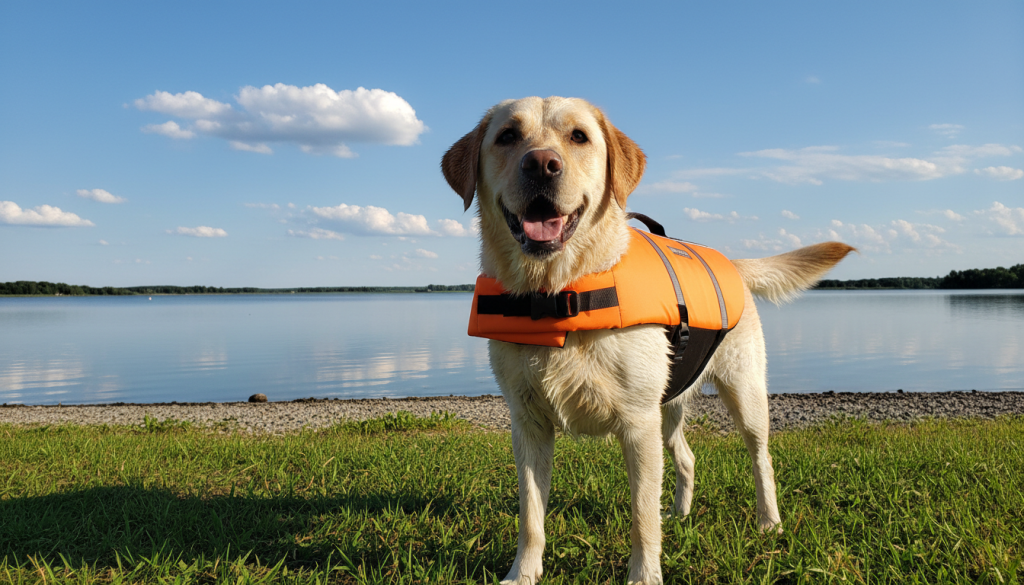
Life jacket fit and when to use one
A properly fitted dog life jacket gives an extra safety margin in open water, cold conditions, or boating. Even strong swimmers benefit when currents, long retrieves, or fatigue are possible.
Good fit means snug straps that don’t slip, free shoulder movement for a natural paddle, a sturdy top handle for assisted exits, and bright color or reflective panels for visibility.
Recall training and exit cues
Start training on land, then add a long line near shore before short swims. This stepwise plan helps a retriever return when waves, birds, or other dogs distract them.
Teach an exit cue—examples include “this way” or “out”—and reward the return. A reliable exit cue is as important as swimming skill when a dog tires.
Safe fetch habits
Limit repetitions and avoid launches that force repeated long-distance swims. Skip throwing sticks; splinters and mouth injuries are common.
Use controlled toys, monitor exercise, and stop sessions early if the dog slows. Labs love having a job—use that drive for safer habits and consistent training.
Supervision That Prevents Drowning and Panic
Supervision is the single most important safety tool when dogs play near or in water. Owners should commit to active watching: eyes-on, within quick reach, and ready to move. Being merely nearby — scrolling or chatting — delays response when seconds matter.
Active watching vs. “nearby”
Active supervision means focused attention, short distance, and a clear path to help. Hold a leash or use a life jacket when exits are tricky. This approach lets you intervene before a swim becomes an emergency.
Early signs of fatigue and stress
Look for slower paddling, a lower head, wide eyes, drifting, or delayed cue responses. Panic shows as frantic splashing, repeated attempts to climb on people, or failing to find an exit.
These signs can appear fast in a Labrador retriever that overdoes its activity; watch closely on busy days.
Overexcitement, overheating, and EIC-like episodes
Intense fetch plus warm weather can raise body temperature and trigger an exercise-induced collapse (EIC)-like condition. That shows as hindlimb weakness, poor coordination, or sudden collapse.
- Use structured work-rest intervals — short swims, regular breaks, and water to drink.
- Limit the total amount of long retrieves and stop early if anything looks off.
Priority: end the session early to protect your dog’s health and avoid risky rescues.
Ear Infection Prevention for Swimming Labradors
Floppy ears that once looked cute can become a wet, warm trap after a swim, and that invites infection. Owners should treat ear care as part of every post-swim routine to protect overall health.
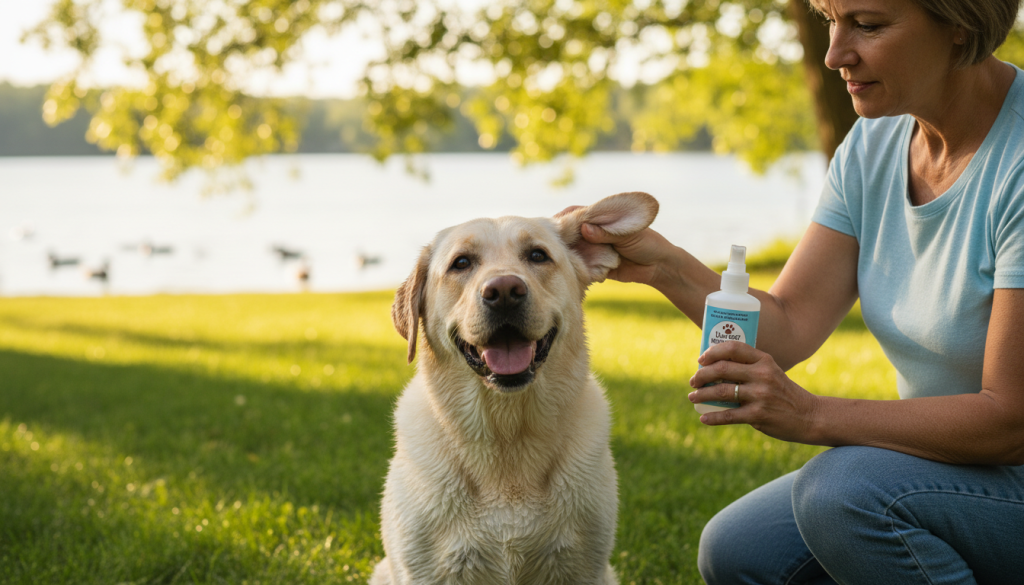
Why moisture and wax lead to recurring trouble
The labrador retriever has low-airflow ear canals under long flaps. Water and wax get trapped, making a warm, damp environment where bacteria and yeast grow.
Allergies and skin issues make inflammation worse between swims and raise the chance of repeat infections.
Early-warning checklist to memorize
- Redness or swelling inside the ear.
- Brown or yellow debris, strong odor, increased scratching.
- Head shaking, tilt, or rubbing the ear on surfaces.
Practical cleaning and after-swim care
Use a vet-approved routine: maintenance cleaning every two to three months or as your vet advises, plus an after-swim check each time.
After water play, gently dry the ear flap and outer canal. If the vet approves, use a drying-agent cleaner like Epi-Otic Advanced to help evaporate trapped moisture.
Avoid cotton swabs deep in the canal; instead, wipe visible debris with a soft cloth. Dogs with recurring problems need a tailored plan and closer follow-up.
Post-Swim Care Routine to Protect Coat and Skin
A short, reliable cleanup after a dip prevents many common skin problems. A quick routine helps hair and skin recover and reduces the chance of hot spots or irritation.
Dry the double coat thoroughly
Dogs with a dense undercoat can trap water close to the skin. Part the coat and towel dry until the underlayer feels warm and dry to the touch.
Why it matters: trapped moisture creates a warm, damp spot that invites infection and hot spots in atopic or sensitive dogs.
Rinse off lake, ocean, or pool residue
Salt, algae, and chlorine can irritate hair and skin. Rinse with fresh water after non-chlorinated and natural swims, and skip full baths unless truly needed.
Tip: a quick rinse reduces residue without stripping natural oils that protect the coat.
Check paws and pads
After rivers or beaches, inspect paws for cuts, glass, or lodged debris. Small wounds can worsen if sand or bacteria get trapped.
- Repeatable 10-minute at‑home routine: rinse if needed, towel dry, part the coat to check damp spots, check paws, then a calm break.
- First aid: flush minor cuts with running water, apply pressure to stop bleeding, and call your vet for deep cuts, severe pain, or limping.
Bottom line: a simple, consistent post-swim plan protects coat, hair, and overall health and prevents small issues from becoming big problems.
Hydration, Diet, and Treats Around Swim Days
When water play is on the agenda, hydration and meal timing deserve extra attention. Swim sessions raise fluid needs, but they also increase the chance a dog will gulp lake or pool water and get an upset stomach.
Prevention tips: offer frequent small drinks of fresh water and schedule short “water breaks” during play. Interrupt frantic fetch that encourages gulping; calmer retrieves lower the risk of swallowing excess water.
Avoiding dietary indiscretion
Many food-motivated dogs will raid bags, snatch discarded food, or eat odd items on shore. These behaviors can cause vomiting, diarrhea, poisoning, or intestinal blockages.
Keep food and trash sealed, supervise breaks, and remove tempting things from the beach or dock.
Portion control and feeding tools
Measure meals and set a clear daily ration. Use part of that amount as training treats during swim training so total food intake stays steady.
For fast eaters, try a slow-feeder bowl and calmer feeding routines, especially when swimming close to meal times.
Nutrition ties to safety: maintaining a healthy weight supports stamina, joint condition, and safer recovery after heavy exercise. Small, practical changes to diet and treats make a big difference in your pet’s long-term health.
Special Swim Precautions for Puppies, Seniors, and Dogs With Health Conditions
Not every dog benefits from the same swim routine; age and medical status change what’s safe and smart. Tailor sessions to the individual and check with a vet before big changes.
Puppies: controlled exposure and limits
Treat a puppy as a learner. Keep sessions short and positive with easy exits and calm water.
Follow Dr. Deborah Brown’s guidance: limit walks to two or three 15-minute lead walks until six months, then increase slowly until about 11 months. Avoid ball launchers and high-impact chasing early.
Seniors and low-impact swims
Older dogs often have arthritis or stiffness. Use warm-up walks, shorter swims, and gentle entries to protect joints.
Chronic conditions, dysplasia, and allergies
Dogs with hip dysplasia or elbow issues may benefit from low-impact water work, but only if they show no pain and are supervised.
Allergy-prone dogs need consistent ear and skin care to reduce flare-ups after swimming.
- Check comfort, gait, and willingness before each session.
- Consult your vet for a personalized plan when a dog has a known medical condition.
When to Call a Vet After Swimming
Quickly recognizing worrying signs after a swim gives you a head start in protecting your dog’s health. Below are clear thresholds to help you decide when to contact a vet and what to report.
Ear and skin warning signs that shouldn’t wait
Call your vet the same day for strong odor, persistent head shaking, visible redness, or discharge from the ear. Also seek advice for rapidly worsening skin irritation or new open sores after a dip.
Urgent red flags: collapse, breathing trouble, severe pain, or suspected injury
Get emergency care immediately for collapse, labored breathing, repeated vomiting, inability to stand, or severe pain. If a limb is misshapen or the dog cannot bear weight, this needs urgent attention.
What to document for your vet: timing, symptoms, and water conditions
- Times and duration in water, and whether it was lake/ocean/pool.
- Exact symptoms observed and when they began.
- Side of the body affected, any eye changes, and possible swallowed items.
- Photos of ear redness, paw cuts, or skin lesions help the clinic assess faster.
Conclusion
Simple habits—smart spot choice, steady supervision, and quick drying—are the heart of safe swimming for this active breed.
Match each session to fitness and medical status, use recall and exit training as safety tools, and stop early when the dog tires. Keep retrieves structured so play stays fun, not endless.
Ear and skin problems are common but manageable with a routine of post-swim checks, gentle drying, and prompt vet advice when something looks wrong. Good weight and measured exercise improve long-term health.
These devoted companions—whether black, yellow, or chocolate—thrive with thoughtful care. If anything feels “not quite right” after a dip, document symptoms and contact your vet promptly; early checks save discomfort and cost later.