Imagine the joy of bringing home a new little companion, full of boundless energy and endless love. Your heart swells with happiness as you watch them explore their new surroundings, their wagging tail a constant reminder of the pure joy they bring to your life.
But as the days go by, you start to realize that this adorable bundle of fur also needs some guidance. Those innocent eyes can quickly turn mischievous, and that boundless energy can become overwhelming if not channeled properly. That’s where puppy training comes in.
Leash training and obedience are two essential pillars of raising a well-behaved and happy dog. They provide the foundation for a harmonious relationship with your furry friend and ensure that they grow into a confident and well-adjusted adult dog.
In this article, we will delve into the world of puppy training, focusing specifically on leash training and obedience. Whether you’re a first-time puppy parent or a seasoned dog owner looking to brush up on your training skills, we’ve got you covered. Get ready to embark on a journey of discovery and transformation as you unlock the full potential of your four-legged companion.
Key Takeaways:
- Leash training and obedience are crucial for a well-behaved and happy dog.
- Investing time and effort in training will establish a strong foundation for your puppy’s future behavior.
- Positive reinforcement is key to successful training.
- Consistency and patience are essential throughout the training process.
- Seek professional help if needed to ensure the success of your puppy training journey.
Training Your Dog to Walk on a Leash
When it comes to training your dog to walk on a leash, taking a gradual approach is key. By starting slowly and ensuring a positive experience, you can lay the foundation for a well-behaved and enjoyable walking companion.
Begin by introducing your puppy to wearing a collar or harness and attaching a leash. This allows them to get acclimated to these new sensations. Use treats and rewards to create a positive association with the leash, making it a fun and rewarding experience for your furry friend.
Teaching a cue, such as a clicker or a word like “yes,” can be helpful in indicating that food and rewards are coming. This helps your puppy understand that good things happen when they are on the leash and reinforces their desired behavior.
Practice calling your puppy to come to you while on the leash and reward them with treats and praise when they reach you. This encourages them to come willingly and reinforces the idea that being on the leash is a positive experience.
Start with short walks in a quiet and distraction-free area. This allows your puppy to focus on you and the walking process without being overwhelmed. Gradually increase the duration and difficulty of the walks as your puppy becomes more comfortable and confident on the leash.
Leash-Training Troubleshooting
Leash training can sometimes present challenges when teaching your puppy proper walking behavior. Understanding how to troubleshoot common issues can help you overcome obstacles and achieve success in leash training.
1. Pulling on the Leash
If your puppy pulls on the leash during walks, it’s important to resist the urge to yank or jerk the leash. Instead, stand still like a tree and wait until your puppy returns to your side. Once they do, reward them with praise or a small treat. By remaining consistent with this approach, your puppy will learn that pulling on the leash does not result in forward movement and will eventually walk calmly beside you.
2. Lunging at Targets
Some puppies may have a tendency to lunge at targets, such as squirrels or other dogs. To redirect their attention, keep tasty treats with you during walks. When your puppy starts to fixate on a target, use a treat to get their attention and create distance between them and the target. By employing this technique consistently, your puppy will learn to focus on you instead of distractions.
3. Barking at Other Dogs
If your puppy tends to bark at other dogs while on a leash, it’s important to ensure they are receiving enough mental and physical exercise. A tired puppy is less likely to react anxiously or inappropriately towards other dogs. Additionally, redirect your puppy’s attention to you before they start barking by using cues such as their name or a training command. This will help them refocus their energy and reinforce good behavior.
4. Gradual Reduction of Treats
While treats can be beneficial for reinforcing desired behavior during leash training, it’s important to gradually reduce their use over time. As your puppy becomes more comfortable and reliable in their leash-walking behavior, rely less on treats and focus more on verbal praise or toy rewards. This transition will help solidify their understanding of proper leash etiquette and foster greater independence.
By addressing these common challenges and implementing the appropriate techniques, you can troubleshoot leash-training issues and set your puppy up for success in their walking journey.
The Importance of Crate Training
Crate training is a crucial aspect of puppy training that offers numerous benefits for both you and your furry friend. Not only does it provide a safe and comfortable space for your puppy, but it also aids in potty training by teaching them to hold their bladder. By introducing your puppy to the crate gradually, you can create a positive and inviting environment that they will come to love.
When crate training your puppy, it’s important to establish a schedule for crate time, including meals, naps, and quiet time. This consistent routine helps your puppy understand when it’s time to enter the crate and when they’ll have a chance to come out again.
Proper sizing and bedding are essential for ensuring your puppy’s comfort in the crate. Choose a crate that provides enough space for your puppy to stand, turn around, and lie down comfortably. Adding a soft and cozy bedding material, such as a blanket or crate pad, can make the crate even more inviting.
Remember, crate training should never be used as a form of punishment. It should always be a positive experience for your puppy. Use treats and rewards to encourage them to enter the crate willingly. By associating the crate with positive things, such as treats or meals, your puppy will start to see it as their own special den.
Potty Training Basics
Potty training is an important aspect of puppy training to ensure a clean and sanitary living environment. By following these tips, you can establish a successful potty training routine for your furry friend.
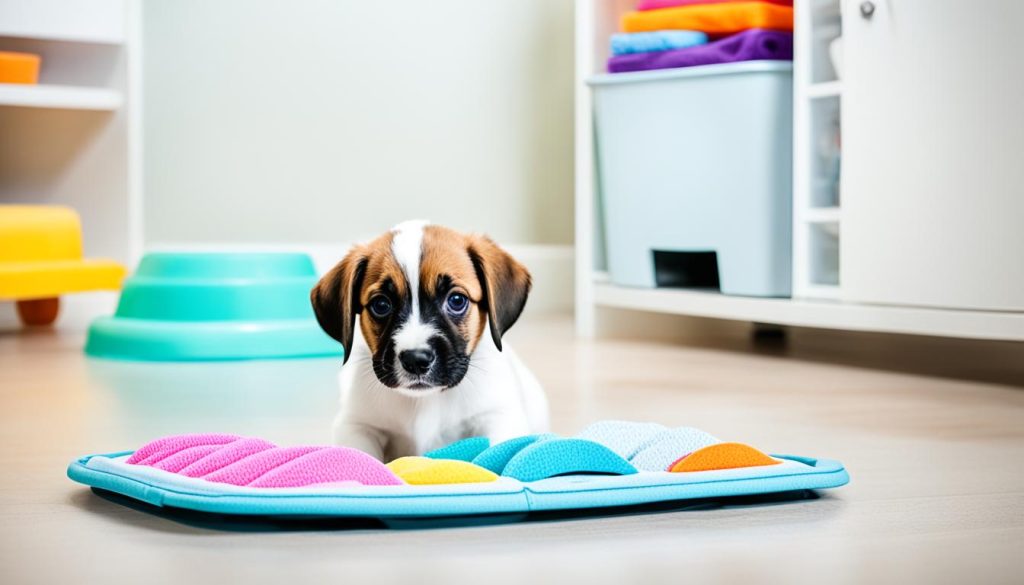
- Establish a routine: Create a consistent schedule for taking your puppy outside to eliminate. Take them out frequently, especially after meals and naps, as well as first thing in the morning and before bedtime.
- Positive reinforcement: Use praise, treats, and rewards to reinforce good behavior when your puppy eliminates outside. This positive association can help them understand where they should go.
- Supervise closely indoors: Keep a close eye on your puppy when they are indoors and watch for signs that they need to go potty, such as sniffing, circling, or squatting. If you notice these signs, quickly redirect them to the designated potty area.
- Be consistent: Consistency is key when it comes to potty training. Stick to the established routine and be patient with your puppy as accidents may happen during the learning process.
With time, patience, and consistent effort, your puppy will learn to potty outside and establish good hygiene habits. Remember to celebrate their successes and provide plenty of love and encouragement throughout the potty training journey.
Teaching Basic Commands
Teaching basic commands is crucial for your puppy’s obedience and communication skills. By establishing a solid foundation of basic commands, you can effectively communicate your expectations and ensure your puppy’s safety. Here are some essential tips for basic commands training:
- Start with simple commands: Begin with basic commands like “sit” and “come” in a distraction-free environment. These commands form the building blocks for more complex commands later on.
- Use treats, praise, and positive reinforcement: Reward your puppy with treats, verbal praise, and positive reinforcement when they successfully execute the desired behavior. This encourages them to associate the command with positive experiences and motivates them to repeat it.
- Gradually increase difficulty: Once your puppy has mastered a command in a controlled environment, gradually increase the difficulty by practicing in different locations and introducing distractions. This helps them generalize the command and respond even in challenging situations.
- Consistency is key: Consistency is crucial in training. Use the same verbal cues and hand signals for each command, and ensure that all family members or caregivers follow the same training techniques and rules.
- Short, frequent training sessions: Keep training sessions short and frequent, as puppies have a limited attention span. Aim for multiple 5-10 minute sessions throughout the day rather than one long session. This helps maintain their focus and prevents them from getting overwhelmed.
Remember, training should always be a positive experience for your puppy. Patience, consistency, and positive reinforcement go a long way in helping your puppy master basic commands and become a well-behaved companion.
The Power of Positive Reinforcement
Positive reinforcement training is a highly effective method for training puppies. It involves rewarding desired behavior with treats, praise, and other positive stimuli. This type of training builds a strong bond between you and your puppy and encourages them to repeat the desired behavior. Positive reinforcement also helps foster a positive and happy learning environment for your puppy.
https://www.youtube.com/watch?v=kqV4PQNJ8lI
When employing positive reinforcement training, it is important to remember a few key principles. Firstly, timing is crucial. The reward should be given immediately after the desired behavior is exhibited, so your puppy can make the connection between their action and the reward. Secondly, consistency is key. Consistently rewarding your puppy for positive behavior helps reinforce the desired actions and strengthens their understanding of what you want from them.
Using positive reinforcement allows you to communicate with your puppy in a clear and encouraging manner. By focusing on rewarding the behaviors you want to encourage, rather than punishing unwanted behaviors, you create a positive association in your puppy’s mind and motivate them to continue behaving appropriately.
A variety of positive reinforcements can be utilized, including treats, verbal praise, toys, and physical affection. Experiment to find what motivates your puppy the most and be sure to use high-value rewards for particularly challenging behaviors.
By implementing positive reinforcement training techniques, you can shape your puppy’s behavior while strengthening your bond. With consistency, patience, and a positive approach, you’ll be able to teach your puppy essential skills and foster their growth into a well-mannered and happy companion.
Socialization Training for a Well-Adjusted Dog
Socialization training is a crucial aspect of puppy training that ensures your furry friend grows up to be a confident and well-adjusted dog. By exposing your puppy to various people, animals, environments, and stimuli in a controlled and positive manner, you can help them develop the necessary skills to navigate the world around them.
To begin socialization training, start by introducing your puppy to different individuals and encouraging positive interactions. This can include friends, family members, and even strangers who can offer a variety of social experiences. Remember to monitor these interactions closely and always prioritize your puppy’s safety and comfort.
Animal socialization is equally important. Arrange playdates with friendly and vaccinated dogs to allow your puppy to interact and learn appropriate social cues. This interaction is vital for their development and helps them understand how to communicate and behave around other animals.
Additionally, expose your puppy to various environments and stimuli. Take them on outings to parks, quiet streets, and pet-friendly establishments, gradually increasing the intensity of these experiences. This exposure helps your puppy adapt to new sights, sounds, and smells, preventing fear and anxiety issues in the future.
During socialization training, remember to reward and praise your puppy for calm and appropriate behavior. Use positive reinforcement techniques to reinforce positive associations and build their confidence. This not only helps prevent fear and aggression issues but also promotes their ability to interact positively with others.
Key Tips for Socialization Training:
- Start socialization training early during the critical socialization period, which is typically between 3 to 14 weeks old for puppies.
- Expose your puppy to a wide range of people, animals, environments, sounds, and objects.
- Ensure that all interactions and experiences are positive and controlled, allowing your puppy to feel safe and confident.
- Gradually increase the intensity of socialization experiences based on your puppy’s comfort level.
- Consistency and patience are critical during socialization training. It is a gradual process that takes time and practice.
By prioritizing socialization training in your puppy’s training regimen, you are setting them up for a lifetime of successful interactions, confidence, and well-being.
Conclusion
Training your puppy in leash and obedience skills is crucial for their development and overall well-being. Investing time and effort in their training will set them on the path to becoming a well-behaved and happy dog.
To ensure success in puppy training, it’s important to follow expert tips and techniques. Leash training and obedience training should be approached with positive reinforcement, using treats, praise, and rewards to reinforce desired behavior.
Consistency is key in puppy training. Establishing a routine and sticking to it will help your puppy understand what is expected of them. Patience is also essential, as puppies learn at their own pace. Celebrate small victories along the way to keep both you and your puppy motivated.
If you encounter challenges during puppy training, don’t hesitate to seek professional help. Trainers and behaviorists can provide guidance and support tailored to your puppy’s specific needs.