The German Shepherd is known for its smarts, loyalty, and power. But, as they age, they face special challenges with their mobility. Around ages seven to ten, their joints, digestion, and energy levels change. This makes it key to take care of them early to keep them healthy.
Conditions like degenerative myelopathy and hip dysplasia can cause weakness in their back legs. If not treated, these issues can worsen. It’s important to act fast and use a mix of treatments to help them stay mobile.
Therapies like hydrotherapy and laser therapy can slow down their decline. Keeping them at a healthy weight and feeding them the right food also helps. Regular vet visits are a must to catch problems early and create a care plan that works for them.
This article is here to help you care for your senior German Shepherd. We’ll give you practical tips to keep them comfortable and full of life. We aim to guide you with both technical advice and a caring touch.
Key Takeaways
- Start monitoring German Shepherd health closely by age seven to ten to catch mobility changes early.
- Combine physical rehabilitation, weight management, and senior-appropriate nutrition to support mobility.
- Regular veterinary care and diagnostic testing enable personalized treatment plans.
- Low-impact therapies like hydrotherapy and therapeutic exercise improve strength and comfort.
- Preventive strategies and home adjustments enhance pet well-being and long-term quality of life.
Understanding Pet Wellness in Senior Dogs
Senior German Shepherds need careful care to stay mobile and comfortable. Regular checks and a good relationship with your vet are key. They help keep your pet healthy for a long time.
Importance of Regular Check-Ups
Visiting the vet every six months is important. It helps catch early signs of weakness or pain in the back legs. Tests can also show if your dog might get certain diseases later.
Starting physical therapy early can really help. It includes swimming, special exercises, or professional rehab. These steps are vital for keeping your dog active and healthy.
Signs of Declining Mobility
As dogs get older, they might walk slower or have trouble getting up. They might not want to go up stairs or play as much. These are signs of joint or spinal problems.
Look out for signs like drinking more water or acting confused. These could mean diabetes or brain issues. Catching these early helps you make changes to keep your dog happy and healthy.
Assessing Your Dog’s Overall Health
- Include senior wellness exams with complete blood panels and urinalysis to monitor liver, kidney, and endocrine function.
- Request joint assessments, dental checks, and preventive screenings such as X-rays or ultrasound when indicated.
- Track weight, appetite, stool quality, and behavior to catch subtle declines in pet wellness.
Use these findings to create a care plan just for your dog. It should include the right food, exercise, and vet visits. This plan helps keep your dog healthy and happy.
Challenges Faced by Senior German Shepherds
As German Shepherds get older, they face many health and mobility issues. Spotting these signs early is key to caring for them well. It helps keep them healthy for a long time.
Common Mobility Issues
Seniors may tire easily, move slower, or struggle with stairs. Problems like hip dysplasia and degenerative myelopathy affect their strength and balance. Spinal issues like IVDD can cause sudden problems with their nerves.
Carrying too much weight puts extra stress on their joints. This can make their condition worse faster.
Joint Pain and Arthritis
Osteoarthritis often leads to limping and stiffness, making it hard to play or walk. Doctors can use imaging to see how bad the damage is. To ease the pain, they might prescribe medicine, supplements, and suggest less activity to protect their joints.
Muscle Weakness and Atrophy
Loss of muscle can happen due to lack of use or neurologic problems. It shows as thinner back legs and weaker hind legs. To keep muscles strong, low-impact exercises, physical therapy, and special rehab plans are helpful.
- Watch for reluctance to jump, uneven paw placement, or shorter stride lengths.
- Ask your veterinarian about diagnostic tests when symptoms appear suddenly or worsen.
- Plan interventions that balance movement and rest to support pet health without overtaxing fragile joints.
Essential Nutritional Needs for Mobility
As senior German Shepherds age, proper feeding is key. A focused diet protects joints, keeps muscles strong, and maintains energy. Owners should pair diet choices with gentle exercise to keep their pets mobile and healthy.
Importance of High-Quality Diet
Opt for senior formulas rich in nutrients. Look for diets with easy-to-digest proteins and controlled calories. These help manage weight, support muscle, and ensure steady digestion.
For dogs with sensitivities, limited-ingredient diets are a good choice. Prescription diets are available for specific health issues like kidney or liver disease.
Supplements for Joint Health
Vets often suggest joint supplements like glucosamine and chondroitin for cartilage support. Omega-3 fatty acids from fish oil reduce inflammation and enhance movement comfort. A balanced diet and quality supplements are essential for long-term mobility.
Weight Management Strategies
- Measure portions and track daily calories; even small reductions can ease stress on hips and knees.
- Use body condition scoring monthly to guide adjustments and prevent excess strain on the hind end.
- Combine controlled feeding with short, regular walks or swimming to burn fat while protecting joints.
Regular monitoring and working with your vet ensures dietary changes meet evolving needs. Thoughtful nutrition and joint supplements enhance quality of life for senior dogs.
Tailored Exercise Routines for Seniors
Keeping an older German Shepherd active is key for their wellness. Gentle routines that fit their energy, health, and living space are essential. Short, regular workouts are better than long, intense ones for their long-term health.
Low-Impact Activities to Consider
- Short walks on soft surfaces, such as grass or packed dirt, reduce joint stress while keeping muscles engaged.
- Swimming or sessions on an underwater treadmill offer buoyant support and build strength without impact.
- Controlled play, like gentle fetch with a soft toy, maintains range of motion and prevents weight gain.
Engaging Mental Stimulation
Mental stimulation is vital for a senior dog’s health. It keeps them active and sharp. Puzzle feeders, scent work, and hide-and-seek games are great for this.
- Rotate puzzle toys to keep interest high.
- Use scent trails in the yard to encourage slow, purposeful walking.
- Pair short training cues with treats to reinforce mobility and focus.
Importance of Consistency
Consistency is key to prevent deconditioning. It makes progress easy to track. Adjust the intensity based on vet advice.
- Begin with low-impact exercise three to five times weekly, then tailor frequency to the dog’s tolerance.
- Combine therapeutic exercises—sit-to-stand repetitions and balance work—with light massage to improve circulation.
- Consult a veterinarian or a certified canine rehab specialist for personalized plans, integrating preventive care and targeted therapies like laser treatment or acupuncture when appropriate.
Exercise that matches the dog’s ability, along with mental stimulation, is a form of preventive care. It improves their quality of life and is part of a holistic care plan.
Home Modifications for Improved Mobility
Small changes at home can make a big difference for a senior German Shepherd. Making your home more comfortable can help a lot. It reduces the risk of falls and supports your dog’s long-term health.
Creating a Safe Space
Clear pathways by removing cords and low furniture that can trip a dog with stiff joints. Place soft, supportive beds such as orthopedic or memory foam models in favorite rooms to reduce joint pressure. Keep water and food within easy reach to avoid long walks across the house.
Non-Slip Flooring Solutions
Slippery floors can lead to falls and pain. Install rugs with non-slip pads or use traction mats on tile and hardwood to improve grip. Choosing non-slip flooring in high-traffic zones preserves senior dog safety and supports overall pet well-being.
Ramps and Elevated Bowls
Ramps and low steps let dogs access sofas, beds, and cars without jumping. Use sturdy ramps with gentle inclines and textured surfaces for traction. Elevated bowls reduce neck and spine strain for arthritic dogs, making mealtime part of a broader strategy for pet wellness.
- Provide slip-resistant surfaces near doors and ramps to cut slips and strains.
- Place non-slip mats at the top and bottom of ramps for secure footing.
- Check bedding and bowls regularly; replace worn traction aids as needed.
Combine these home modifications with routine monitoring of mobility and posture. Small, consistent changes protect senior dog safety and contribute to sustained pet well-being over time.
Alternative Therapies to Consider
Senior German Shepherds can greatly benefit from various complementary therapies. These support their mobility and overall health. Owners often combine these with diet, exercise, and vet care for a well-rounded plan.
Acupuncture works by stimulating nerves and releasing endorphins. This helps reduce pain and improve mood. Licensed vets tailor sessions for each dog’s age and health, making it safe for those with osteoarthritis or after surgery.
Massage therapy relaxes muscles, boosts circulation, and eases stiffness. Trained therapists teach owners simple routines to use at home. These routines help with flexibility and comfort.
Hydrotherapy uses water to reduce joint pain while strengthening muscles. Underwater treadmills and swimming at vet centers are great for improving confidence and gait.
- Combine approaches for best outcomes: acupuncture, massage therapy, hydrotherapy, and, when indicated, laser or physical therapy.
- Seek professionals at veterinary rehabilitation centers for tailored plans and progress tracking.
- Schedule regular sessions and reassess needs as the dog’s condition changes.
Adding alternative therapies to holistic pet care boosts quality of life. Small, consistent steps and working with your vet create a caring, effective plan for senior dogs.
The Role of Veterinary Care
Veterinary care is key to keeping senior German Shepherds mobile. Early signs of issues like hip dysplasia and arthritis are caught through regular check-ups. A vet can order tests and guide owners on the best care for their pets.
Regular Veterinary Check-Ups
Senior dogs should see the vet every six months. These visits check on joints, teeth, digestion, and brain health. They help spot problems early, before they affect movement.
During these visits, vets examine joints, check weight, and test brain function. Blood tests and urine analysis also look for metabolic issues that can impact mobility.
Setting Up an Effective Care Plan
Work with your vet to make a care plan for your senior dog. This plan might include diet changes, exercise plans, supplements, and updated shots.
Rehabilitation experts and behaviorists might join the team if needed. Together, they create a plan that combines preventive care with daily routines to protect your dog’s health.
Advanced Treatment Options
When simple steps aren’t enough, advanced treatments can help. X-rays and ultrasounds show joint or spinal problems. Blood tests and genetic screens help diagnose issues like diabetes.
Treatments might include special diets, pain meds for arthritis, and insulin for diabetes. Physical therapy and pain management can also improve your dog’s quality of life.
Mobility Aids and Devices
When a senior German Shepherd has trouble getting up, there are tools to help. These range from simple slings to advanced carts. The right choice helps keep them independent and healthy.
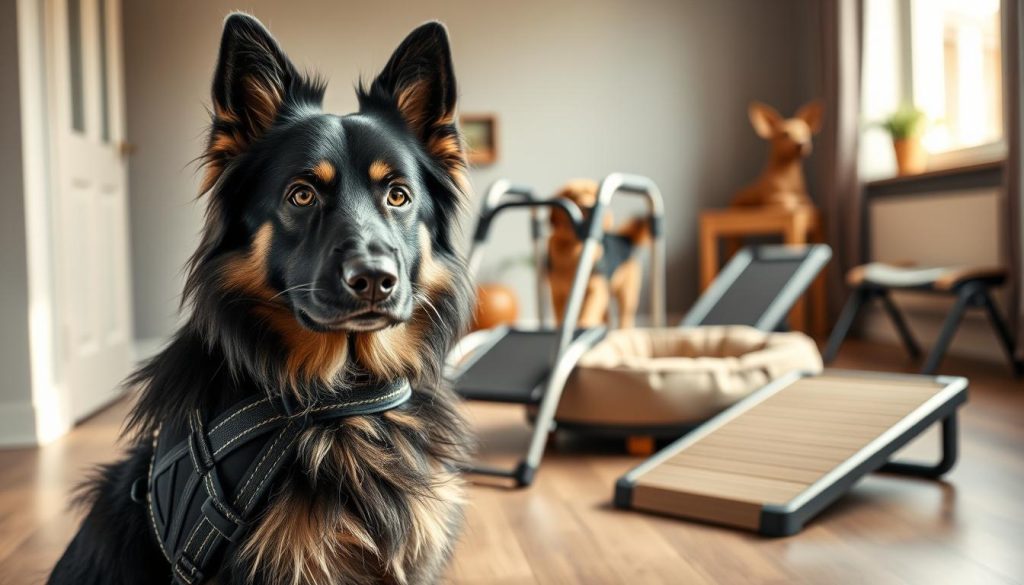
Introduction to options
Vets and rehab experts suggest mobility devices after checking them out. It’s key to get the right size and fit for comfort and safety. Adding ramps is a small change that helps avoid jumping, which can hurt their joints.
Harnesses and slings
Harness support is great for short walks and therapy. A padded harness helps lift or steady the dog without hurting. Slings are good for recovery or when balance is off.
- Use harness support for guided walks and stair help.
- Try adjustable slings for gradual strength-building exercises.
- Check fit frequently to prevent rubbing and pressure sores.
Wheelchairs for dogs
Canine wheelchairs help dogs with severe back leg weakness or paralysis. Rear-support carts let dogs walk, sniff, and play. Training with a pro helps them get used to it faster.
- Have a vet or rehab therapist verify measurements before buying.
- Introduce the wheelchair in short, calm sessions to build confidence.
- Combine use of canine wheelchairs with targeted rehab for best results.
Choosing mobility devices is part of a bigger care plan. The right choice supports comfort, encourages activity, and boosts overall pet wellness.
The Importance of a Stable Environment
Senior German Shepherds do best with a calm, predictable routine. This routine supports their well-being and makes moving around easier. Simple changes at home can help reduce agitation and save energy when they can’t move as much.
Reducing Stress and Anxiety
Changes in how a dog stands or acts can mean they’re not feeling well. Paying attention to these signs helps catch problems early. Regular feeding times, set walk windows, and quiet rest periods make seniors feel safe.
Providing Familiar Surroundings
Keeping beds, bowls, and favorite toys in the same spots helps dogs feel secure. A soft, supportive bed near where people hang out helps them stay connected while resting.
Using Calming Products
Vets recommend calming products like pheromone diffusers, Thundershirt-style wraps, and supplements for anxious dogs. Using these with low lighting and quiet helps them relax and breathe easily.
Practical steps for everyday comfort:
- Set a clear daily schedule for feeding, short walks, and rest to aid digestion and cognitive clarity.
- Use non-slip mats and keep pathways free of clutter to lower fall risk and reduce stress during movement.
- Offer fresh water within easy reach and position supportive bedding near familiar family activity.
Watching for small behavior changes helps caregivers adjust routines for better pet well-being. Consistency and calming products improve animal wellness and quality of life.
Social Interaction and Engagement
Keeping a senior German Shepherd active supports their emotional health. Gentle play boosts their mood and helps owners notice any changes in behavior. This is key for their overall well-being.
Benefits of playtime
Short, easy play sessions are great for seniors. Playing fetch with a soft ball or tug games are low-impact. They help keep the dog and owner close while providing gentle exercise.
Opportunities for socialization
Socialization can be adjusted to fit the dog’s energy and mood. Puzzle toys and scent games keep their mind active. Meeting other dogs or calm neighbors helps build confidence and fights loneliness.
Visiting dog parks safely
Dog parks can be good for seniors if they’re mobile enough. Look for quiet times and flat, safe areas. Watch for signs of tiredness or stress and be prepared to leave if needed.
Getting involved in the community helps find resources and play groups for seniors. With careful planning, social activities can greatly benefit a senior dog’s mental and physical health.
Recognizing and Addressing Pain
Senior German Shepherds may show subtle signs when discomfort begins. Not every spinal issue is painful, yet conditions like intervertebral disc disease and osteoarthritis often cause stiffness and genuine pain. Careful observation helps preserve pet wellness and overall animal wellness.
Watch for limping, reluctance to climb stairs, less interest in play, or sudden irritability. Vocalizing during movement, reduced appetite, and guarding behaviors can point to discomfort. Small shifts in daily habits often signal that pet health is at risk and deserve prompt attention.
Understanding pain management options
Treatment plans should combine medical and supportive approaches. Veterinarians commonly prescribe NSAIDs when appropriate, paired with supplements such as omega-3 fatty acids and glucosamine to support joints. Physical therapy and hydrotherapy rebuild strength while environmental adjustments—ramps, non-slip mats, elevated bowls—reduce strain.
Alternative therapies like acupuncture and targeted massage provide relief for many dogs. Regular monitoring and biannual veterinary care visits allow adjustments in dosing and therapy based on progress. This layered strategy supports long-term pet wellness and effective pain management.
When to consult your veterinarian
Seek veterinary care if limping persists, mobility drops suddenly, or incontinence appears. Severe appetite loss, dramatic behavior shifts, or signs of intense pain require immediate diagnostics. Bloodwork and imaging often reveal underlying causes; advanced treatments, including surgery or targeted medical therapy, may be needed to restore comfort and protect pet health.
Timely consultation helps tailor a plan that balances medical intervention with day-to-day measures. That approach preserves mobility, maintains animal wellness, and strengthens the bond between caregiver and dog.
The Bond Between Canine and Caregiver
As mobility changes, a calm and steady caregiver bond becomes vital for pet well-being. Ongoing, compassionate caregiving—regular physical therapy, gentle handling, and consistent routines—helps an aging dog feel safe. This trust supports rehabilitation and makes daily care less stressful for both dog and owner.
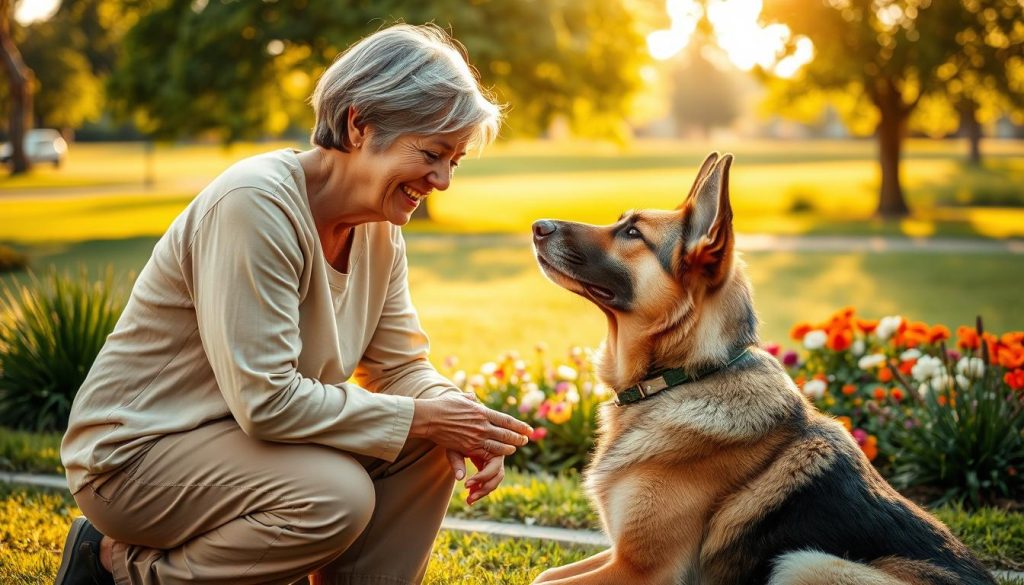
Building trust takes time and small actions. Short, predictable sessions for grooming and gentle range-of-motion exercises create positive associations. When owners stay involved in rehab, dogs adapt faster and show better engagement with exercises that promote pet wellness.
Building Trust with Your Pet
Start with slow introductions to new aids or exercises. Use low-stress cues and gentle praise to encourage cooperation. Consistent timing and familiar voices reduce anxiety.
- Keep touch gentle during handling and therapy.
- Offer quiet, safe spaces for rest after activity.
- Maintain predictable daily routines for sleeping and meals.
Emotional Support Strategies
Emotional support can be simple and powerful. Spend quality time in quiet play, short walks, or passive companionship while reading or watching TV together. These moments boost cognitive health and lower stress.
- Prioritize short, pleasant interactions over long, tiring sessions.
- Provide mental enrichment like scent games or puzzle feeders.
- Monitor responses and reduce activities that cause discomfort.
Training for Better Communication
Training for seniors requires adjustments. Focus on positive reinforcement and avoid demanding positions or long sessions. Clear, gentle cues help seniors understand expectations without strain.
Use high-value treats for motivation and break tasks into tiny, achievable steps. This approach strengthens the caregiver bond, improves compliance with care plans, and enhances overall pet wellness.
Importance of Hydration
Keeping a senior German Shepherd well-hydrated is key for their comfort and mobility. Drinking enough water helps with circulation, digestion, and joint lubrication. This makes gentle exercise easier for them. Hydration is a silent but essential part of their health and well-being.
Ensuring Proper Water Intake
Make sure fresh water is always available. Change it every day. Use elevated bowls from brands like PetSafe or K&H. They are easier for arthritic dogs to use without bending.
Keep bowls clean and have multiple stations if your home is big. Some older dogs don’t like cold water. Try warming it slightly or add low-sodium broth to encourage drinking, under vet advice.
Benefits of Hydration for Joint Health
Water cushions cartilage and supports joint fluid. When a senior dog drinks enough, their joints stay healthy. This makes recovery after walks faster and muscles work better.
Hydration also gives energy for short, easy activities. This energy helps keep muscles strong and reduces joint strain. It’s a big part of their overall health and well-being.
Recognizing Dehydration Symptoms
- Check gums for tackiness and note sunken eyes.
- Watch for lethargy, reduced urine output, or poor skin elasticity.
- Sudden changes in drinking may signal diabetes, kidney issues, or other conditions requiring prompt veterinary review.
If you see these signs, call a vet fast. Early action protects their health and finds the real cause, not just treating dehydration.
Regular Monitoring and Adaptation
Watching a senior German Shepherd closely helps them stay comfortable. Regular checks spot small changes in how they move. This could mean they have arthritis or other health issues.
Going to the vet often and keeping a journal at home is key. It helps keep your pet healthy for a long time.
- Record daily or weekly notes on walking distance, stumbling, or stiffness.
- Use simple tests: time to stand, ability to climb stairs, and changes in stride length.
- Share patterns with your veterinarian so diagnostics and imaging can be timed well.
Adjusting exercise as needed
- Shift to low-impact activities like controlled walks, gentle hill work, and hydrotherapy when stamina drops.
- Decrease intensity if pain behaviors appear; increase gentle repetitions to maintain muscle without strain.
- Track rehabilitation milestones and tweak therapy—exercise, massage, laser, or pool sessions—based on progress.
Observing dietary needs over time
- Weigh and score body condition regularly; metabolic changes often require portion or formula changes.
- Choose diets that support joint health and lean muscle mass while preventing excess weight.
- Coordinate nutrition shifts with veterinary bloodwork and imaging to ensure the plan supports overall pet wellness.
Seeing the vet at least twice a year is important. It helps adjust care plans to keep your pet moving well. This makes sure they live a good life, showing how important it is to care for them.
Community Resources for Senior Pet Wellness
Local networks can greatly improve a senior German Shepherd’s life. Look for clinics that offer diagnostic imaging, physical therapy, and hydrotherapy. These help with mobility and keep pets healthy for a long time.
Local veterinary services often have special care plans for seniors. Find places with certified therapists and staff who know how to treat pets well. Make sure they work with specialists for complex issues.
Local Veterinary Services
- Diagnostic imaging and lab work for accurate diagnosis.
- Physical therapy, hydrotherapy pools and controlled exercise programs.
- Customized senior care plans that combine medication, therapy and home care.
Getting advice from others helps too. Breed-specific groups and local German Shepherd communities share useful tips. They can help find good vendors and trainers.
Support Groups for Pet Owners
- Local breed clubs and rescue groups share hands-on experience.
- Support groups provide emotional backing during difficult decisions.
- Meetups and local forums help owners compare products and services.
Online resources are also key. Look for articles from vets and university sites for reliable info. Use vetted websites to check treatment options and tests.
Online Resources and Forums
- Veterinary clinic pages and university publications for condition overviews.
- Manufacturer resources like Zoetis Petcare for medication and product guidance.
- Forums and moderated groups where members exchange experiences and product recommendations.
Combining local care, support groups, and online resources creates a strong support system. This network helps owners adjust care plans, find specialists, and focus on their dog’s health.
Long-Term Care Strategies for German Shepherds
Looking after a senior German Shepherd requires careful planning and regular vet visits. Diseases like degenerative myelopathy and osteoarthritis can make moving hard. Talking to your vet early helps set what’s best for your pet’s life quality.
A mix of pain relief, physical therapy, and aids helps keep your pet comfortable and active. This approach supports their well-being for a long time.
End-of-Life Considerations
Talk to your vet about what to expect. This helps you plan for the future. Keep your pet’s routine the same and focus on comfort.
Things like orthopedic beds and easy-to-reach food bowls are important. Also, think about hospice or euthanasia when your pet’s pain is too much.
Palliative Care Options
Palliative care aims to ease pain, not cure it. Using the right meds and supplements can help. Adding therapies like acupuncture and massage can also reduce pain.
Home changes and mobility aids help your pet stay active and dignified. This is key in the later stages of life.
Leaving a Legacy for Your Pet
Keep memories alive with photos, journals, or special keepsakes. Supporting German Shepherd rescue groups or senior pet programs is a great way to honor your pet. It also helps other animals in need.
These actions turn sadness into something positive. They show your dedication to caring for pets long-term.
FAQ
Q: What are the most common causes of hind end weakness in senior German Shepherds?
A: Senior German Shepherds often face hind end weakness due to several reasons. Degenerative myelopathy (DM) leads to coordination loss without pain. Hip dysplasia and osteoarthritis cause stiffness and reduced mobility. Intervertebral disc disease (IVDD) results in spinal pain and neurological issues. Fibrotic myopathy also plays a role.
Early veterinary evaluation is key. Diagnostic imaging and bloodwork help identify the cause. This guides a tailored plan for mobility, pain management, and rehabilitation.
Q: At what age should owners begin senior-focused care for German Shepherds?
A: Owners should start senior-focused care for German Shepherds around ages 7–10. At this stage, joints, digestion, and energy levels often change. Regular veterinary check-ups and senior diets are essential.
Monitoring weight and adjusting exercise routines help manage early signs of arthritis and other conditions.
Q: What signs indicate declining mobility or pain in a senior German Shepherd?
A: Look out for stiffness after rest, limping, and difficulty rising. Reluctance to climb or jump and longer recovery after exercise are also signs. Muscle atrophy and altered posture are indicators too.
Behavioral changes include decreased interest in play, changes in appetite, and increased vocalization. Sudden incontinence or rapid loss of coordination requires immediate vet attention.
Q: How often should senior German Shepherds see the veterinarian?
A: Senior German Shepherds should see the vet twice a year. These visits include a full physical exam, joint assessment, and dental check. Bloodwork and urinalysis screen organ function.
Diagnostic imaging is used when needed. Regular visits help detect osteoarthritis, hypothyroidism, diabetes, or spinal disease early.
Q: Which diagnostics help identify causes of mobility decline?
A: Blood panels, thyroid testing, and urinalysis are useful diagnostics. X-rays for hips and spine, and advanced imaging like CT or MRI for spinal cord concerns, are also helpful. Genetic testing for degenerative myelopathy may be necessary.
Combining imaging with neurological exams helps determine if weakness is due to orthopedic, neurologic, or metabolic issues.
Q: What role does weight management play in protecting mobility?
A: Maintaining an optimal body condition is vital. Excess weight increases joint load, worsens pain, and accelerates degenerative changes. A senior-appropriate diet with controlled calories and regular exercise can improve mobility.
Q: Which dietary components support joint and overall health in senior dogs?
A: Senior diets should have high-quality, easily digestible proteins and balanced fiber. They should also have controlled calories and anti-inflammatory nutrients like omega-3 fatty acids. Joint supplements like glucosamine and chondroitin support cartilage health.
For specific health needs, such as kidney, liver, or diabetes, veterinary prescription diets offer targeted support.
Q: What low-impact exercises are best for senior German Shepherds?
A: Low-impact exercises include hydrotherapy, swimming, and slow walks on soft surfaces. Sit-to-stand repetitions, balance exercises, and range-of-motion work are also beneficial. Consistency is key to prevent deconditioning and protect joints.
Q: How can owners safely introduce hydrotherapy or physical rehabilitation?
A: Work with a certified canine rehabilitation specialist or your vet to create a tailored program. Start slowly and monitor for signs of fatigue or pain. Combine hydrotherapy with exercises, massage, laser therapy, or acupuncture as needed.
Rehabilitation improves strength, balance, and quality of life when done safely and progressively.
Q: Are alternative therapies like acupuncture and laser therapy effective?
A: Acupuncture, massage, and class IV laser therapy can reduce inflammation and ease pain. They improve comfort when used as part of a multimodal plan. Evidence supports their use in osteoarthritis and post-operative recovery.
Discuss expected benefits and session frequency with a vet experienced in integrative care.
Q: What home modifications help a senior German Shepherd remain comfortable and mobile?
A: Create a senior-friendly environment with non-slip flooring or traction mats. Use area rugs, ramps or pet steps for furniture and car access. Elevated feeding bowls reduce neck strain.
Orthopedic beds relieve pressure on joints. Keep water and food easily accessible and remove trip hazards to lower fall risk.
Q: When are mobility aids appropriate and which options exist?
A: Mobility aids are helpful when hind limb weakness limits independence. Harnesses and slings provide short-term support for standing or stairs. Rear-support carts (wheelchairs) restore mobility for severe weakness or paralysis.
Ramps reduce jumping. A vet rehab specialist can recommend correct sizing and training for safe use.
Q: How should pain be managed in senior German Shepherds?
A: Pain management is multimodal. Use NSAIDs or other prescription analgesics, adjuncts like gabapentin or amantadine when appropriate, omega-3 supplementation, and joint nutraceuticals. Physical therapy, acupuncture, and environmental changes also help.
Regular re-evaluation by a vet ensures dosing and therapies remain effective and safe for organ health.
Q: What behavioral changes suggest cognitive dysfunction syndrome (CDS)?
A: Signs of CDS include disorientation, altered sleep–wake cycles, decreased interaction, house-training lapses, and reduced response to familiar cues. If these behaviors appear, consult a vet for screening, supportive nutrition, mental enrichment plans, and medications or supplements that may slow progression.
Q: How can owners balance physical activity with safety for a senior dog?
A: Prioritize short, predictable routines with gentle walks on soft terrain. Schedule rest and monitor for stiffness or fatigue. Use warm-up and cool-down periods and tailor intensity to the dog’s stamina.
Physical therapy guidance helps progress exercises safely while preserving muscle mass.
Q: What signs require immediate veterinary attention?
A: Seek prompt care for sudden paralysis, severe pain, loss of bladder or bowel control, rapid decline in coordination, marked lethargy, or sudden inability to rise. These may indicate IVDD, acute neurologic events, or systemic disease that require urgent diagnostics and intervention.
Q: How often should weight and body condition be checked at home?
A: Owners should check weight and body condition monthly and record trends. Use body condition scoring to detect subtle changes. Any persistent weight gain or loss, or difficulty maintaining muscle mass, warrants a vet consult to adjust diet, supplements, or investigate underlying illness.
Q: Which supplements are commonly recommended for joint support?
A: Veterinarians often recommend glucosamine, chondroitin, and omega-3 fatty acids for joint support and to reduce inflammation. Green-lipped mussel and type II collagen are other options. Always choose veterinary-formulated products and discuss dosing and interactions with other medications.
Q: How do owners manage comorbid conditions like hypothyroidism or diabetes?
A: Management includes routine bloodwork monitoring, appropriate prescription diets, medication adherence (levothyroxine for hypothyroidism, insulin for diabetes), weight control, dental care, and regular vet check-ups. Coordinated care preserves mobility and reduces secondary complications that may worsen weakness.
Q: What emotional care helps a senior German Shepherd adjust to changing abilities?
A: Emotional support includes consistent routines, gentle handling, short engaging play, and mental enrichment like scent games and puzzle toys. Quality time together is also important. Calming aids—pheromone diffusers, anxiety wraps, or vet-recommended supplements—may help anxious seniors adapt to therapeutic routines and mobility aids.
Q: How should end-of-life decisions and palliative care be approached?
A: Discuss prognosis, palliative options, and quality-of-life thresholds with your vet early. Palliative strategies include optimized pain control, mobility aids, home adaptations, and hospice support. Regular reassessment of comfort, appetite, mobility, and social engagement helps guide compassionate decisions when suffering can no longer be managed.
Q: Where can owners find reputable resources and community support?
A: Seek local vet clinics with canine rehabilitation services, certified canine rehab specialists, and breed-specific rescues or German Shepherd clubs for practical advice. Trusted online sources like vet school articles and vet association pages, plus moderated support groups, provide guidance on nutrition, mobility aids, and long-term care strategies.