Ear infections in French Bulldogs are more than a nuisance; they affect sleep, play, and long-term ear health. This short guide explains what an infection is, why it matters for daily comfort, and how steady dog care helps prevent repeat problems.
The article sets clear expectations: readers will learn common causes, signs to watch for at home, safe cleaning tips, and when to call the vet. It also outlines typical treatments so a pup can feel better faster.
Recurring ear issues often come from missed checks or grooming choices, not bad luck. Regular ear checks fit into whole-body wellness because ear pain can lower appetite, reduce play, and affect training focus for the whole family.
Gentle routines — calm handling and small rewards — make ear care easier over time for both pet parent and furry friend. Home tips support well-being, but diagnosis and meds should come from a vet when there is discharge, odor, or pain.
Key Takeaways
- Ear infections harm comfort and overall health if left unchecked.
- Learn causes, signs, safe cleaning, and when to seek a vet.
- Prevention comes from steady grooming and regular ear checks.
- Positive handling makes routine checks less stressful for your pup.
- Home care supports wellness, but vet diagnosis is essential for infections.
Why French Bulldogs Are So Prone to Ear Infections
Certain physical traits of French Bulldogs create an environment where ear problems can start. Short canals and tight ear flaps reduce airflow, which lets moisture linger after baths or walks in humid months. This trapped warmth becomes a welcome setting for yeast and bacteria.
Wax, skin oils, and everyday debris build up slowly. What looks like a small amount of wax can hide irritation until a sudden flare-up causes pain and redness. Regular cleaning with a dog-approved ear cleaner can help prevent dirt and debris from accumulating.
How ear health links to overall wellbeing
Ear trouble often appears alongside itchy skin, recurring infections, low energy, or less interest in play. These signs point to broader issues, such as allergies, that repeat unless identified and treated.
- Realistic prevention: Small, steady routines beat rare deep cleaning.
- Watch for patterns: Recurring problems often need allergy checks or vet input.
- Comfort focus: The goal is steady comfort and long-term happiness for pups and their families.
What Ear Infections Look Like in Your Pup
A quiet shift in routine or a tiny smell can be the first hint that an ear problem is brewing. Regular, calm handling — touching the ears during play — helps pet parents notice issues early and reduce stress at vet visits.
Early signs pet parents often miss
Subtle clues include a mild head tilt, brief scratching, rubbing the ear on furniture, or pulling away when the ear is touched.
These small changes may occur off and on, so check consistently during the day and note when they happen.
Red flags that suggest pain or deeper infection
Seek vet attention if there is persistent head shaking, yelping, swelling, bleeding, or sudden sensitivity when the ear is touched.
Behavior changes that show up during the day at home
Less interest in play, irritability, poor sleep, skipping training, or hiding can signal discomfort that affects overall health and happiness.
Smell, discharge, and head shaking: what they can indicate
Normal ear gunk is pale and mildly sticky. Concerning changes include a yeasty odor, foul smell, thick colored discharge, or watery fluid.
Make sure to note which ear is affected, how long symptoms last, and if signs appear after a bath or outdoor time; this helps the vet diagnose faster.
- Check ears in good lighting.
- Take a quick photo of discharge if present.
- Track changes so the pet parent can give clear info at appointment time.
Common Causes and Risk Factors in Dogs
Small exposures and routine habits often create the conditions for an ear infection to start. Identifying the triggers helps prevent recurring problems and keeps a pet comfortable.
Yeast vs. bacterial infections
Yeast infections often smell musty and cause brown, crumbly discharge. Bacterial infections can smell foul, produce thick pus, and cause rapid swelling.
They need different medication, so guessing at home can delay relief. Make sure a vet checks the ear before starting treatment.
Allergies and skin issues
Food or environmental allergies inflame skin and the canal. This inflammation is a common root cause of repeat flare-ups.
Addressing allergies often stops cycles of infection for dogs that get frequent issues.
Water, overcleaning, and foreign material
Baths, rainy walks, swimming, and wet grass trap moisture and invite microbes. Thorough drying after these activities reduces risk.
Overcleaning or harsh products can irritate tissue and disrupt normal balance. Never use cotton swabs in the canal; use an ear cleaner approved for use in dogs.
Foxtails, dirt, excess hair, or rough grooming can act as foreign bodies. Make sure grooming tools and salon practices are gentle, and speak up if ears look irritated after a visit.
Dog care Routine That Helps Prevent Ear Infections
A simple, consistent routine cuts risk and makes ear checks a calm, predictable part of weekly life. Start with small steps tied to things the pup already enjoys, like after play or before dinner.
Build a realistic weekly plan
Quick ear looks 1–2 times a week catch changes early. Add a post-bath drying step every time and a grooming check that matches activity level.
Use a dog-safe cleaner; skip cotton swabs
Use a vet-approved ear cleanser and never insert cotton swabs into the canal. Swabs push debris deeper and can irritate tender tissue.
Positive handling and mini training
Play with purpose: during short training sessions, touch ears, paws, and mouth while giving high-value treats. Keep sessions brief and stop before stress appears.
Grooming and drying that work
- Keep nearby hair tidy and wipe the outer flap after play.
- Towel-blot gently, allow a natural shake, then re-check folds.
- Schedule pro grooming for sensitive pups using positive techniques.
Link prevention to enrichment: plenty of exercise, structured play, and predictable routines make handling easier and help keep ears healthy.
How to Check and Clean Your Frenchie’s Ears Safely at Home
Before reaching for a cleaner, take a calm minute to inspect the ear for signs that need a vet instead. A quick check helps you decide if a gentle wipe will help or if professional attention is safer.
What to look for before you clean
Look for redness, swelling, strong odor, thick discharge, crusting, or obvious pain. These signs mean cleaning may be uncomfortable and a vet visit is likely the safer choice.
Do not clean at home if the ear is bleeding, the dog yelps, there is heavy discharge, or the pup can’t stop shaking its head. In short: don’t push through pain.
A gentle, step-by-step ear-cleaning process
- Choose a quiet spot and have treats ready to keep the pet calm.
- Lift the ear flap and apply a dog-safe ear cleaner as directed on the product label.
- Massage the base gently for 20–30 seconds, then let the pup shake its head.
- Wipe only the visible outer canal and flap with a soft pad—wipe only what you can see.
- Stop if there is pain or heavy discharge and contact your veterinarian.
How often is “too often” for ear cleaning?
Cleaning too frequently can dry and irritate tissue. Signs of over-cleaning include new redness, flaking, or more scratching after treatment.
- Follow a simple routine and make sure products are dog-specific.
- Use short time blocks for a wiggly pup and end on a positive note.
- Keep a log (date, what you noticed) to spot patterns and make sure your vet sees trends.
When to Call the Vet Instead of Waiting It Out
Recognizing serious signs quickly helps protect a pet’s comfort and long-term health. Knowing when home steps are no longer enough avoids extra pain and longer treatment times.
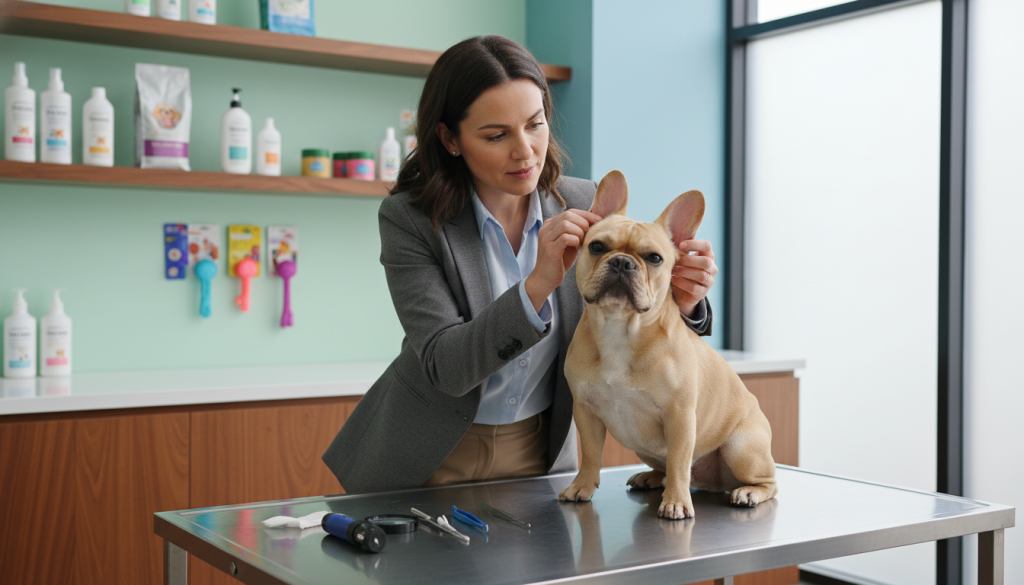
Symptoms that require prompt veterinary care
If you see any of the following, contact a vet right away:
- Severe head shaking or constant pawing at the ear
- Visible swelling, pus-like discharge, or a strong foul odor
- Fever-like lethargy, loss of balance, or sudden disorientation
Why delaying treatment can affect your pup’s quality of life
Waiting often lets inflammation grow. That increases pain and can make infections harder to treat.
Timely medical attention usually means faster relief, better sleep, improved appetite, and a calmer household.
Practical decision tool: if symptoms persist beyond 24–48 hours, worsen quickly, or cause obvious discomfort, call the vet.
Make sure to bring notes to the appointment: timeline, cleaning products used, recent baths or swimming, and food changes. Annual vet visits also help screen for issues and protect overall health—part of being a responsible pet owner and supporting long-term health happiness and life quality.
What to Expect at the Vet Visit in the United States
Expect a concise medical history and a calm, hands-on exam when you bring an ear problem to the clinic.
The team will ask about symptom timing, past ear issues, baths, and any allergy signs. This helps the vet build a clear picture fast.
Common exam steps
- History: questions from the pet parents about when signs started and prior treatments.
- Outer exam: look for redness, swelling, or discharge and a brief pain check.
- Otoscope: the vet inspects the canal with a lighted scope to see deeper changes.
Why vets may take ear samples
Ear cytology means a tiny swab is checked under a microscope. It shows whether yeast or bacteria are present.
That simple test guides the right medication so treatment is not guesswork.
Follow-up and at-home instructions
Many cases need a recheck to confirm the infection is cleared. Adult dogs should see a veterinarian yearly; seniors often every six months.
Make sure to share past products used and allergy patterns. The clinic will explain how to apply drops, how long treatment lasts, and when to call back.
Treatment Options: What Actually Works for French Bulldog Ear Infections
The best results come from targeted therapy, correct technique, and finishing the full treatment course. A clear diagnosis—often from an exam and cytology—guides the right approach and speeds recovery.
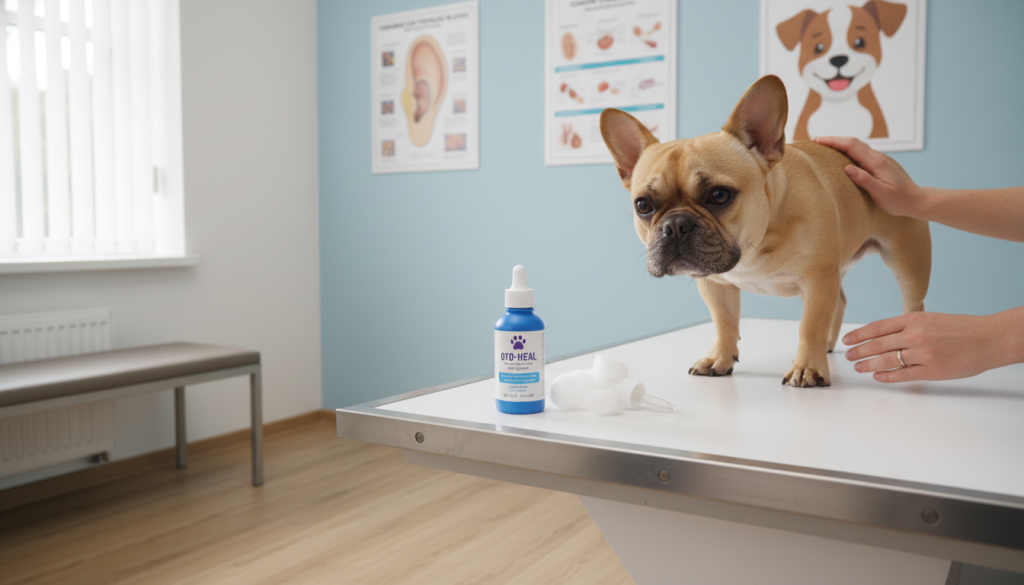
Ear drops and topical medication: how to give them correctly
Use drops exactly as prescribed. Warm the bottle in your hands for a minute to reduce shock, then gently lift the flap and aim for the canal opening—do not jab the tip inside.
Massage the base of the ear for 20–30 seconds so drops move in. Let the pup shake, then wipe visible debris with a soft pad. Reward the animal to build a positive routine.
When oral medication may be needed
Oral antibiotics or anti-inflammatories are prescribed when infections are deep, severe, or when topical meds alone do not clear signs. The vet decides this based on exam and response over time.
Managing underlying allergies for long-term relief
Allergy control is the long game. Diet trials, environmental changes, and vet-guided plans reduce inflammation and lower the chance of repeat infections.
Follow-up rechecks and why finishing treatment matters
Symptoms can fade before the infection is gone. Return visits confirm cure and prevent relapse. Make sure the full course is completed even if the ear looks better.
Some French bulldogs need maintenance for years; that is not failure—it is tailored care that protects overall health and comfort.
Home Care During Recovery: Comfort, Safety, and Faster Healing
Recovery at home focuses on comfort, strict hygiene, and small changes that speed healing. The main goals are to keep the ear dry, keep medication on schedule, and reduce anything that triggers head shaking or scratching.
Keeping the ear dry and reducing irritation
Avoid swimming and long baths while the ear heals. After any brief water exposure, gently blot the outer folds with a soft pad and let the pet shake naturally.
Use only vet-recommended, dog-safe products for cleaning. If moisture or odor returns, call the clinic.
Preventing scratching and protecting the ear flap
Trim nails and supervise play to limit pawing. When needed, a soft cone or e-collar prevents self-trauma and speeds recovery.
Dog-safe pain relief: what not to give
Never give human pain meds unless the veterinarian prescribes them. Call the vet before starting any new medication or supplement.
Supporting recovery with routine, rest, and calm activities
Keep a predictable routine to make medicating easier. Offer short sniff walks, gentle training games, and food puzzles to manage energy without rough play.
- Monitor the ear each day for redness, smell, or increased discomfort.
- Make sure medications are given at the same time each day.
- Contact the vet if symptoms worsen or rebound.
Conclusion
Small, regular habits often prevent big problems — and that rings true for ear health in French Bulldogs.
Many infections are preventable and treatable with steady dog care and prompt vet guidance. Gentle checks, dog-safe cleaning, thoughtful grooming, and post-water drying help stop repeat flare-ups when done consistently, not aggressively.
Zoom out to whole-body wellness: healthy weight, exercise, training, and attention to teeth and nails boost resilience. Responsible pet parents finish treatments, attend rechecks, and ask questions early.
Treat dogs as family members; simple weekly routines protect a furry friend’s comfort and long-term happiness. Make sure you have a regular vet relationship and build a short checklist that covers ears, nails, and teeth.
FAQ
Q: Why are French Bulldogs especially prone to ear infections?
A: French Bulldogs have compact ear canals, limited airflow, and skin folds around the face that trap moisture and debris. Those features, combined with allergies or frequent water exposure, create a warm, damp environment where yeast and bacteria thrive. Regular checks and a prevention routine tailored to brachycephalic breeds reduce risk and support overall health.
Q: What early signs of an ear infection do pet parents often miss?
A: Subtle signs include slight head tilt, gentle pawing at the ear, mild redness inside the flap, or small increases in wax. Changes in sleep, appetite, or reluctance to be touched near the head can also be early clues. Catching these signs early prevents pain and more serious issues.
Q: How can I tell if the infection is painful or more severe?
A: Red flags are swelling, constant head shaking, loud whining when the ear is touched, strong foul odor, or yellow/green discharge. These indicate a deeper infection or inflammation that needs prompt veterinary attention to avoid complications.
Q: What differences exist between yeast and bacterial ear infections?
A: Yeast infections often produce a brownish, waxy discharge and a yeasty smell; bacteria tend to create thicker, sometimes pus-like discharge with a stronger foul odor. Vets may take an ear swab to identify the organism and choose the right treatment—topical or oral medication depends on the cause and severity.
Q: Can allergies cause recurring ear problems in Frenchies?
A: Yes. Environmental and food allergies commonly trigger chronic inflammation that makes infections more likely. Managing allergies—through diet changes, flea control, or veterinary allergy testing—helps reduce flare-ups and improves long-term comfort and happiness.
Q: How often should I clean my French Bulldog’s ears at home?
A: For most healthy dogs, a weekly to biweekly check is enough; actual cleaning should be done only when needed. Overcleaning can strip protective oils and cause irritation. Use a dog-safe ear cleaner and follow a gentle, step-by-step routine recommended by your veterinarian.
Q: What is a safe, step-by-step ear-cleaning process for home?
A: Look for redness, discharge, or odor first. Hold the flap up, apply a veterinarian-approved ear cleaner into the canal, gently massage the base for 20–30 seconds, let your pet shake, and then wipe away loosened debris with a soft gauze or cloth. Never insert cotton swabs into the canal. Positive handling and treats help your pet stay calm.
Q: Can bathing or swimming cause ear infections?
A: Water in the ear can increase risk, especially if moisture remains trapped. After baths or swimming, gently dry the outer ear and, if advised by a vet, use a drying ear solution. Avoid forceful drying inside the canal; focus on preventing lingering dampness.
Q: When should I stop home care and call the veterinarian?
A: Call a vet if you see persistent discharge, worsening redness, severe pain, hearing loss, balance issues, or if symptoms don’t improve after a short home-care attempt. Prompt treatment prevents chronic changes and preserves quality of life.
Q: What happens during an ear exam at a U.S. veterinary clinic?
A: A typical exam includes visual inspection with an otoscope, an ear swab for cytology or culture if needed, and assessment for underlying skin or allergy issues. The vet may trim hair around the ear, clean the canal, and recommend topical or oral medications based on findings.
Q: Which treatments are most effective for French Bulldog ear infections?
A: Effective options include medicated ear drops with antifungal or antibacterial agents, topical anti-inflammatories, and, when necessary, systemic antibiotics or steroids. Treating any underlying allergies or skin disease is essential for long-term control. Always finish the full course and attend follow-up checks.
Q: How can pet parents protect their Frenchie’s ears during recovery?
A: Keep the ear dry, prevent scratching with an Elizabethan collar if needed, follow prescribed medication schedules precisely, and avoid unapproved over-the-counter remedies. Provide calm activity and a consistent routine to support healing and reduce stress.
Q: Are there grooming habits that help reduce ear issues?
A: Regularly remove excess hair around the ear opening if recommended by a groomer or vet, keep the face folds clean and dry, and use gentle, pet-safe shampoos. Avoid harsh chemicals and overzealous cleaning that can irritate delicate skin.
Q: How do I choose a dog-safe ear cleaner and products?
A: Pick ear cleaners labeled for canine use and recommended by veterinarians. Look for products that balance cleaning with gentle drying and avoid alcohol or other irritants. When in doubt, ask your veterinarian for a specific brand recommendation that suits your pet’s needs.
Q: Can overcleaning cause problems and how often is “too often”?
A: Yes. Cleaning more than once a week without veterinary guidance can remove protective oils and increase irritation. Frequency depends on the individual; pets with chronic issues need a tailored plan from a veterinarian or veterinary dermatologist.
Q: What should owners avoid giving their pet for ear pain or inflammation?
A: Never give human painkillers like ibuprofen or acetaminophen. Use only medications prescribed or approved by a veterinarian. Some over-the-counter ear drops contain ingredients that worsen infections or cause pain if the eardrum is damaged.
Q: How does managing ear health fit into overall pet wellbeing?
A: Healthy ears contribute to comfort, hearing, and behavior. Regular checks, prompt treatment, and addressing underlying causes like allergies or skin disease improve daily life, energy levels, and the bond between pet and family.