Hot spots are fast-moving skin infections that start small and can spread quickly over a coat-covered area. For many owners of golden retrievers, a sunny afternoon or a swim can lead to a sudden, angry patch of red, moist skin that itches and oozes.
The golden retriever is one of the most popular dog breeds in the United States because they are loyal, easy to train, and excellent family dogs. Yet their dense coat and tendency toward allergies raise the risk of hot spots compared with some other breeds.
This guide is practical and supportive. It explains common causes, how a vet typically treats these infections, safe at-home steps you can take, and long-term prevention through regular grooming and skin checks. If you only read one thing: early action limits pain, size, and recovery time.
Key Takeaways
- Act fast: early treatment stops spread and eases discomfort.
- Hot spots are often bacterial or yeast infections, not just dry skin.
- Routine grooming and skin checks cut the chance of repeat flare-ups.
- A vet visit is essential when lesions are painful, spreading, or infected.
- Understanding coat and allergy risks helps protect overall health and comfort.
Understanding Hot Spots in Dogs With a Golden Retriever Double Coat
Hot spots are small, irritated patches that can turn into full-blown skin infections when a dog keeps licking, chewing, or scratching. They spread fast because moisture, warmth, and bacteria thrive under fur, transforming a tiny sore into an angry, oozing lesion.
What hot spots are and why they spread fast
A hot spot is a localized area where the skin barrier has broken down and infection moves quickly. Moist, warm conditions under the coat help bacteria and yeast multiply. If the dog keeps traumatizing the spot, the lesion expands and may crust or scab within days.
Why the double coat increases risk
The double coat — a thick undercoat topped by longer hair — can hide early redness and hold humidity against the skin. Seasonal shedding leaves loose undercoat that traps debris and moisture close to the skin.
- Mats act like a tight blanket, raising heat and lowering airflow.
- Loose undercoat and heavy shedding raise the chance of trapped moisture.
- Do a quick, hands-on coat check once a week behind ears, on hindquarters, and where collars sit at home.
Understanding the why makes it easier to find the trigger — often allergies, moisture, or irritation — so readers can spot problems early and reduce repeat episodes.
Common Causes of Hot Spots in Golden Retrievers
Allergic itch from environmental triggers is often the first domino. Atopic dermatitis (atopy) makes this breed prone to chronic itch. Pollen, grass, dust mites, dander, and mold commonly spark symptoms between 2–6 years of age.
When a dog scratches, chews, or licks repeatedly, the protective skin barrier breaks. Normal skin microbes then multiply and a small sore can turn into an angry, wet lesion.
Moisture and trapped debris are next on the list. Swimming, a bath that doesn’t fully dry the undercoat, or humid summer days let lake water, sand, or yard allergens stay near the skin and keep irritation going.
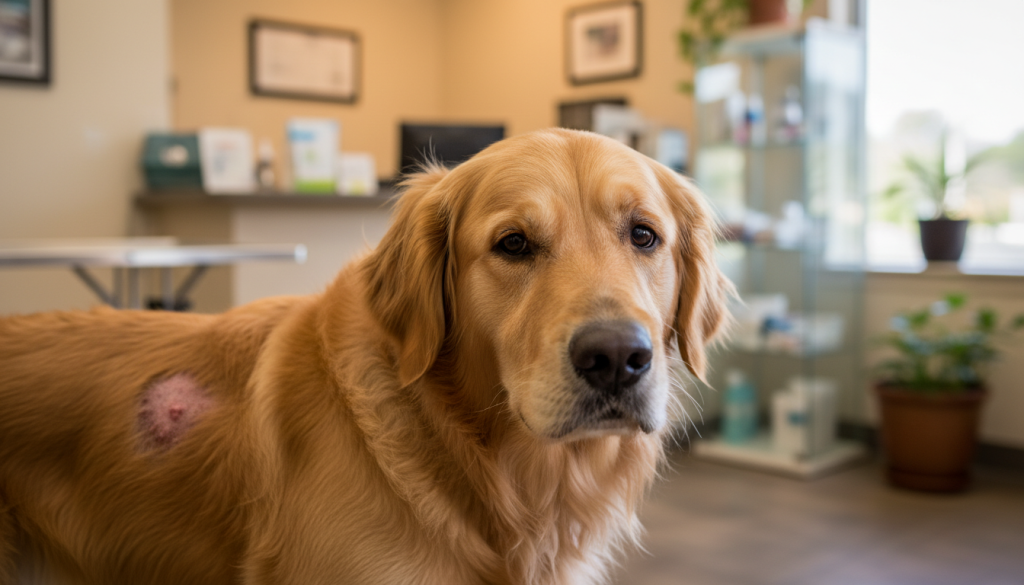
Mats behind the ears and on hind limbs create warm, low-airflow pockets where bacteria thrive. These hot zones are common in this breed and often hide early redness.
Underlying conditions like hypothyroidism can also raise risk. Middle-aged pets may show thinning fur, dry scaly skin, and recurring ear or skin infections that need lifelong management.
- Pattern to watch: repeated hot spots usually signal an untreated trigger, not bad luck.
- Action tip: if lesions recur, talk with your vet about allergy testing and screening for underlying disease.
What Hot Spots Look Like and When to See a Vet
A fast-moving sore can appear on a dog’s skin in a matter of hours, and owners often spot it by smell or sudden licking. Early recognition saves time and prevents pain.

Early signs are usually obvious: sudden intense licking, a damp patch of fur, a warm or “hot” smell, or a tender spot the dog avoids being touched.
When fur parts, you may find a red, shiny, or wet area with missing hair. The patch can quickly crust, ooze, or form thick scabs. Dogs with allergic tendencies often start by scratching or chewing near the ears, neck, hips, or tail base.
Quick inspection tips
- Part the coat in good light and look for dampness or redness.
- Check around the ears, under collars, and at the tail base where irritation hides.
- Note smell, heat, and whether your dog flinches when touched.
Same‑day red flags
Bring your dog to the vet the same day if you see rapid expansion, pus-like discharge, heavy swelling, feverish behavior or marked lethargy, or nonstop chewing that won’t stop.
Lesions near the eye, deep skin folds, or at the ear opening require prompt evaluation because complications can escalate quickly.
Expectation: many hot spot cases need professional treatment rather than waiting it out, especially in a double-coated breed prone to trapped moisture and repeated issues.
Veterinary Diagnosis and Treatment Options
Prompt veterinary assessment separates routine hot spots from conditions that need targeted testing or longer treatment.
The vet begins with a focused skin exam. The clinician checks lesion depth, looks for parasites, and inspects ears and nearby skin for broader patterns of inflammation.
How infection is confirmed and rule-outs
Clinicians often use skin cytology—a quick microscope check—to spot bacteria or yeast. That test guides whether topical care or oral antibiotics are best.
If hot spots recur, the vet may rule out deeper skin disease, parasites, or endocrine causes such as hypothyroidism.
Medications and common treatments
Treatment typically includes trimming hair around the lesion, gentle cleaning, and a combination of topical antiseptics and anti-inflammatory medications.
For more severe infection, short courses of oral antibiotics or antifungals help dogs recover fast. Stopping early can cause relapse, so follow the full prescription.
Managing underlying causes and recovery expectations
Addressing triggers is key: allergy control plans, ear treatment, and testing for thyroid disease can reduce repeat episodes. Atopy often appears between 2 and 6 years and needs long-term planning.
- Follow-up: many dogs need a recheck to confirm healing and adjust meds.
- Owner role: reputable breeders and kennel club guidelines recommend awareness of breed health when planning care and breeding decisions.
At-Home Care That Supports Healing Without Making It Worse
Simple, timely steps at home can help a sore heal while you follow your vet’s plan. These measures support treatment and limit pain, but they do not replace professional care for spreading or severe infections.
Safe coat management near a lesion
Keep hair from matting around the spot to improve airflow and lower bacterial growth. Use a comb to find tangles beside — not on — the raw area.
Avoid aggressive brushing directly over broken skin. For a retriever with thick undercoat, carefully trim surrounding fur or ask a groomer for a targeted cut.
Bathing basics for sensitive skin
Choose a gentle, hypoallergenic shampoo made for sensitive dogs or for atopy-prone goldens. Rinse thoroughly and fully dry the undercoat — dampness trapped under fur makes things worse.
Limit baths to the vet’s recommendation and use lukewarm water; give the skin time to recover between washes.
Preventing self‑trauma from licking and chewing
Stop obsessive licking with an e-collar or recovery cone when needed. Keep nails trimmed and add calm enrichment so the dog spends less time focused on the spot.
Do short daily checks and a weekly grooming rhythm so your family can spot problems early without spending too much time on care.
Safety note: at-home measures support veterinary treatment; seek immediate vet care if infection spreads, worsens, or causes fever.
Long-Term Prevention Plan for Skin and Ear Health
Small, consistent habits often stop skin flare-ups before they start. Build a simple prevention mindset: reduce itch, cut moisture, and catch matting early. These steps fit real life and lower repeat problems in this sporting breed.
Weekly grooming routine
Brush at least once or twice each week to cut shedding and prevent mats, focusing behind the ears and on hind limbs.
Line-brush to the skin and detangle gently. Check the coat more often during heavy shedding seasons.
Ear care schedule
Clean ears every 2–3 weeks with a drying-agent cleanser and always after swimming or bathing. Damp ears plus allergies can spiral into infection, so keep a simple cleaning kit on hand.
Allergy reduction and home habits
Wipe paws and coat after outdoor play, wash bedding weekly, and vacuum common lounging spots. Talk with your vet about allergy control when itching is frequent.
Nutrition, supplements, and vet guidance
Feed an AAFCO-compliant diet and discuss omega-3 fish oil for skin support. Your veterinarian can recommend targeted supplements based on the dog’s needs and conditions.
Exercise, training, and mental stimulation
Daily walks, retrieving games, scent work, and short training sessions reduce boredom licking. Consistent exercise and mental stimulation help prevent stress-related self‑trauma.
Budgeting and planning for recurring care
Plan a monthly pet budget for grooming tools, follow-up visits, and allergy care. Compare pet insurance plans to ease costs from repeat skin issues and other breed health risks like hip dysplasia and progressive retinal atrophy.
Practical note: Responsible breeders, the American Kennel Club, and retriever club groups encourage health screening and record-keeping. Ask questions, keep records, and schedule regular vet checks to protect long-term comfort.
Conclusion
Conclusion, When a patch of skin becomes damp and red, early steps cut recovery time and suffering.
Hot spots are common but treatable in golden retrievers; quick veterinary care plus steady at-home attention usually brings fast improvement. The basic cause is simple: itch (often allergies) plus moisture and a dense coat can turn a small irritation into a painful infection for a dog.
Balance prompt vet guidance with regular grooming and monitoring. Build a prevention plan that targets triggers, not just each flare.
With consistent grooming and skin checks over the years, many families can reduce hot spot frequency and keep this breed comfortable and healthy for the long term.