Start with the dog in front of you: this guide helps match protein ratios, calories, and meal timing to a working, active companion rather than chasing trends. It focuses on practical, performance nutrition basics for the modern german shepherd owner.
High-energy dogs can look lean yet still be under-fueled. They also gain weight fast when activity drops—weekends off, injuries, or cold weather make a big difference.
This article frames feeding around real-life energy: protein-to-calorie thinking, balanced fat and carbs, feeding windows, and portion control. Safety matters too; common risks like bloat are covered so you keep meals effective and safe.
Expect clear tips for daily life: structured training, long walks, sprint play, or job-like enrichment. Use this piece as a tuning guide—choose a solid base diet, then adjust portions and timing as work level changes.
Key Takeaways
- Match food to activity: adjust calories when work level changes.
- Focus on protein-to-calorie balance for performance and recovery.
- Keep feeding windows consistent to reduce bloat risk.
- Watch joints, digestion, and coat health without automatic supplements.
- Use portion control, not trends, as the primary tool for weight management.
Why this high-energy breed needs a performance-focused diet
This active breed needs food that fuels long workdays and sharp minds. Their origins in herding created dogs built for stamina, attention, and quick recovery. Over time, the same traits made them ideal for police, military, disability assistance, and search roles.
Working-dog roots and modern expectations
Many shepherds still act like they are “on duty.” That means diet must support steady energy, muscle repair, and mental focus rather than only appearance.
Daily activity and why busy dogs burn fuel differently
Tracking, scent work, patrol-style movement, and intense training use different fuel than casual walks. A dog can look fit yet lack muscle or raid the trash if under-fueled.
- Busy day: obedience drills plus a long hike — increase portions or add a recovery meal.
- Quiet day: short walks and rest — reduce calories to avoid weight gain.
- Signs of mismatch: frantic behavior, muscle loss, or gaining thickness over the ribs.
Practical approach: track portions, weigh weekly, and keep meal timing steady so you match intake to ability and workload without overdoing protein.
Baseline nutrition rules before you tweak protein and calories
Before tweaking macros, make sure the dog’s core diet is solid and reliable. Start with a food that meets AAFCO “complete and balanced” standards. That label means the formula supplies essential vitamins and minerals for a life stage, not just marketing claims.
Choose an AAFCO-complete diet as your foundation
An AAFCO-complete diet gives consistent nutrition so you can safely adjust protein and calories later. For a german shepherd owner, that means the food supports growth, maintenance, or active work without guesswork.
When supplements help—and when they’re unnecessary
Supplements can target real conditions. A vet may suggest digestive enzymes for exocrine pancreatic insufficiency or a joint product for painful mobility issues.
But, adding multivitamin powders to a complete diet often adds cost and can unbalance intake. Use supplements only with clear reason and vet guidance.
Why table scraps can backfire for active dogs
Fatty human foods may cause GI upset, diarrhea, or pancreatitis. That risk is especially harmful when a working dog needs steady energy for training the next day.
If the family wants to share, offer measured dog treats or a bit of daily kibble from the regular ration. Keep a simple log of brand, portion, stool quality, and energy. That record gives useful information if the vet needs to troubleshoot.
Protein ratios for athletic German Shepherds
Performance feeding focuses on how much usable protein a working dog gets at each meal, not just the label percentage. Think in protein-per-calorie terms so portions change without throwing off recovery or lean mass.
https://www.youtube.com/watch?v=GIn949W97_Y
How to think in protein-to-calorie terms
Percent protein alone can mislead when calorie targets shift. A denser kibble with 30% protein may deliver less protein per 1,000 kcal than a higher-fat formula at the same portion size.
- Calculate grams of protein per 100 kcal to compare foods.
- Adjust portions so protein grams meet recovery needs while total calories match activity.
- Change slowly over 3–7 days and watch energy and stool quality.
Active adult targets vs. a couch-week
An active adult needs steady protein to preserve muscle during heavy work. During short low-activity spells—injury, travel, or bad weather—reduce calories but keep sufficient protein grams.
Puppy caution for growing shepherd dogs
Rapid weight gain stresses developing joints. For puppies, support steady growth: avoid pushing calories too high and follow breeder or vet guidance on when to move to adult food around 12–18 months.
Quality signals on the label
Look for named animal proteins, clear sourcing, and digestibility notes. Good labels and credible breeders who screen for joint issues help protect long-term health.
Quick check: monitor body condition, stool, and play energy. If a puppy isn’t thriving or an adult loses weight despite eating, consult a vet rather than simply increasing portions.
Balancing fat and carbs for sustained energy and recovery
For steady endurance and sharp bursts, a measured mix of fats and carbs matters more than raw calories. This section explains how each macro supports a working dog and how to test changes safely at home.
Fat as steady fuel
Fat provides long-lasting energy for endurance-style activity. Many german shepherds stay satisfied and focused during long training blocks when fat supplies most slow-burning calories.
Carbs for quick work
Carbohydrates support sprint play, fetch, and agility. They refill glycogen so the dog can return to intense work the next day without lag.
- Too little fat can leave an active dog hungry and flat; too much raises calorie density and weight risk.
- Adjust one variable at a time: change portion size first, then the macro balance by food choice.
- Track performance and stool quality for a week to judge the effect.
Examples: a weekend hiker (higher fat for endurance) vs. a daily backyard ball player (higher carbs for repeats). A balanced plan aids recovery, muscle repair, and a calmer temperament after intense work.
Feeding windows that match training, play, and work
Align meals with the day’s demands to keep performance steady and digestion calm. Pick windows that fit your household routine so the dog has predictable fuel before training and steady recovery after exercise.
Ideal meal timing on normal days vs. heavy exercise days
On a normal day, feed twice: morning and evening, with modest snacks for short walks. This reduces hunger-driven behavior and keeps energy stable.
On heavy work or long training days, shift a portion earlier and add a small recovery meal after intense sessions. Keep portions measured to prevent GI upset.
Pre-work snacks: when they help and when to skip them
A light pre-work snack can help long morning outings or early agility trials. Skip snacks for dogs that gulp food, vomit, or show nausea. Watch behavior and adjust.
Post-exercise recovery feeding for muscle repair
Post-exercise meals should be calm and measured. Offer recovery food within an hour if activity was long, but avoid large reward-feeding after training.
- Use part of the daily ration as obedience rewards to control calories and reinforce learning.
- Watch pacing, poor focus, or nighttime hunger as signs to tweak meal timing or portions.
- Make the feeding window consistent—the best schedule is the one the family keeps.
Portion control that prevents weight creep in powerful, muscular dogs
Portion control is the single habit that quietly protects a powerful, muscular dog from creeping fat. Start with the bag’s feeding guide as a baseline, then tune portions to the dog in front of you.
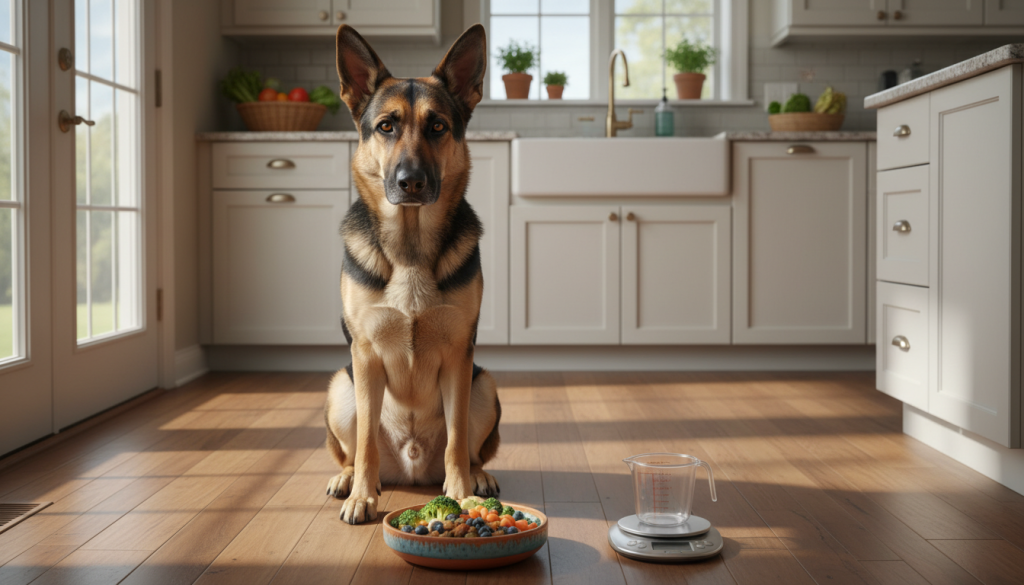
Start with the bag’s guide, then adjust
The feeding chart gives a useful starting point. Measure portions with a cup or scale and record changes for a week.
Use body condition scoring and weekly weigh-ins
Feel for ribs, watch for a visible waist, and weigh weekly. Hands-on checks catch hidden fat that can hide under strong muscle.
Budget calories for treats during obedience training
Count treats as part of the daily ration. Use small kibble pieces or set a clear calorie allowance so obedience and reward-based training don’t add excess energy.
Slow feeders and meal splitting for speed and satiety
Split meals or use slow-feeder bowls to slow intake and increase fullness. This helps multi-dog homes and reduces gulping after active play.
- Tie portions to lifestyle: more food on heavy work days, slightly less on rest days.
- During heavy grooming season, judge condition by touch, not coat volume.
Meal frequency by age: puppy, adolescent, and adult schedules
Meal timing should follow the dog’s life stage. A clear routine helps energy, digestion, and steady growth. Owners can use age-based guidelines and then adjust to the individual animal in front of them.
Puppies: three to four meals per day
Puppy feeding works best with three to four small meals daily. Frequent meals keep blood sugar steady and reduce overeating during rapid growth.
Why it matters: steady intake supports bone and muscle development and eases digestion during intense growth periods.
Adolescents: transition with patience
During teenage months, appetite and activity often spike. Adjust portion sizes and meal times gradually.
Don’t panic-switch foods; minor tweaks and close monitoring of body condition and behavior are usually enough.
Adults: twice-daily feeding and the 12–18 month switch
Most adult dogs do well on two meals per day. This pattern supports stable energy for training and family life.
Move from puppy to adult food around 12–18 months, based on size, growth rate, and body condition. Discuss timing with your vet, breeders, or kennel club guidance as needed.
- Rule of thumb: let the dog’s weight, coat, and activity guide the change.
- Remember: looking adult does not always mean maturity inside; control calories during late growth to protect long-term mobility.
German Shepherds and bloat risk: safer feeding around exercise
Bloat is when the stomach fills with gas and can twist, called gastric dilation-volvulus (GDV). It is a sudden, serious condition that needs immediate veterinary care.
Why deep-chested dogs face higher risk
Large, deep-chested breeds have a body shape that can allow the stomach more room to rotate. That anatomical setup raises the odds of GDV compared with compact breeds.
This does not mean every dog will have problems; it means owners of this breed should use prevention habits.
Skip hard exercise one hour before and after meals
Rule: avoid hard exercise for one hour before and after feeding. “Hard” means sprints, long fetch sessions, high‑intensity training, or anything that makes the dog pant heavily.
Light leash walks or calm activity are fine, but vigorous play close to mealtime increases risk.
Smaller, frequent meals and slow feeders
Some dogs gulp food or swallow air when excited. Splitting the daily ration into smaller meals can reduce a full stomach and lower risk.
- Use a slow‑feeder bowl to slow intake and cut air swallowing.
- Feed calm, separate spaces if multiple dogs eat together.
- Offer measured meals on a regular schedule to control intake and stress.
Emergency signs and prevention options
If a dog shows a swollen abdomen, unproductive retching, restlessness, or collapse, treat it as an emergency and go to a clinic right away.
For high‑risk dogs, owners can discuss gastropexy with their vet. That surgical step is often timed around spay or neuter and can prevent stomach rotation.
Small routine changes—timing meals, splitting portions, and using slow feeders—can meaningfully reduce risk over the long end of your dog’s life.
Supporting joints and mobility through nutrition and weight management
Extra pounds quietly add years of wear to joints that already work hard every day. In shepherd-type dogs, hip dysplasia affects a notable share—reports often cite ~20% in some datasets—so keeping weight in check matters for long-term quality of life.
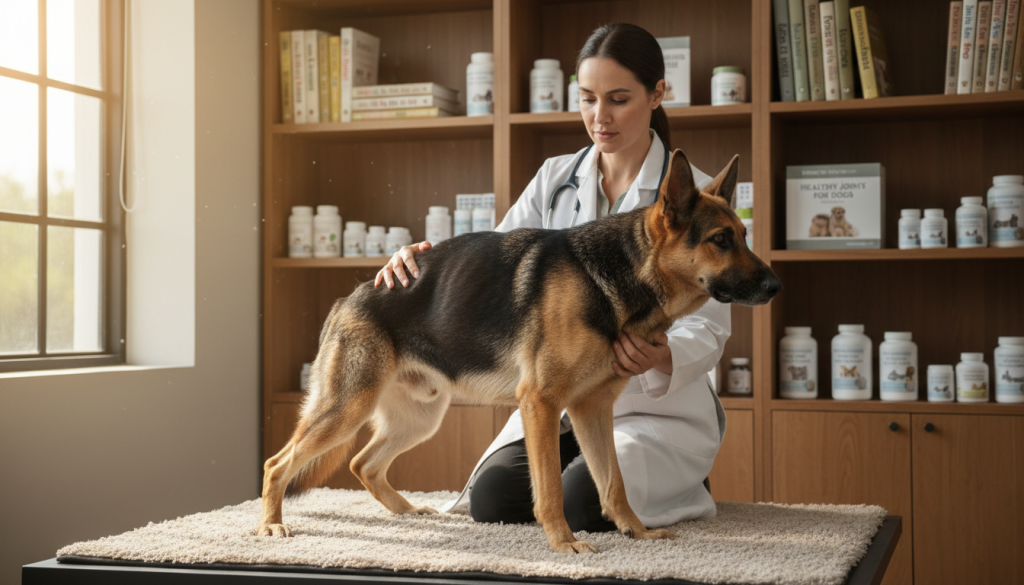
How weight stresses hips and elbows
Every pound of extra mass increases load on hips and elbow joints. That added force accelerates cartilage breakdown and makes dysplasia and arthritis symptoms worse, even in dogs that look muscular.
Nutrition strategies to protect mobility
Keep the dog lean and prioritize enough protein to preserve muscle. Avoid calorie creep from treats and table food by measuring portions and counting treats as part of the daily ration.
When supplements and vet input are appropriate
A vet may recommend joint supplements or prescription diets for dogs with diagnosed joint disease or persistent stiffness. Use supplements when there is a clear diagnosis, not as a default for every active animal.
- Watch for limping, reluctance to jump, or gait changes—these are health signals.
- On painful days, reduce calories slightly and keep meals measured.
- Long-term weight management protects hips, elbows, and overall life quality.
Feeding for skin and double-coat health in heavy shedders
A healthy coat starts with the food your dog eats, not just the brush in your hand.
Fatty acids for coat quality and skin comfort
Omega-3 and omega-6 fats support a glossy coat and reduce itch. Include foods or supplements with EPA/DHA and balanced linoleic acid so skin stays resilient and the coat sheds less painfully.
Seasonal shedding and why diet consistency matters
Double-coated dogs often peak in spring and fall. Sudden food changes can cause a dull coat or loose stools.
Keep transitions slow: mix new food over 5–7 days and keep feeding routines steady at home to protect skin and digestion.
- Brush daily during heavy sheds; regular grooming year-round reduces hair around the home.
- Avoid frequent baths; over-washing strips natural oils and dries skin—bathe only as needed with a dog-appropriate shampoo.
- Watch for flaky skin, constant itching, or recurrent ear issues—these may signal allergies or other health concerns.
Practical tip: pair balanced fats in the diet with a short daily grooming session. Consistency wins over perfection for most families and keeps the coat and skin in better health each day.
When to call your vet and personalize the plan
Watch for steady changes in eating, stool, or behavior—these are often the first clues that something medical is wrong.
Red flags that need prompt attention
Call the vet if your dog has ongoing diarrhea, repeated vomiting, chronic itching, frequent ear infections, or unexplained weight loss—especially when a diet change didn’t help.
Health conditions that change diet choices
Some conditions require a different approach. Exocrine pancreatic insufficiency (EPI) often shows as weight loss despite a big appetite, loose stools, and gas. EPI needs lifelong pancreatic enzyme support and a tailored feeding plan.
Food allergies and intolerances can cause itching and recurrent GI signs. Controlled ingredient trials are the right way to test for allergies—don’t improvise at home without vet guidance.
What to bring to make the visit efficient
Bring the food label, exact feeding amounts, treat list, meal timing, and notes on stool and recent changes. This information lets the vet personalize recommendations faster.
Practical notes for real homes
If you adopted or rescued a dog, unknown history is common; careful tracking at home helps the vet narrow causes. Agree with other people in the household and ask visitors or strangers not to give snacks that can derail the plan.
The vet is a partner—their exam and tests let you build a plan that fits the dog’s lifestyle, medical conditions, and your home routine for the long life ahead.
Conclusion
Small, consistent adjustments to diet produce the biggest gains for a busy shepherd dog over years.
Start with an AAFCO-complete base, then tune protein-to-calorie balance, fats and carbs, feeding windows, and portions to match training load and recovery. Use measured meals, slow feeders, and calm timing to reduce bloat risk around exercise, especially in deep-chested dogs.
Let body condition, energy, stool quality, and coat health guide changes more than marketing claims. Responsible people who aim for police work, search, or advanced obedience find nutrition makes big goals sustainable.
Temperament and needs vary; personalization is good care, not failure. Pick one small change this week—measure food, cut treat calories, or shift a meal—and reassess in two weeks with notes to share with a vet or breeder.
FAQ
Q: What protein-to-calorie ratio is best for a high-energy German Shepherd dog?
A: Aim for a diet that provides roughly 25–30% crude protein on a dry-matter basis for active adults, which commonly equates to a higher protein-to-calorie ratio than maintenance kibbles. Think in terms of grams of protein per 1,000 kcal: around 75–90 g/1,000 kcal supports sustained muscle work. Always choose an AAFCO-complete formula and adjust based on your dog’s condition, activity level, and vet advice.
Q: How do I balance fat and carbohydrates for endurance and recovery?
A: For long sessions or working days, a slightly higher fat content (12–20% on dry matter) supplies steady energy. Carbohydrates are important for sprint efforts and quick glycogen replenishment; moderate, digestible sources like sweet potato or rice are preferable. The goal is a mix that fuels both steady-state endurance and short bursts of activity without causing GI upset.
Q: When should I change portion sizes from the bag’s feeding guide?
A: Use the bag as a starting point. Then monitor your dog’s body condition score, weekly weight, coat quality, and energy. Reduce calories if excess weight appears; increase if the dog is losing weight or underperforming. Small, incremental adjustments (5–10%) every one to two weeks are safer than large jumps.
Q: How many meals per day are best for puppies and adults?
A: Puppies typically eat three to four times daily to steady glucose and support growth. Adults usually do well on two meals per day—morning and evening—to match activity and reduce hunger. For highly active dogs or those at risk of bloat, splitting calories into more frequent, smaller meals can help.
Q: Can supplements help joint health and when are they necessary?
A: Supplements like glucosamine, chondroitin, omega-3 fatty acids (EPA/DHA), and green-lipped mussel can support joint comfort and mobility, especially in dogs with breed-related hip issues or early arthritis. Start them when clinical signs appear or when recommended by your veterinarian—routine use without signs may be unnecessary.
Q: Are table scraps okay for a busy, working breed?
A: Table scraps often add unbalanced calories, excess fat, and salt, which can cause weight gain or digestive upset. For training, use measured, low-calorie treats or pieces of the dog’s kibble to prevent calorie creep. Reserve high-value human foods for occasional rewards, not daily feeding.
Q: What is the safest pre- and post-exercise feeding schedule?
A: Avoid heavy meals for at least one hour before intense activity. Offer a small, easily digestible snack 15–30 minutes prior if needed. After exercise, feed a regular meal about 30–60 minutes later to aid muscle repair, provided the dog is calm and not overheated. This timing reduces bloat risk and improves recovery.
Q: How do I prevent bloat (GDV) in a deep-chested breed?
A: Reduce GDV risk by feeding smaller, more frequent meals, avoiding vigorous exercise for one hour before and after eating, using slow-feeder bowls, and preventing rapid water gulping. If your dog has risk factors or a family history of GDV, discuss preventive options with your veterinarian, including gastropexy during unrelated surgeries.
Q: What signs mean I should call the vet about nutrition or health?
A: Contact your veterinarian for persistent vomiting, chronic diarrhea, unexplained weight loss, marked appetite change, severe itching, lameness, or sudden behavioral shifts. Also seek help if you suspect food allergy, exocrine pancreatic insufficiency (EPI), or if supplements interact with medications.
Q: How do I choose quality proteins and read labels correctly?
A: Favor formulas that list named meat sources (chicken, lamb, beef, salmon) near the top of the ingredient list. Look for specific amino acid content when available and high digestibility claims supported by manufacturer testing. Avoid vague terms like “meat meal” without qualifiers; instead pick brands that disclose sourcing and nutrient analysis.
Q: How should I budget calories for training treats without causing weight gain?
A: Calculate daily calorie needs, then reserve 5–10% for training rewards. Use very small, high-value treats or cut regular kibble into tiny pieces. For long training sessions, substitute low-calorie options like steamed veggies (as tolerated) or specialized training treats to keep total intake within your calorie plan.
Q: When is it appropriate to switch a dog to adult food?
A: Most large, powerful breeds transition to adult formulas between 12 and 18 months. Watch growth rate and musculoskeletal maturity; delaying until nearer 18 months can reduce excessive growth spurts in some dogs. Consult your vet to pick the right moment and to choose an adult diet that supports activity without excess calories.
Q: How can nutrition help with double-coat and skin health?
A: Adequate omega-3 and omega-6 fatty acids, quality protein, and vitamins help maintain a healthy double coat and skin. Supplementing with fish oil (EPA/DHA) can reduce inflammation and improve shine; introduce oils slowly and under vet guidance to avoid GI upset and caloric overload.
Q: What adjustments are needed for dogs prone to hip dysplasia or elbow issues?
A: Keep body weight lean to limit joint stress, choose diets with controlled calorie density, and include joint-support nutrients when recommended. Avoid overfeeding during growth; puppies should follow breed-appropriate feeding plans to prevent too-rapid weight gain that worsens hip and elbow development.
Q: How do I prepare for a vet visit about nutrition?
A: Bring the dog’s current food label, portion sizes, feeding times, treat types, exercise routine, and notes on any clinical signs (GI upset, itching, weight changes). This information helps the veterinarian tailor recommendations, run tests if needed, and create a realistic, personalized plan.