This guide helps owners choose what truly improves comfort, mobility, and mental sharpness for an older poodle. The breed is lively and smart, with a history in water work and service. As these dogs age, needs change even when they still look fine.
Expect subtle shifts in energy, sleep, confidence, and how much routine they tolerate. Small changes in behavior can mean health concerns, so pair purchases with regular vet checks.
Rather than less life, seniors often need smarter routines: shorter, more frequent walks, better traction, and calmer enrichment. Size matters — a Standard and a Toy have very different stride and safety needs.
Read on for three practical pillars: mind (cognitive changes), body (joint support and mobility), and environment (home setup and daily schedule). This section frames the article as a buyer’s guide for owners focused on real, present-day improvements.
Key Takeaways
- Older poodles show subtle signs of aging; watch energy and routine tolerance.
- Focus on smarter routines: short walks, traction aids, and calm enrichment.
- Choose products that match size and lifestyle to reduce safety risks.
- Address both cognitive and joint support for better daily comfort.
- New behavior changes merit a vet check before big purchases.
Senior Poodle care goals and what changes with age
Aging dogs need a plan that balances gentle activity with brain games to keep life comfortable. Goals narrow to the essentials: steady mobility, steady appetite, and calm confidence as overall energy shifts.
Why older dogs still need movement and challenge
Even in later years, short bouts of exercise protect joints and stamina. Keep sessions lower-impact and allow more recovery time.
Regular, varied training and puzzle play deliver brain work without long sessions. That kind of mental stimulation reduces boredom and unwanted behaviors.
Quality-of-life priorities for a busy home
In a bustling family, small wins matter: 10-minute enrichment blocks, swapped toys, and a clear daily routine add comfort.
- Senior care goals: maintain mobility, protect confidence, support digestion, preserve engagement.
- Quick enrichment, predictable walks, and safe surfaces cut slip and pain risk.
- Simple checklist: movement, appetite, sleep, mood, bathroom habits—check weekly and adjust time or tools as needed.
Know your Poodle variety to buy the right support
Different sizes mean different risks and gear—buying for your dog starts with knowing their build. Matching support to body weight and height prevents common mistakes like beds that are too firm or ramps that are too steep. Assess pounds and inches before you shop.
Standard size and stamina considerations
Standard poodle adults commonly weigh about 45-70 pounds and stand roughly 15-22 inches. These dogs often have high endurance and need load-bearing solutions.
Choose thicker orthopedic foam, wider ramps, and heavy-duty traction to protect hips and shoulders under greater load.
Small-body safety: toy and compact needs
Toy poodle breeds are often ~4-10 pounds and under 10 inches. Toy poodles were bred for small size and need gentler step heights and non-slip surfaces.
Avoid high jumps and narrow harnesses; tiny joints suffer when gear is oversized or rigid.
Miniature vs. standard vs. toy: practical buying tips
Miniatures sit between the extremes at ~15-20 pounds and ~11-15 inches. They can be athletic but risk injury from repeated furniture jumps.
- Fit charts: match harness girth and neck measurements to pounds and inches.
- Ramp ratio: a gentler ramp length-to-height keeps slope under 20° for larger dogs and under 25° for small dogs.
- Bed sizing: allow 4–6 inches of clearance beyond the dog’s length for comfortable turning.
All varieties share high intelligence and social needs, so even a small companion remains active and requires thoughtful, size-appropriate care.
Spotting cognitive decline in senior dogs and protecting the mind
Watch for small shifts in habits—like pacing or new clinginess—that hint the mind needs more help.
Early behavior clues
Common early signs owners notice include:
- Pacing or getting “stuck” in corners.
- New clinginess or confusion around routines.
- Nighttime restlessness or sudden anxiety.
Buyer’s guide to mental enrichment tools
Choose puzzles by difficulty level: easy treats for beginners, harder puzzles for fast learners.
- Snuffle mats and lick mats for calm stimulation.
- Treat puzzles sized appropriately — small compartments for toy sizes; rugged builds for larger breeds.
- Scent-work kits for indoor days when walks are limited.
Keeping training engaging
Short, varied sessions work best. Add low-impact targeting games and new tricks to keep interest high.
Stimulation delivered in small doses preserves confidence and reduces boredom.
When “stubborn” means something else
Remember that poodles may seem stubborn but refusal can signal pain, hearing loss, or cognitive change.
Track triggers, time-of-day patterns, and recovery time. That simple log helps people decide the next product or routine choice.
Joint support and mobility: choosing products that actually help
Small changes in stride or stiffness are signals that supportive gear can help. Owners should match tools to body size and common health issues so the right buys make a real difference.
Common mobility risks by variety
Large dogs are more prone to hip dysplasia; the standard poodle often needs sturdier support and thicker bedding. Tiny companions face patellar luxation, so gentler step heights and low ramps matter for a toy poodle.
Orthopedic bed checklist
Look for high-density foam, at least 3–4 inches thick, a low-entry rim, and a washable cover. Ensure the surface allows full-body sprawl and easy edge access for stiff joints.
Ramps, traction, and handling
Choose non-slip ramps and stable frames for sofas, beds, and cars. Add runner rugs and grip mats on hard floors to prevent slips that worsen pain.
Harnesses, leashes, and grooming choices
Pick padded, easy-on harnesses with a handle for balance; front-clip options reduce shoulder strain on walks. For coat care, prefer practical grooming clips that cut matting after outdoor play. Traditional clips began as protection in cold water, but modern pet clips are an easier-care choice that aid movement.
Exercise for older Poodles without overdoing it
Balance matters: steady, lower-impact activity helps aging dogs stay mobile and mentally engaged. Aim for consistent movement that protects joints and keeps confidence high.
Daily walk targets and how intensity varies by size
Plan about one hour of total activity per day, split into shorter outings. Standards may still enjoy longer runs or hikes when conditioned; healthy adults can run ~5 miles and hike up to ~10 miles at their best level.
Miniatures do well with shorter distances—up to ~3 miles running or ~5 miles hiking when fit. Toys tire faster and benefit from brief, frequent walks on soft surfaces.
Low-impact options for a water-loving breed
Swimming is an excellent, low-impact conditioner for a water-loving dog; use a life vest for safety and build sessions slowly. Gentle fetch on grass and controlled, short hill repeats help strength without sharp joint stress.
Signs to lighten the plan versus add enrichment
- Too much: stiffness the next morning, lagging behind, or panting that lingers beyond recovery.
- Too little: restlessness, attention-seeking, or weight gain.
- Adjust by duration, terrain, and recovery time; then choose supportive gear (traction mats, padded harnesses) based on what limits comfort.
Practical note: over the years, consistency beats intensity—regular, manageable activity preserves mobility and joy.
Senior diet and digestive comfort: food choices that fit aging health
As dogs age, their stomachs often prefer predictability: steady meals, gentler textures, and calmer routines.
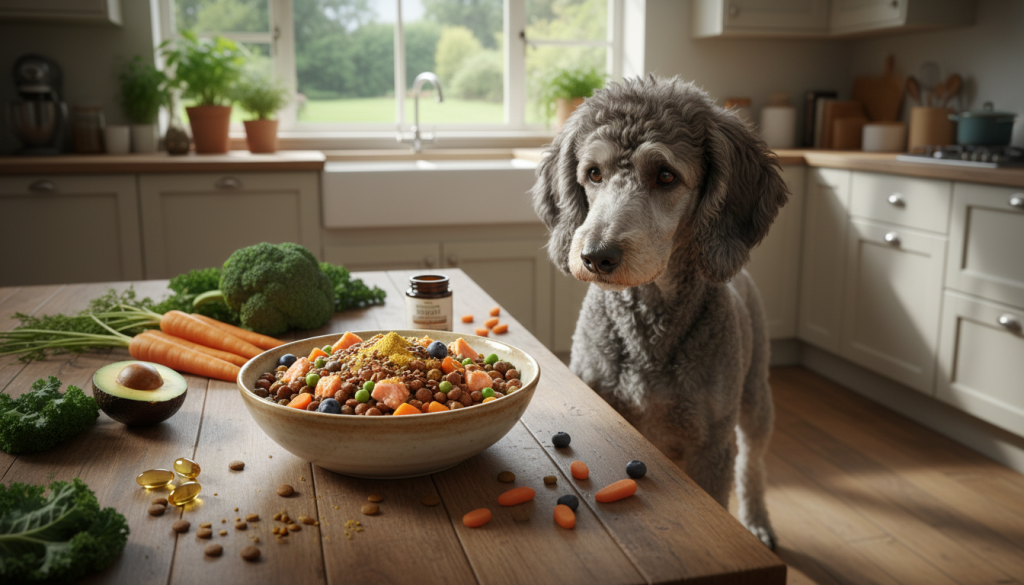
Feeding routine to reduce bloat risk
Offer 2–3 measured meals a day rather than one large serving. Measured portions lower bloat risk and keep energy even.
After eating, allow quiet rest for 20–30 minutes and avoid vigorous play. These small steps cut the chance of stomach torsion and an uneasy stomach.
When sensitivities need special diets
Some dogs develop food sensitivities that cause vomiting, loose stools, or weight loss. Try a senior formula or a sensitive-stomach recipe first.
If problems persist, ask the vet about a therapeutic diet to rule out allergies or medical causes.
Portion guidance by size
- Standard: 1–2 cups dry daily (adjust by pounds and activity).
- Miniature: ¾–1 cup daily.
- Toy: ¼–¾ cup daily.
Hydration and symptom tracking
Place multiple water stations and use low-lip bowls for neck stiffness. Track vomiting frequency, stool changes, appetite dips, and any other issues to report to your vet.
Coat, skin, and grooming buys that make senior care easier
As hair thins and skin changes with age, grooming becomes a comfort practice rather than a chore. A single, hair-like coat grows continuously and can mat quickly. Regular care prevents tight tangles that pull and cause pain.
Poodle coat basics and why tools matter
The coat is hair, not fur, so it needs brushing to stay loose. Low shedding does not equal low maintenance; mats limit movement and irritate skin.
Home grooming toolkit
- Slicker brush and wide-tooth metal comb for detangling hair.
- Pet-safe detangling spray and a gentle mat splitter (use carefully).
- Quiet clippers, non-slip bath mat, and nail trimmers to stop clicking.
Ear care and tear-stain basics
Use a vet-approved ear cleaner and cotton pads for weekly checks. Wipe tear staining gently a few times per week.
Note: Many people find these dogs easier for allergies, but “hypoallergenic” is not absolute. Consistent grooming and cleaning keep both pet and household comfortable.
Comfortable home setup for senior dogs and families
Simple household tweaks can prevent slips, reduce stress, and keep senior dogs moving with confidence. Small upgrades to the home often deliver the largest quality-of-life gain for an older dog—sometimes more than another supplement.
Warmth and weather planning for small varieties
Miniature and toy varieties tolerate cold less well than larger dogs. In cold U.S. winters, use sweaters or lightweight jackets for short outings.
Tip: Keep outdoor time brief in harsh weather and dry the coat after walks to avoid chill and extra grooming later.
Creating safe rest zones to reduce slips and night wandering
Place cozy beds away from drafts and next to where the family spends time so the dog feels connected without following constantly.
Use non-slip runners, nightlights for hallways, and consider gating stairs if balance is declining. These steps cut fall risk and ease stress at night.
Designing secure paths and nightly routine
Think in routes: kitchen to door to bed. Secure those paths with traction mats and clear clutter so walks through the house are predictable and safe.
For night wandering, set a calm bedtime routine, give gentle enrichment earlier in the day, and keep a quiet sleep area to reduce pacing and restlessness.
- Big wins: warm, draft-free beds; short outdoor time when cold; non-slip surfaces.
- Placement: beds near family areas to support social needs without constant movement.
- Safety: nightlights and gates to protect balance and reduce anxiety.
Behavior, companionship, and alone-time planning
Changes in hearing or sight can make a senior dog rely more on familiar faces and cues. That reliance raises social needs and makes predictable routines comforting.
Separation anxiety and boredom
Predictability helps. A calm pre-departure routine, a tidy home base (crate or low-traffic pen), and consistent timing reduce stress.
Build short departures first. Gradually increase alone time up to 4–8 hours while watching for pacing, barking, or chewing.
Enrichment “while you’re out”
Choose durable chews and treat-dispensing toys to offer quiet stimulation. Rotate items every few days to keep interest high.
- Heavy-duty chew or dental toys for long sessions.
- Slow-release puzzle feeders to stretch mealtime into calm activity.
- Soft, cozy bedding near a family room so the dog feels connected.
Kids and senior pets
Teach children gentle handling: no sudden lifts, no rough play, and respect sleep zones. Supervise all interactions so both the child and the dog stay safe.
Training simple “settle” cues and short guided sessions help the dog feel safe and oriented. Enrichment is more than amusement; it lowers stress behaviors and supports good family life.
Health issues to monitor in older Poodles and what to screen for
Some health changes arrive quietly; noticing them early makes a big difference. This section offers a clear senior-health watch list to bring to the vet and topics to discuss during screenings, not a self-diagnosis guide.
Breed-prone concerns to review with your vet
Talk about conditions that the breed can inherit: Progressive Retinal Atrophy (PRA), Addison’s disease, diabetes, and cancer.
Explain subtle vision shifts and ask about PRA screening. Discuss tests for Addison’s if your dog shows unusual lethargy, GI signs, or poor stress tolerance.
Digestive signs to track and report
Keep a simple log of stool consistency, vomiting episodes, gassiness, appetite changes, and weight trends.
- Note frequency and timing of vomiting or loose stools.
- Introduce diet changes slowly and record reactions.
- Report sudden weight loss, persistent appetite change, or signs of bloat promptly.
Preventing ear infections for lasting comfort
Routine ear checks matter. Dry ears after water play, use vet-recommended cleaners, and trim hair that traps moisture.
Early treatment keeps ear pain and secondary infections from becoming chronic. Given life expectancy ranges—about 10–18 years for Standards and 12–18 for smaller varieties—regular checks support longer, healthier years.
Cost planning for senior Poodle care in the United States
Planning for senior years means mapping predictable costs so care never becomes a surprise. This short guide helps you forecast regular bills and one-time upgrades that protect comfort and reduce emergency spending.
Pet insurance expectations and age effects
Monthly insurance typically runs about $30–$60 depending on age, location, and coverage level. Premiums often rise as the dog gets older and many plans exclude pre-existing conditions.
Buy coverage while your companion is young to lock in broader protection for later years.
Lifetime cost realities
Estimated lifetime spending often falls between $15,000 and $25,000. That includes veterinary care, dental, grooming, special food, mobility aids, and home traction upgrades.
Grooming cadence varies by clip—every ~3 weeks to every other month—which affects monthly budgets.
Where to spend and where to save
- Spend: fall prevention (traction, ramps), pain relief beds, preventive vet care.
- Save: trendy gadgets that add little daily value.
- Buy durable, correctly sized items once—cheap gear fails faster under weight, especially for a Standard Poodle.
Thoughtful planning protects your pet and your household from crisis-driven costs. Small, timely investments buy peace of mind and better daily comfort at home.
Building a senior-care routine that protects health and extends good years
Set a predictable weekly rhythm that flags small problems before they grow. A short routine helps you spot appetite, movement, sleep, or mood changes early and act fast.
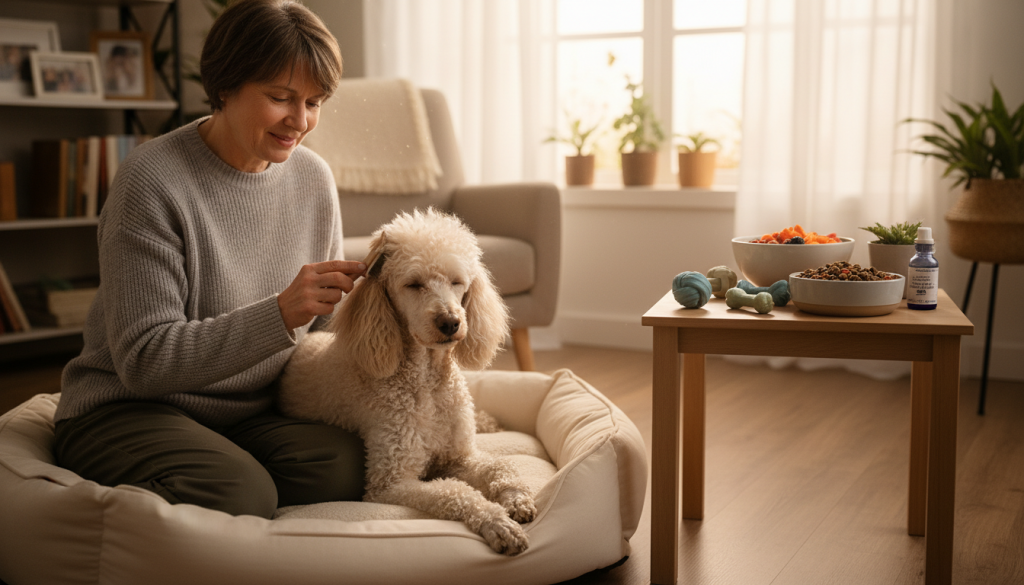
Weekly check-ins for appetite, movement, sleep, and mood
Do a five-minute review once per week. Note clear, simple measures so changes are easy to compare.
- Appetite: eaten meals and water intake.
- Stool: consistency and frequency.
- Movement: ease of rising, steps, and play.
- Sleep: quality, pacing, or night restlessness.
- Mood: interest in toys, social cues, and alertness.
How to adjust exercise, diet, and stimulation as energy changes
Reduce impact first: softer surfaces, fewer jumps, gentler terrain. Keep sniffing and short walks so the dog stays engaged without strain.
For diet, use measured meals and switch foods slowly over 5–7 days. Track body condition so weight does not add joint stress.
Keep mental stimulation short, varied, and success-based. Rotate puzzle styles and praise wins. Make only one change at a time so you can tell what helps, and check routine results at vet visits to protect long-term health.
Conclusion
Caring for a senior companion means choosing a few high-impact changes that protect comfort and confidence.
Focus buys where they matter: non-slip traction and gentle ramps, an orthopedic rest surface, short mental enrichment, and measured feeding routines. These targeted upgrades reduce falls, ease joints, and keep daily energy steady.
Behavior shifts are often communication, not willfulness; in this intelligent breed, signs point to pain, loss of senses, or boredom. Treat changes as clues and adjust tools or routines accordingly.
Start small: pick two upgrades this week—one for comfort and one for enrichment—and track how your dog responds over 2–4 weeks. Keep the dog included in family life to preserve mobility and mood.
With thoughtful care, a senior poodle can remain a happy, connected companion and enjoy many good years of life.
FAQ
Q: What are the main goals of senior care for my aging dog?
A: Keep mobility, mental sharpness, and comfort at the center. That means regular vet checkups, tailored exercise, joint support (supplements, ramps, supportive beds), and consistent mental stimulation. Adjust diet and grooming to match energy and skin needs, and prioritize quality-of-life choices that reduce pain and anxiety.
Q: How does aging change exercise and mental needs?
A: Older dogs often need lower-impact activity but still require daily movement to keep joints and heart healthy. Replace intense runs with controlled walks, swimming, or short play sessions. Cognitive work—puzzle feeders, scent games, short training refreshers—helps prevent decline and reduces boredom.
Q: How do size and variety affect senior care choices?
A: Size determines stamina, weight-bearing stress, and safety needs. Standards need attention to hip and shoulder care and longer walks at gentler paces. Minis and toys need more protection from slips, careful grooming for mobility, and weight monitoring since a few extra pounds cause strain.
Q: What early signs suggest cognitive decline?
A: Look for confusion in familiar places, disrupted sleep-wake cycles, increased anxiety, aimless pacing, decreased interest in routines, and house-training lapses. When these appear, consult your vet to rule out medical causes and start a cognitive support plan.
Q: Which mental-stimulation tools work best for an intelligent, boredom-averse breed?
A: Rotate puzzle toys, scent and nose-work games, food-dispensing toys, and short, varied training sessions. Use novel tasks weekly to prevent habituation. Simple enrichment like hiding treats around the home engages the mind without heavy physical demand.
Q: When does new stubbornness mean a health problem rather than behavioral issues?
A: Sudden reluctance to obey, increased irritability, or changes in movement often signal pain or discomfort. If temperament shifts abruptly, have a vet exam for joint pain, dental issues, hearing or vision loss, and cognitive changes before assuming behavioral causes.
Q: Which mobility risks are common by variety and what preventive steps help?
A: Larger varieties face hip dysplasia and shoulder strain; smaller ones are prone to patellar luxation and fragile limbs. Preventive steps include weight management, appropriate-strength supplements (glucosamine, omega-3s), low-impact exercise, and home adjustments like ramps and non-slip flooring.
Q: What features matter in orthopedic beds for seniors?
A: Look for high-density memory foam, bolstered edges for head support, washable covers, and breathable fabrics. Beds with a low entry height help smaller or stiff dogs climb in easily, while larger sizes must support weight evenly to reduce pressure points.
Q: Are ramps and stairs really helpful at home?
A: Yes. Ramps and pet steps reduce jumping that strains hips and knees. Place them at sofas, beds, and vehicles. Ensure gentle slopes, non-slip surfaces, and secure placement so the dog trusts the aid and avoids sudden slips.
Q: How do supportive harnesses improve walks for seniors?
A: A well-fitted harness redistributes pressure away from the neck and allows you to steady hindquarters or lift a paw safely. Look for padded, adjustable designs with a handle to assist on stairs or uneven terrain, and pair with a lightweight leash for better control.
Q: What grooming choices ease movement for older dogs?
A: Practical, short clips reduce matting and make inspection easier. Keep hair trimmed around paws and sanitary areas, schedule more frequent trims to prevent heavy mats, and opt for gentle, moisturizing shampoos to protect fragile skin.
Q: How much daily exercise should seniors get by size?
A: Targets vary: smaller seniors may do two short 10–20 minute walks plus indoor play; medium sizes often benefit from two 20–30 minute sessions; larger seniors might handle one longer gentle walk plus low-impact activities. Monitor stamina and adjust pace and duration.
Q: Is swimming safe and beneficial for older dogs?
A: Swimming is excellent low-impact exercise that supports joints and builds muscle without weight-bearing stress. Always supervise, use a canine life vest for weak swimmers, and start with brief sessions to gauge endurance.
Q: What signs indicate the need to ease or intensify activity?
A: Ease activity if you see limping, prolonged stiffness after exercise, reluctance to move, or excessive panting. Consider more enrichment (puzzles, scent work) rather than physical increase. If mobility and appetite remain good, maintain or slowly raise low-impact activity for muscle tone.
Q: How should feeding routines change for older dogs to reduce bloat and digestive upset?
A: Offer measured, smaller meals spread through the day rather than one large serving. Use raised bowls if neck strain is an issue, slow-feeders to prevent gulping, and transition gradually to any new diet to avoid stomach upset.
Q: When might a special diet be necessary?
A: Special diets help with food sensitivities, joint health, weight management, kidney or liver disease, and dental issues. If you notice chronic diarrhea, vomiting, weight loss, or allergies, consult your vet for a diagnostic plan and tailored diet.
Q: How much should portions differ by size?
A: Portion sizes depend on age, activity, and metabolism. Larger varieties need more calories but should avoid excess weight; toy varieties require small, nutrient-dense portions to prevent overfeeding. Follow vet guidance and package feeding charts as starting points.
Q: What hydration strategies help older dogs stay well-hydrated?
A: Keep fresh water available in several spots, use shallow bowls for seniors with neck or joint issues, and consider wet food to boost fluid intake. Check water bowls daily and encourage sipping after walks or play.
Q: How should grooming adapt to aging skin and coat?
A: Older dogs often have drier skin and mats that form faster. Increase brushing frequency with a slicker or pin brush, use hypoallergenic, moisturizing shampoos, and trim problematic hair. Regular grooming reduces discomfort and makes inspection for lumps or sores easier.
Q: What basic tools belong in a home grooming kit for seniors?
A: A quality brush, comb, clippers with quiet motors, detangling spray, blunt-nosed scissors, and ear-cleaning solution. Keep sessions short and calm, and consider professional groomers experienced with seniors for tricky trims.
Q: How to set up a comfortable home for an older dog?
A: Provide warm, draft-free resting areas, non-slip rugs on slippery floors, easy access to water and food, and multiple cozy beds. Position resting zones near family activity so the dog feels included but not disturbed during rest.
Q: How can families reduce night wandering and stress in seniors?
A: Establish consistent evening routines, provide a comfortable sleeping spot with night lighting, and ensure the dog has had adequate daytime mental and physical activity. For wandering tied to cognitive issues, consult a vet for behavior and medical strategies.
Q: How to manage separation anxiety and boredom when leaving a senior alone?
A: Prepare enrichment kits: durable chew toys, puzzle feeders, and scent games. Keep departures calm and short at first, and consider dog walkers or pet sitters. For severe anxiety, discuss behavioral plans and possible medications with your vet.
Q: What precautions should families with children take around an older dog?
A: Teach gentle handling, discourage rough play, and respect the dog’s rest times. Supervise interactions, especially with smaller or arthritic seniors, and create clear boundaries so both kids and the pet feel safe.
Q: Which age-related health screenings are essential?
A: Annual or biannual checks including bloodwork, urine tests, dental exams, and joint assessments. Screen for common issues like progressive retinal atrophy (PRA), Addison’s disease, diabetes, and cancers based on breed risk and clinical signs.
Q: What digestive symptoms should prompt a vet visit?
A: Persistent vomiting, diarrhea, sudden appetite loss, weight fluctuations, or signs of abdominal pain. These can indicate diet intolerance, infection, pancreatitis, or more serious metabolic issues needing prompt attention.
Q: How can ear infections be prevented in older dogs?
A: Keep ears clean and dry, check regularly for odor or discharge, and trim excess hair around the canal. Treat recurring infections early and follow vet-prescribed cleaning routines to prevent chronic problems.
Q: How does pet insurance or costs change as dogs age?
A: Many insurers raise premiums with age and may exclude preexisting conditions. Consider starting coverage early; for seniors, plan for higher out-of-pocket costs for diagnostics, surgeries, medications, and specialized diets or mobility aids.
Q: What are realistic lifetime cost categories for senior care?
A: Major categories include veterinary care (wellness and emergency), grooming, therapeutic diets, joint supplements, mobility equipment (ramps, beds), and possible in-home help. Prioritize spending where it most improves daily comfort and mobility.
Q: How to create a weekly senior-care routine?
A: Schedule short daily walks, regular mental enrichment sessions, weekly weight and appetite checks, grooming touch-ups, and a brief mobility test (observe gait and willingness to climb stairs). Keep a log to spot gradual changes and share it with your vet.
Q: When should exercise, diet, or stimulation be adjusted?
A: Adjust when you notice decreased stamina, changes in weight, altered sleep, new stiffness, or mood shifts. Small, gradual changes—shorter walks, calorie tweaks, or swapped enrichment—help maintain function and quality of life.